
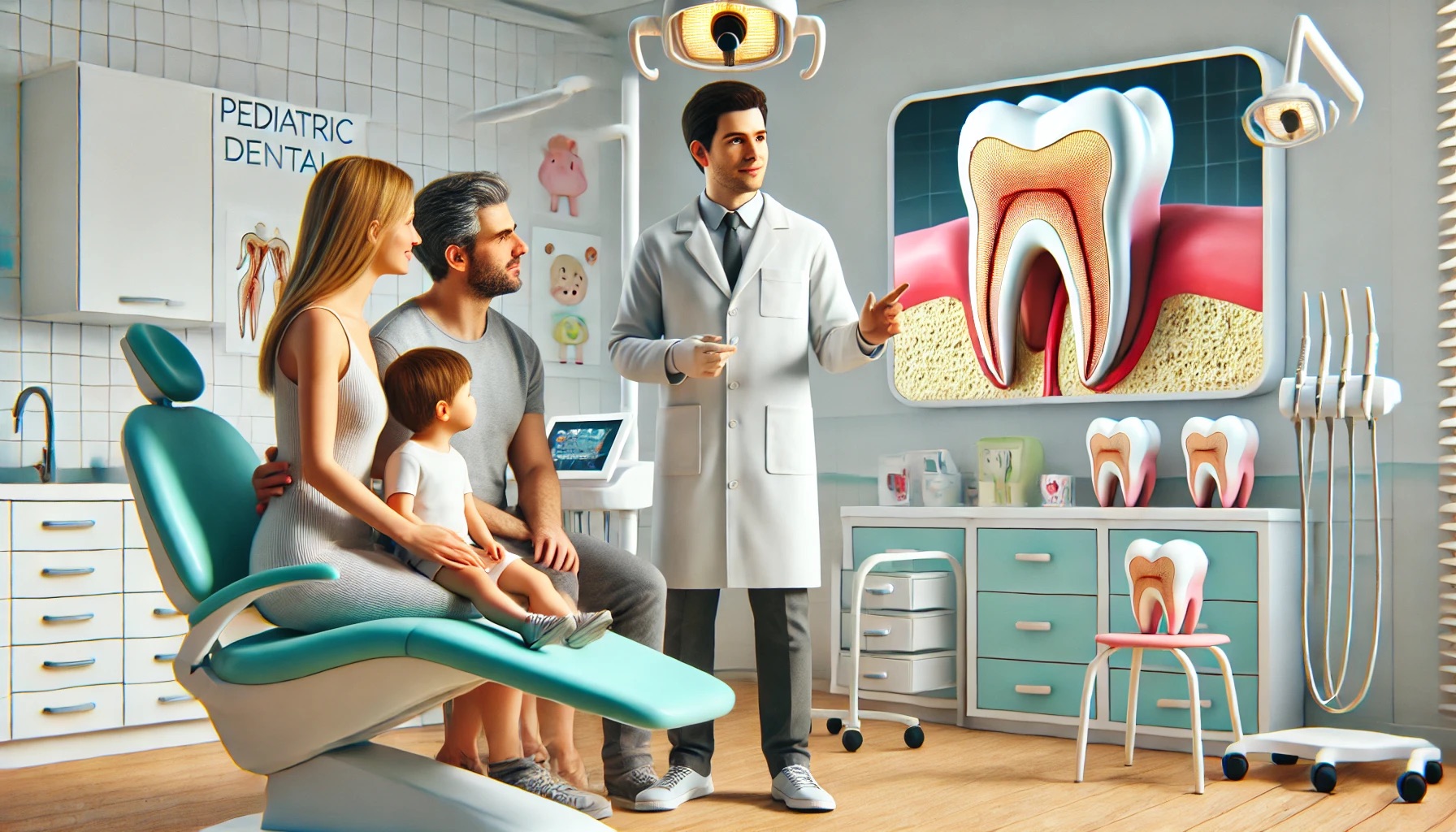
Why Children's Teeth Often Crumble, and Caries Isn't Always the Culprit
Many parents visit pediatric dentistry with fear: "My child's teeth are crumbling—is caries the reason?" However, tooth destruction in children is not always solely linked to the carious process. The enamel of primary (baby) teeth is thinner, softer, and less mineralized than adult enamel, meaning it is more susceptible to multiple factors. Therefore, why young children's teeth crumble is a complex question, and the answer isn't always related to infection.
The problem affects younger age groups too: many parents ask why a two-year-old child's teeth are crumbling or why a newborn's teeth look uneven. In such cases, it is crucial not to panic but to consult a specialist: a pediatric dentist will perform diagnostics and explain the causes.
Main Reasons: Not Just Caries
When children's front teeth crumble, parents often assume it's always caries. But there are many more causes:
- congenital disturbances in enamel formation;
- vitamin and mineral deficiencies;
- acidic diet;
- genetic predispositions;
- metabolic disorders;
- bruxism;
- early tartar formation;
- trauma;
- improper hygiene;
- occlusion (bite) irregularities.
Only a pediatric dentist can identify the true cause of tooth destruction.
Diet, Genetics, Hygiene: Three Key Factors
Three factors—diet, heredity, and hygiene—determine why a child's primary teeth crumble and form the overall picture of oral health. Dietary mistakes, frequent sugary snacks, and sugars provoke enamel softening, especially in toddlers, where the prevalence of dental caries is very high. Genetic factors are also significant: if parents had weak enamel, the child may develop similar dental problems. Finally, hygiene: improper or absent cleaning damages the enamel, increasing the speed of destruction and influencing subsequent stages of caries in children. Therefore, if parents ask what to do if their child's teeth are crumbling, dentists primarily recommend assessing diet, cleaning quality, and hereditary factors—these are the key elements that modern pediatric dentistry focuses on.
Diet. Frequent consumption of juices, sweets, soft carbohydrates, and acidic drinks causes enamel softening. In children, the acid attack lasts longer than in adults.
Genetics. If parents had weak primary teeth, the child is likely to inherit specific enamel mineralization characteristics.
Hygiene. Insufficient cleaning, inability to use a brush effectively, early plaque, and tartar accelerate enamel destruction.
Any disruption in this trio provokes enamel vulnerability, especially in children under 6 years old.
Enamel Hypoplasia — A Common Non-Carious Cause of Destruction
Hypoplasia is a condition where the enamel of primary teeth forms incorrectly: it is thin, porous, and easily crumbles. It is due to hypoplasia that a child's teeth may break down even before a carious cavity appears.
Causes of hypoplasia:
- prematurity;
- infections in the mother;
- toxemia (severe nausea during pregnancy);
- vitamin and mineral deficiencies;
- frequent illnesses of the child at an early age;
- thyroid gland dysfunctions.
If hypoplasia is pronounced, teeth break down "in layers," even without visible dark spots. In children with such a structure, even minimal damage or acid exposure leads to severe weakening of the incisal edge. It is in these situations that parents first notice their child's front teeth crumbling, even though they brush regularly and eat correctly.
Non-Carious Causes of Tooth Destruction
Caries is not the only cause of fragility. Children's teeth can be destroyed due to:
- bruxism (night grinding);
- acid reflux;
- autoimmune diseases;
- trauma;
- malocclusion (improper bite);
- impaired breathing (mouth breathing);
- overload of the chewing surface.
In such cases, the tooth crumbles even if it has no carious surface. In some patients, tooth destruction is provoked by acid reflux, autoimmune processes, or chronic conditions affecting mineral metabolism. This happens even in toddlers, and parents complain that newborn teeth look damaged. In all these cases, the enamel structure suffers not due to bacteria, but due to systemic disorders, requiring complex treatment, not just localized therapy.
Caries: How Is It Related, or Is It Related at All?
Sometimes caries between primary teeth causes destruction, but this is far from always the case. When enamel is initially weakened, even a small spot can turn into a deep defect. However, crumbling can occur even without a carious cavity—for example, with hypoplasia or acid erosion.
To understand how caries develops, the dentist performs diagnostics: evaluating the stages of caries in children, the condition of the lateral surfaces, and checking for hidden areas between the teeth.
Carious Causes of Tooth Destruction in Children
Caries is indeed common, especially at an early age. In childhood, the infectious process develops faster due to thin enamel and an active bacterial environment. Therefore, the prevalence of dental caries remains high in children. If early carious lesions are not treated, they quickly progress into deep defects, and the destruction is exacerbated by stress on the incisal edge. Parents often first notice aesthetic changes when caries appears on the front surface of the tooth, causing chipping.
Caries between the front teeth or caries on the front surface of the tooth can cause cracks, crumbling, and destruction of the incisal edge.
When caries is not treated promptly, it spreads to adjacent teeth and causes crown destruction.
Consequences of Untreated Caries
If treatment for dental caries in children is not performed, the consequences can be serious:
- destruction of the tooth down to the gum level;
- pulpitis;
- premature tooth loss;
- speech impairment;
- problems with permanent bite formation;
- shifting of the dental arch;
- the need for complex treatment in the future.
A decayed primary tooth affects the position of the permanent tooth.
What to Do if a Child's Teeth Are Crumbling
If parents notice a problem, it is important not to wait but to consult a specialist immediately.
What needs to be done:
- make an appointment with a pediatric dentist;
- perform enamel diagnostics;
- take an X-ray if necessary;
- evaluate the bite (occlusion);
- check for systemic diseases;
- adjust the diet;
- strengthen the enamel with remineralization therapy.
When parents notice that a tooth has become uneven or a piece of enamel has chipped off, it is essential to consult a specialist as quickly as possible. Only an experienced pediatric dentist can determine whether the destruction is related to caries, hypoplasia, trauma, or metabolic disorders. Home attempts to strengthen the teeth do not work and can worsen the situation.
During the visit, the doctor performs diagnostics, takes an X-ray if necessary, and assesses the bite and gum condition. They will explain to the parents what to do if their child's teeth are crumbling, select remineralization therapy, correct the diet, and discuss which habits need to be changed. A comprehensive approach helps stabilize the condition and prevent further destruction.
Crumbling Teeth — A Symptom That Cannot Be Ignored
When a child's primary teeth crumble, parents might dismiss it: "they'll fall out anyway." But this is a mistake. Dental problems in children affect the health of permanent teeth, bite, speech, and appearance.
It doesn't matter why the child's teeth are crumbling—whether due to hypoplasia, caries, diet, or trauma—it is crucial to see a specialist in time.
Modern pediatric dentistry allows for enamel restoration, strengthening of teeth, and prevention of destruction. The main thing is to visit the doctor promptly.

Book a consultation.
Don't put off taking care of your smile.
Contact us by phone
+971 58 524 4003
WhatsApp
Online booking
Special offer!
Free dental consultation!

The Factor Smile clinic has a special offer for new patients - a free consultation with a dentist. Depending on the problem you are contacting us with, you can get a consultation from the following specialists: therapist, surgeon, orthopedist, orthodontist.
CONSULTATION INCLUDES:
-

Professional examination by a highly qualified doctor.
-

Treatment plan
Based on the results of the examination, an individual plan will be created for you with detailed information on the stages of treatment and an indication of the current cost.
Book a consultation.
Don't put off taking care of your smile.
Contact us by phone
+971 58 524 4003
WhatsApp
We use cookies!
We use cookies to make the site convenient to use. More detailed information can be found in privacy policy.Accept