
From Tooth Extraction to Dental Implant Placement: How an Oral Surgeon Plans Every Stage of Treatment
Successful dental implant treatment begins long before the implant is placed. A modern oral surgeon starts planning treatment even before tooth extraction to preserve as much bone and gum tissue as possible and create ideal conditions for future restoration. Thanks to digital diagnostics and step-by-step treatment planning, many potential risks can be anticipated in advance, making the outcome more predictable. In advanced dental clinics throughout Dubai, every stage—from tooth extraction to placement of the final crown—is considered part of one comprehensive treatment process.
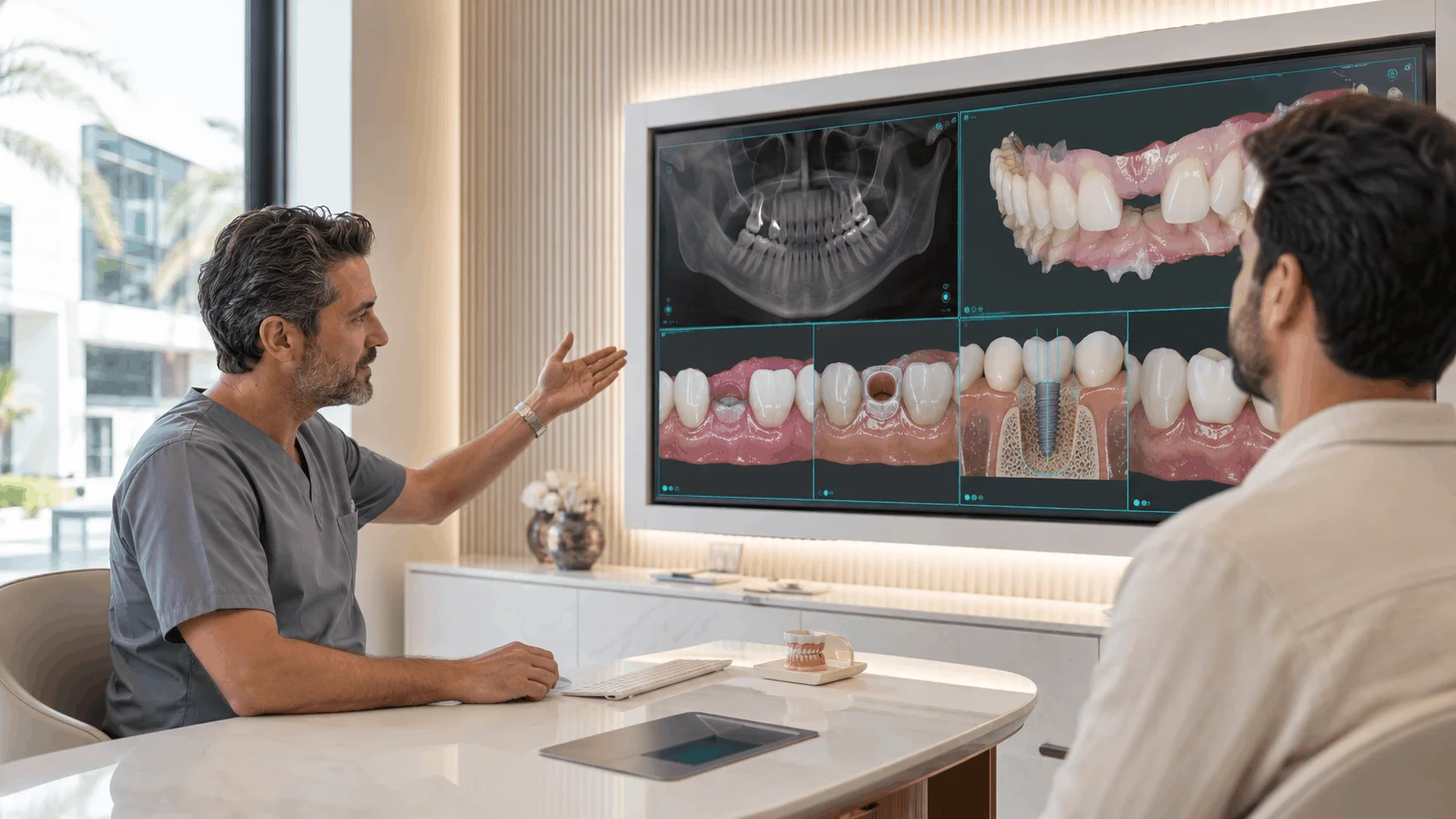
Why Is Early Treatment Planning So Important?
Many people believe that implant treatment begins only after a tooth has been removed.
In reality, successful implant rehabilitation starts well before the extraction procedure.
Early planning allows the surgeon to:
- evaluate whether the natural tooth can still be saved;
- assess the available bone volume;
- determine the ideal position for the future implant;
- preserve healthy gum tissue;
- reduce the risk of complications;
- establish a realistic treatment timeline.
This comprehensive approach helps achieve more stable functional and aesthetic results.

Stage 1. Comprehensive Diagnosis
Every surgical treatment begins with a detailed examination.
Modern diagnostics typically include:
- clinical examination;
- Cone Beam Computed Tomography (CBCT);
- intraoral 3D scanning;
- bite evaluation;
- assessment of neighboring teeth;
- digital smile photography.
In leading dental clinics across Dubai, all diagnostic data are combined into a comprehensive digital treatment plan, allowing clinicians to predict each stage of the rehabilitation process before treatment begins.
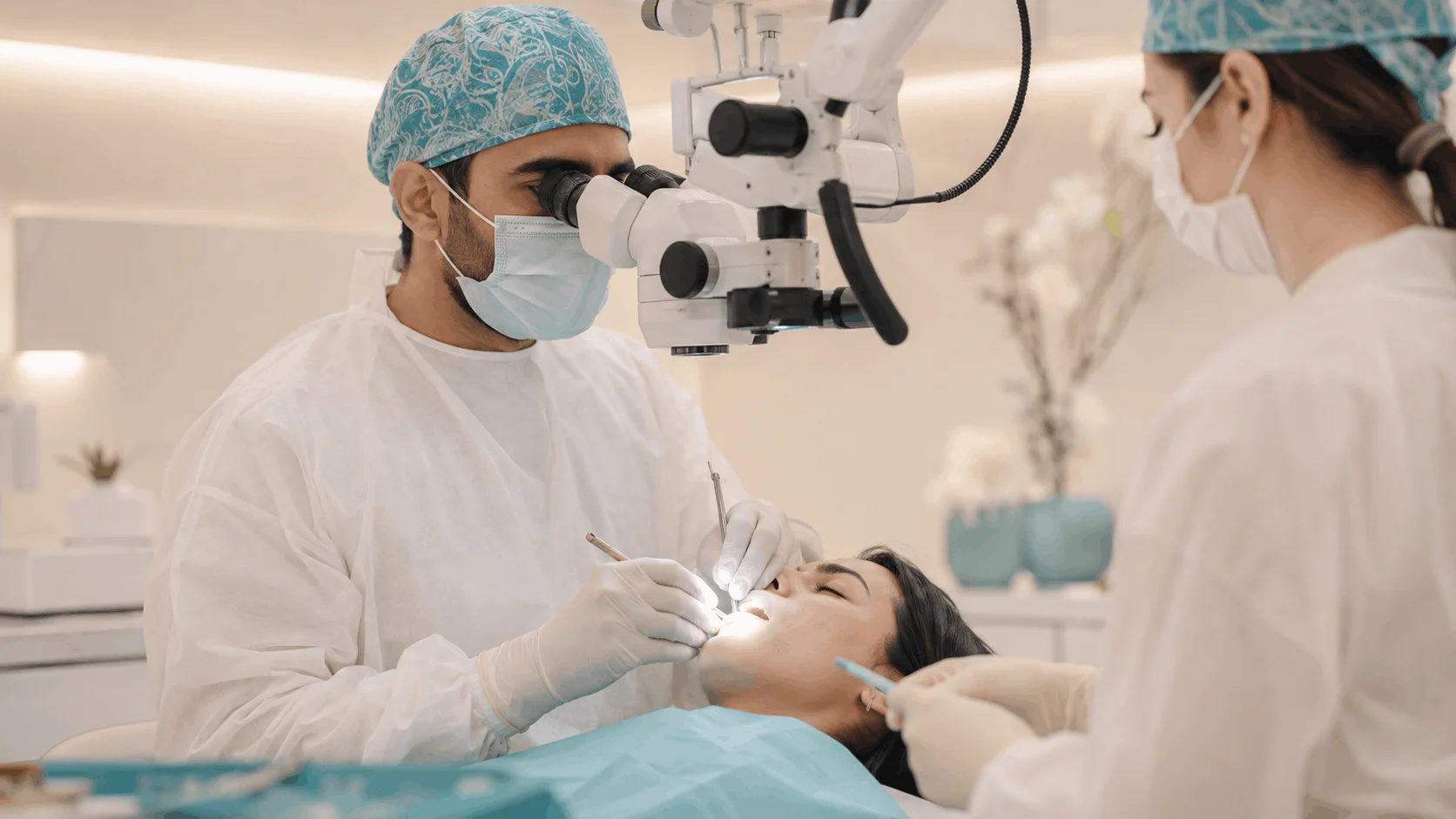
Stage 2. Deciding Whether to Save or Remove the Tooth
Modern dentistry always aims to preserve natural teeth whenever possible.
Extraction is recommended only when:
- the tooth cannot be predictably restored;
- a vertical root fracture is present;
- severe structural destruction has occurred;
- chronic infection is affecting the tooth;
- the long-term prognosis is poor.
The final decision is made after a comprehensive clinical evaluation.
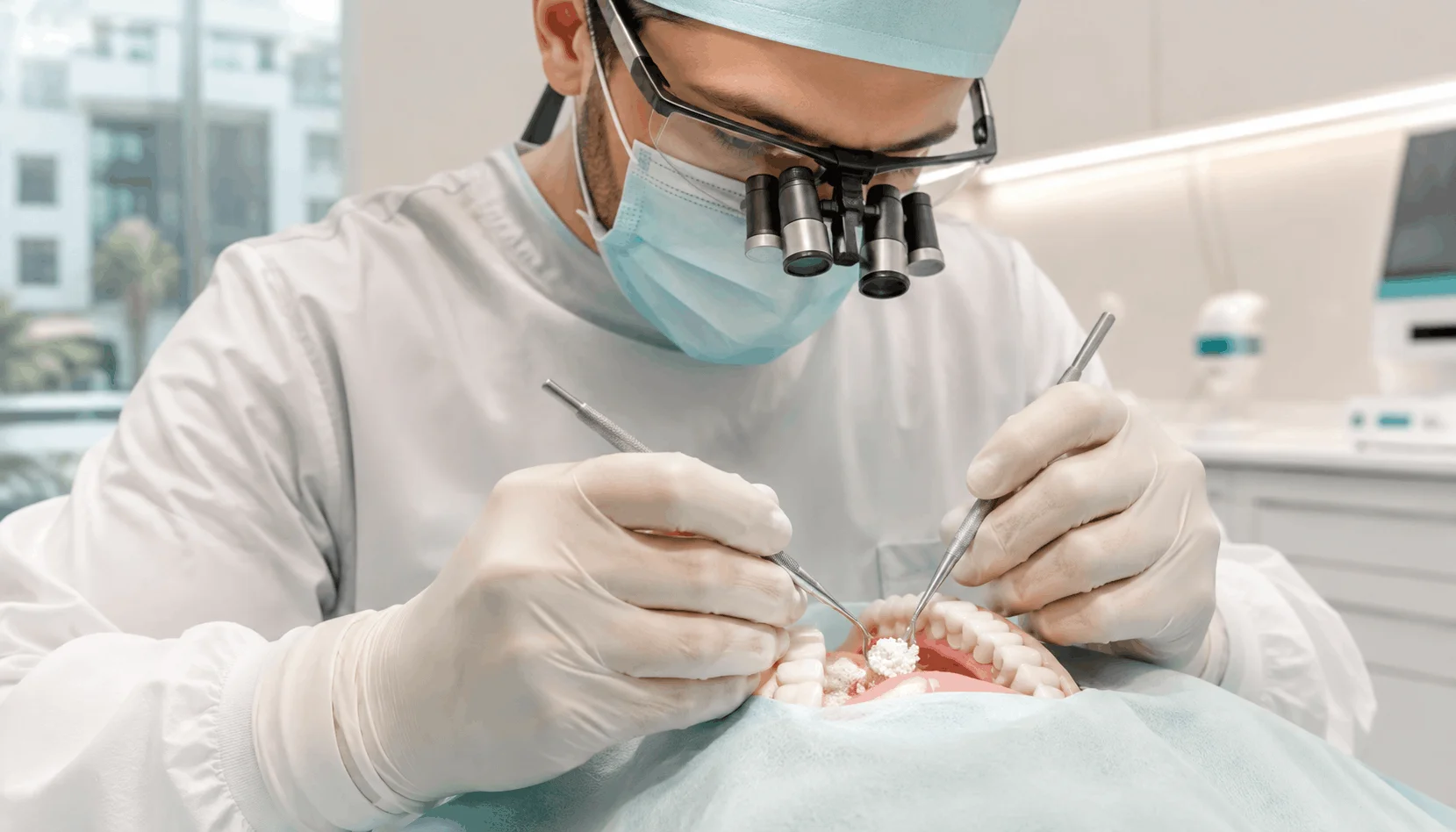
Stage 3. Atraumatic Tooth Extraction
If extraction is unavoidable, the surgeon focuses on preserving the surrounding tissues.
Special attention is given to:
- protecting the surrounding bone walls;
- minimizing trauma to the gums;
- carefully removing the tooth;
- preparing the site for future implant treatment.
This approach creates better conditions for successful implant placement later.
Stage 4. Socket Preservation
Following tooth extraction, the jawbone naturally begins to lose volume.
To minimize this process, the surgeon may recommend socket preservation.
This procedure helps:
- preserve bone volume;
- reduce natural bone resorption;
- simplify future implant placement;
- improve the long-term prognosis of treatment.
Whether socket preservation is necessary depends on the individual clinical situation.
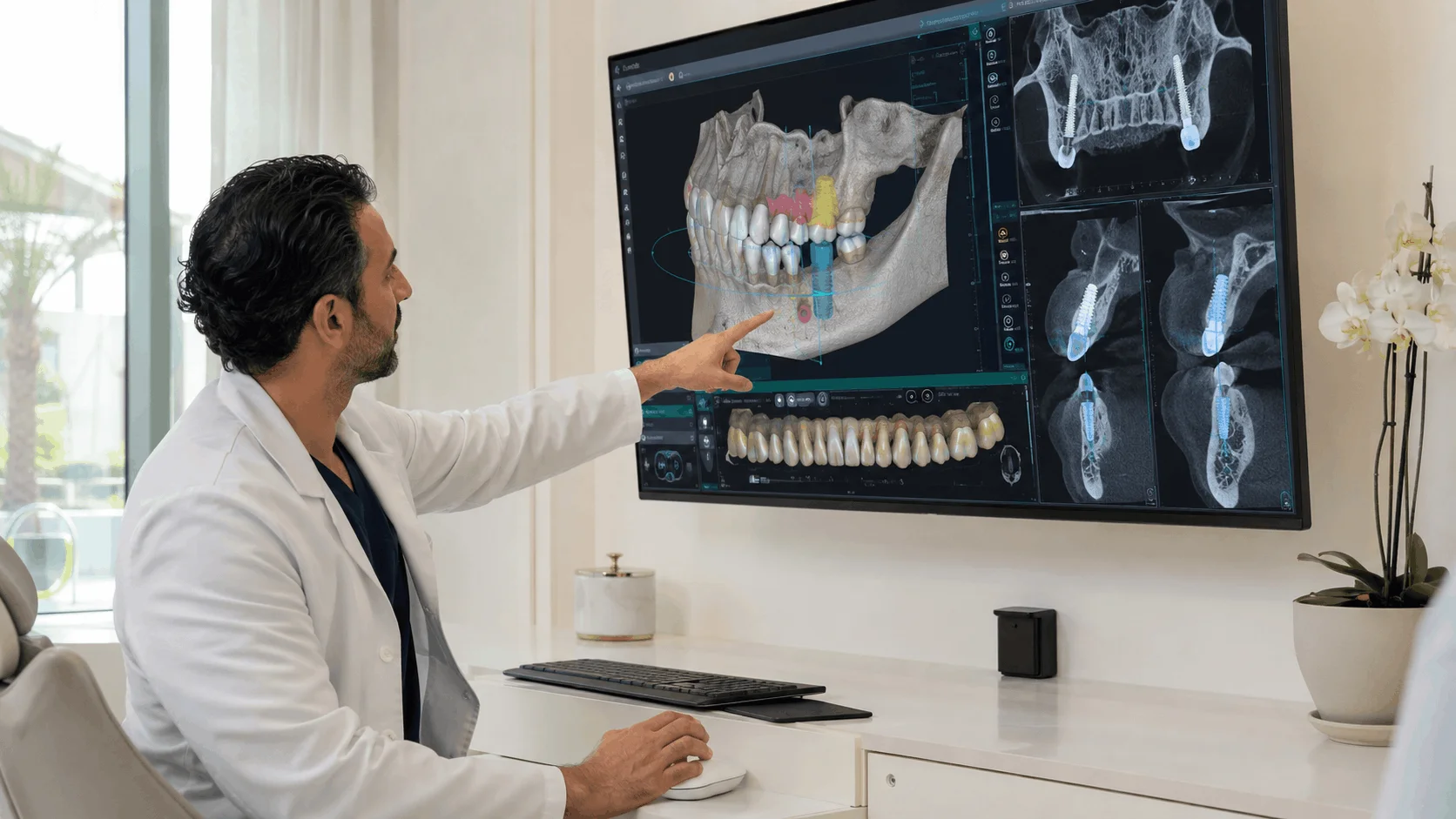
Stage 5. Implant Treatment Planning
Before implant placement, the surgeon carefully determines the ideal position of the future implant.
The planning process takes into account:
- available bone volume;
- the position of adjacent teeth;
- bite relationships;
- the location of nerves and maxillary sinuses;
- the future prosthetic restoration;
- smile aesthetics.
The implant is positioned not only according to anatomy but also with the final restoration in mind.
Stage 6. Dental Implant Placement
Once the tissues are ready, the surgical phase begins.
Modern technology allows clinicians to:
- use digitally designed surgical guides;
- precisely control implant positioning;
- minimize tissue trauma;
- achieve highly accurate implant placement.
In many cases, the procedure is performed under modern local anesthesia and requires relatively little time.
Stage 7. Prosthetic Restoration
After the implant has successfully integrated with the jawbone, the restorative phase begins.
This stage includes:
- digital intraoral scanning;
- fabrication of a custom restoration;
- crown try-in;
- placement of the final crown;
- bite adjustment.
This final step completes the patient's functional and aesthetic rehabilitation.
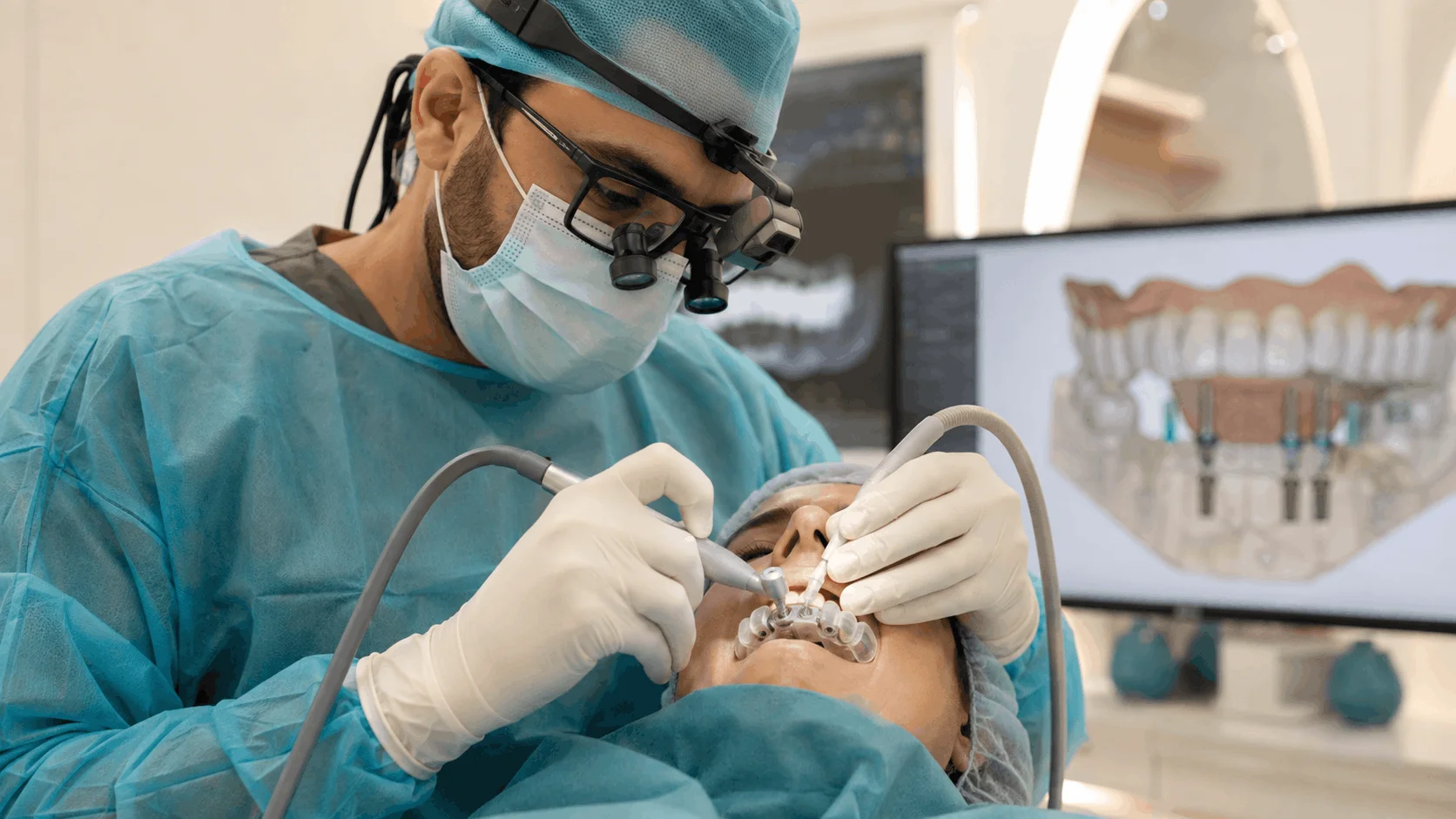
Why Is Digital Planning So Important?
Modern implant dentistry relies extensively on advanced digital technology.
Commonly used tools include:
- Cone Beam Computed Tomography (CBCT);
- intraoral scanners;
- digital smile design;
- virtual implant planning;
- computer-guided surgical templates.
These technologies significantly improve treatment precision while reducing the likelihood of unexpected situations during surgery.

Treatment Timeline at a Glance
Stage |
Primary Goal |
|---|---|
| Diagnosis | Comprehensive evaluation of the clinical situation |
| Decision-making | Preserve or remove the tooth |
| Atraumatic extraction | Preserve as much healthy tissue as possible |
| Socket preservation | Prepare the site for future implant placement |
| Implant planning | Determine the ideal implant position |
| Implant surgery | Replace the missing tooth root |
| Prosthetic restoration | Restore function and smile aesthetics |
Modern implant treatment is not a single procedure—it is a carefully coordinated process that begins even before tooth extraction. Detailed planning at every stage helps preserve healthy tissues, improve surgical precision, and create a strong foundation for long-term functional and aesthetic success. This comprehensive approach allows patients to achieve predictable and durable results.
If you are facing tooth extraction or considering dental implants, contact Factor Smile in Dubai. Our specialists use advanced digital diagnostics to create a personalized treatment plan and guide you through every stage of your rehabilitation—from the initial consultation to the placement of your final dental crown.
Frequently Asked Questions