
Digital Treatment Planning: How Modern Technology Helps Avoid Unexpected Outcomes
Digital treatment planning allows dentists to simulate treatment outcomes before procedures begin, evaluate each patient's unique anatomy, and select the safest and most predictable clinical approach. Technologies such as CBCT imaging, intraoral 3D scanning, digital smile design, and artificial intelligence improve diagnostic accuracy, reduce uncertainty during treatment, and support highly personalized care. In modern dental clinics throughout Dubai, digital workflows are widely used for dental implants, prosthetics, orthodontics, and cosmetic dentistry.
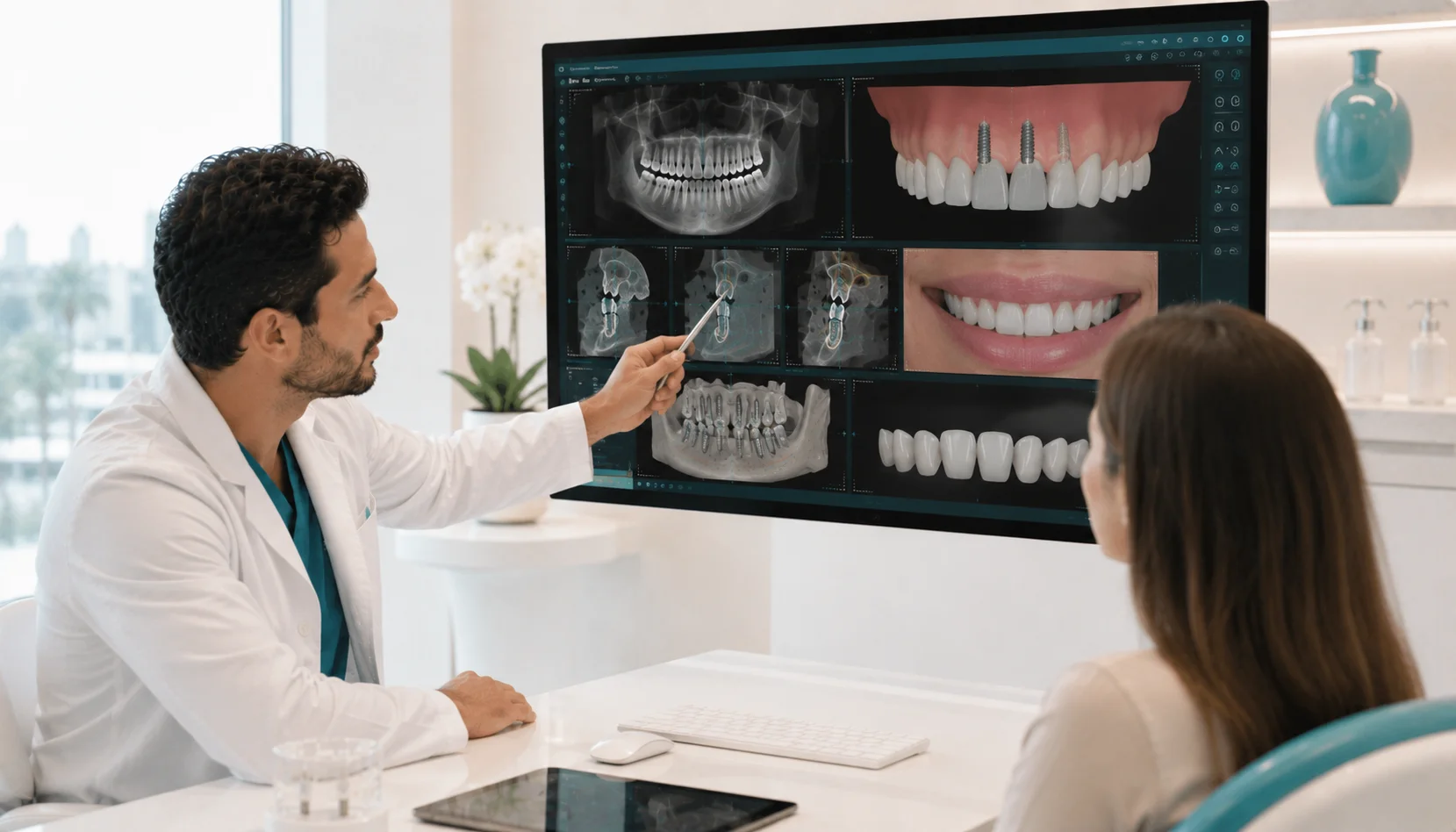
What Is Digital Treatment Planning?
Digital treatment planning is a comprehensive process that combines advanced technologies to collect detailed information about a patient's oral health before treatment begins.
Rather than relying solely on conventional examinations or two-dimensional X-rays, dentists integrate multiple digital data sources into a complete virtual model of the patient's mouth.
These technologies include:
- Cone Beam Computed Tomography (CBCT);
- intraoral 3D scanning;
- high-resolution digital photography;
- bite analysis;
- computer-assisted treatment simulation.
This comprehensive approach allows clinical decisions to be based on highly accurate information.
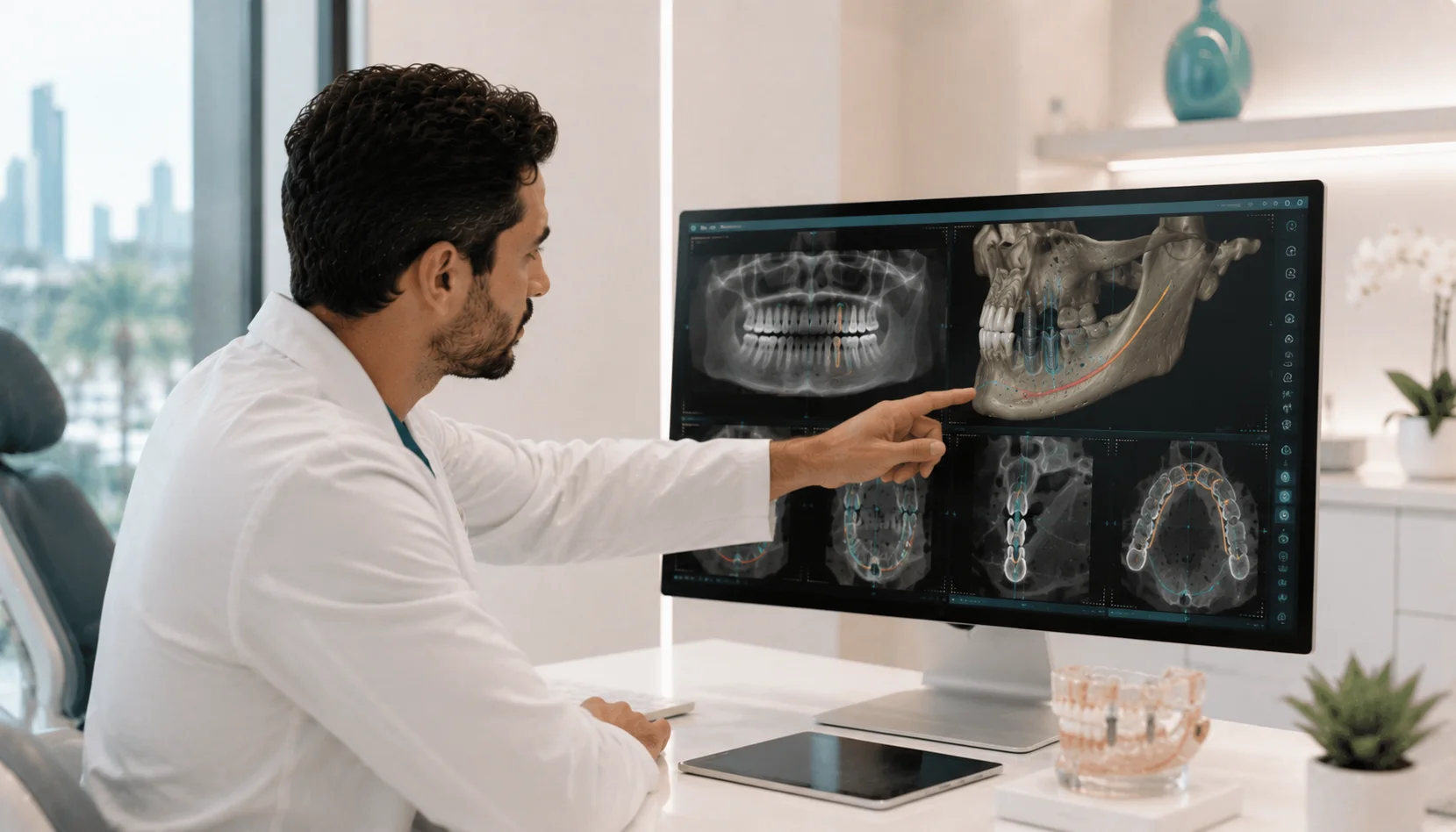
Why Isn't Traditional Diagnostics Always Enough?
Conventional diagnostic methods remain valuable, but they have certain limitations.
For example, two-dimensional images may not fully reveal:
- available bone volume;
- the exact position of tooth roots;
- nearby nerves;
- sinus anatomy;
- complex relationships between teeth.
Three-dimensional digital imaging provides a far more detailed understanding of oral anatomy, allowing dentists to plan treatment with greater precision.
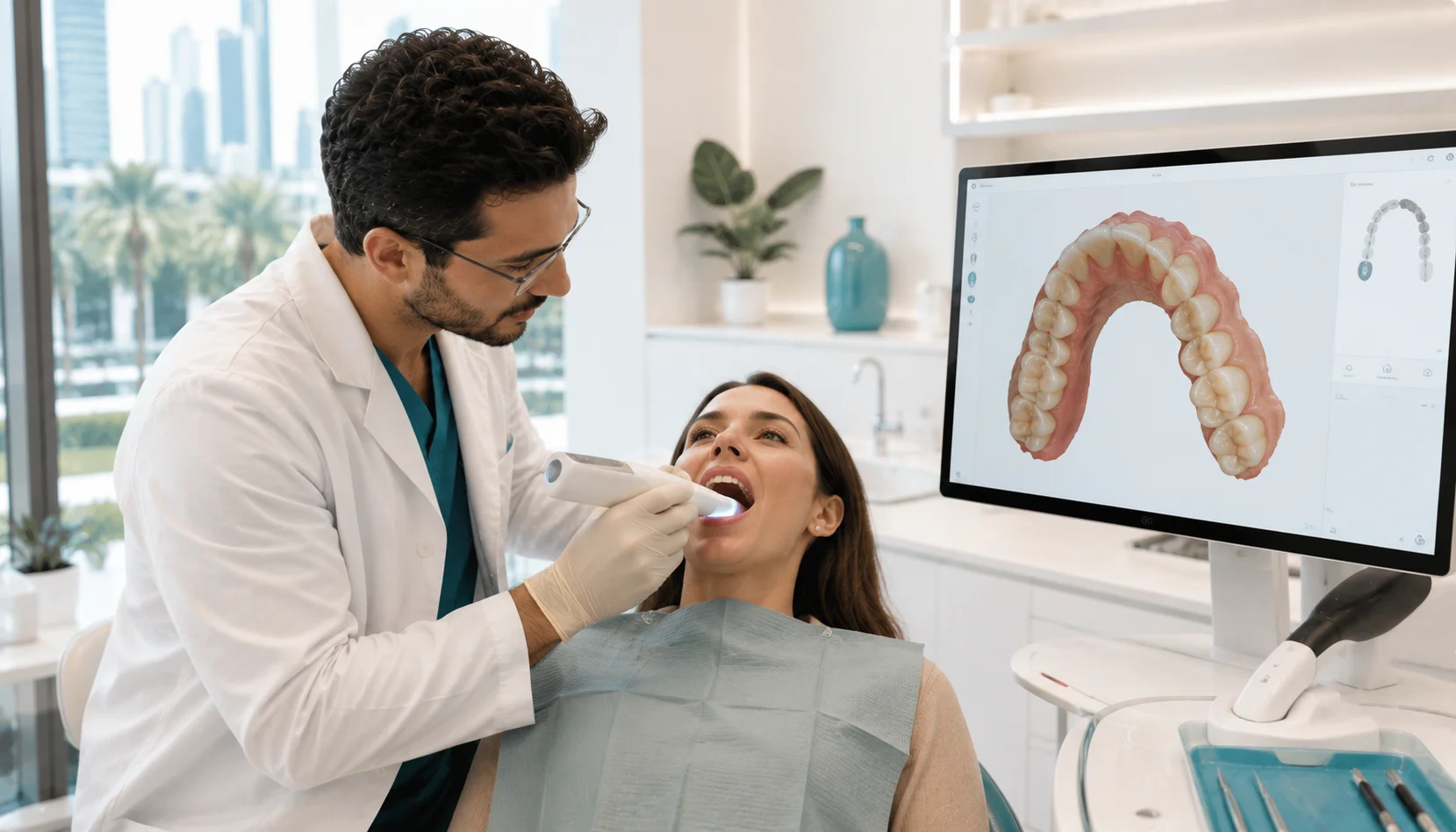
Which Technologies Are Used Today?
Modern dentistry combines several digital tools into one integrated workflow.
The most common technologies include:
- CBCT (3D Cone Beam Computed Tomography);
- digital intraoral scanners;
- CAD/CAM design and manufacturing;
- Digital Smile Design (DSD);
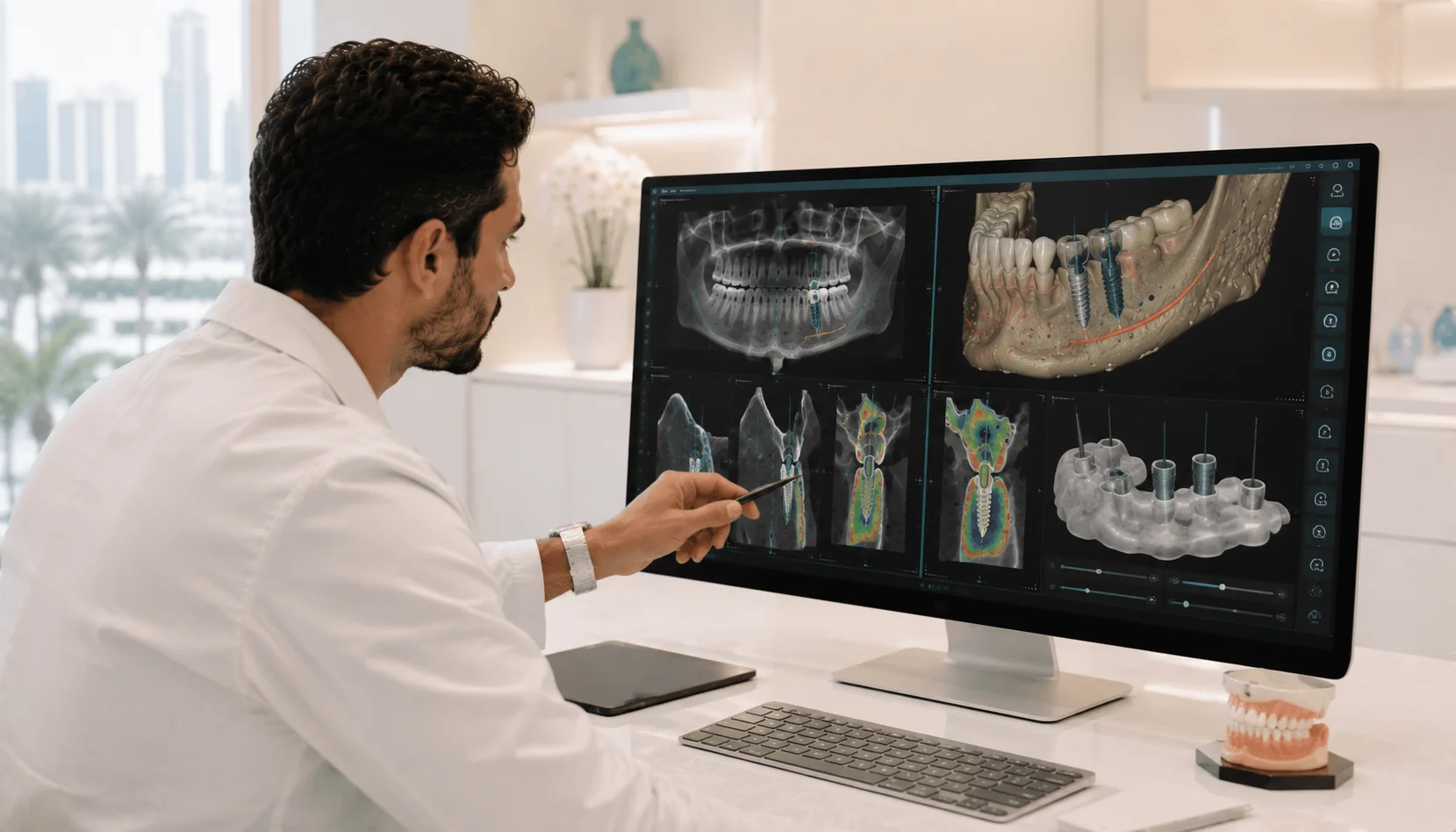
- virtual implant planning;
- artificial intelligence-assisted diagnostic analysis.
Each technology complements the others, providing dentists with a comprehensive understanding of the patient's condition.
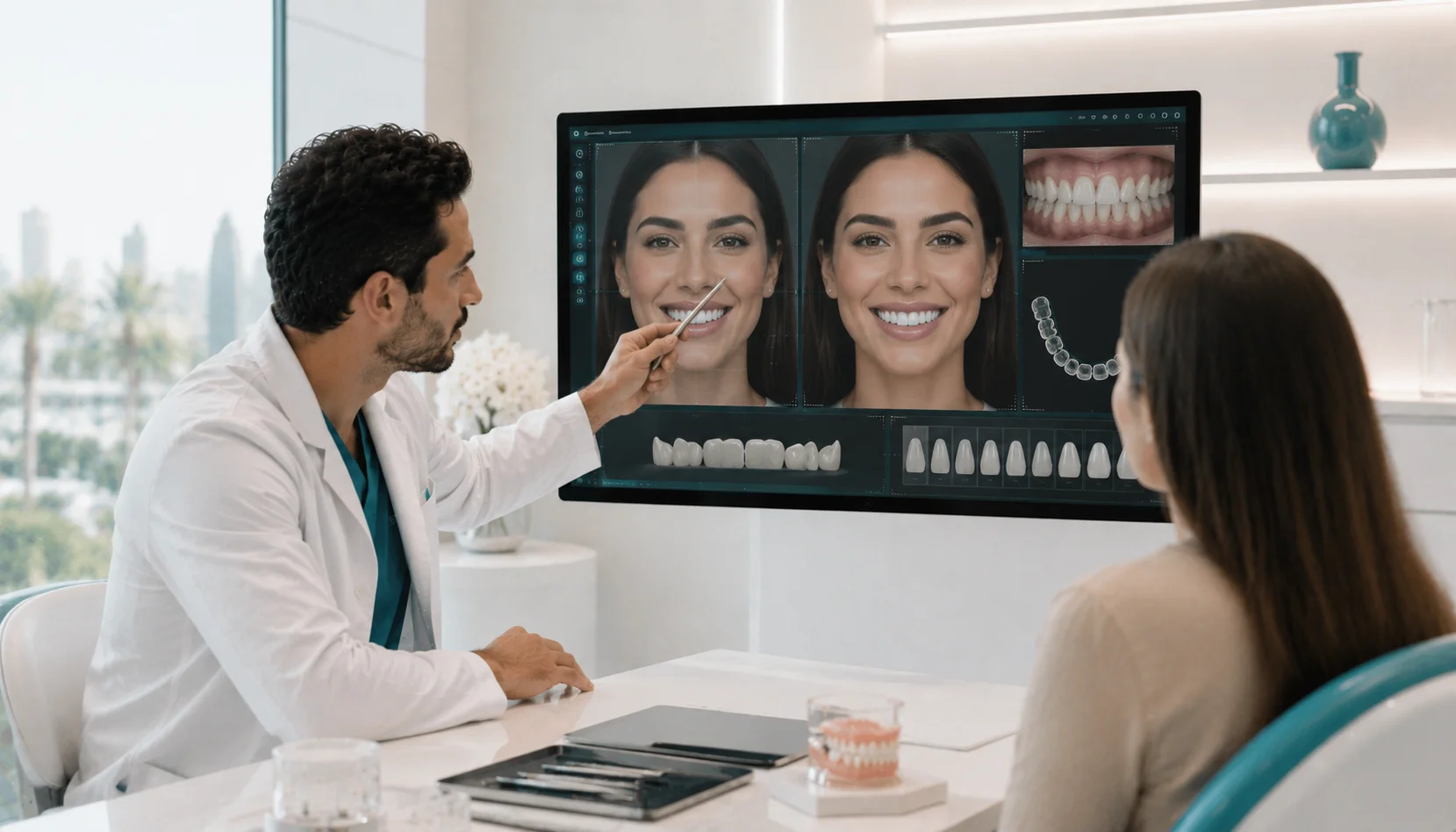
How Does Digital Planning Improve Implant Treatment?
Successful dental implant placement depends on precise positioning.
Digital planning helps determine:
- the ideal implant location;
- insertion angle;
- placement depth;
- available bone volume;
- the relationship to important anatomical structures.
In many cases, custom surgical guides are also produced, allowing the virtual treatment plan to be transferred accurately to the clinical procedure.
The Role of Digital Technology in Cosmetic Dentistry
Before veneers, crowns, or full smile rehabilitation are performed, dentists can often demonstrate the expected outcome digitally.
This may include:
- Digital Smile Design;
- virtual tooth modeling;
- facial photography;
- smile proportion analysis.
Patients can better understand the proposed treatment and participate in planning the appearance of their future smile.
Digital Planning in Orthodontics
For braces and clear aligner treatment, digital technologies allow dentists to predict tooth movement throughout treatment.
These systems help:
- analyze the bite;
- calculate each stage of tooth movement;
- simulate the expected final result;
- monitor treatment progress over time.
This improves communication between the dentist and the patient while supporting more accurate treatment control.
Key Benefits of Digital Treatment Planning
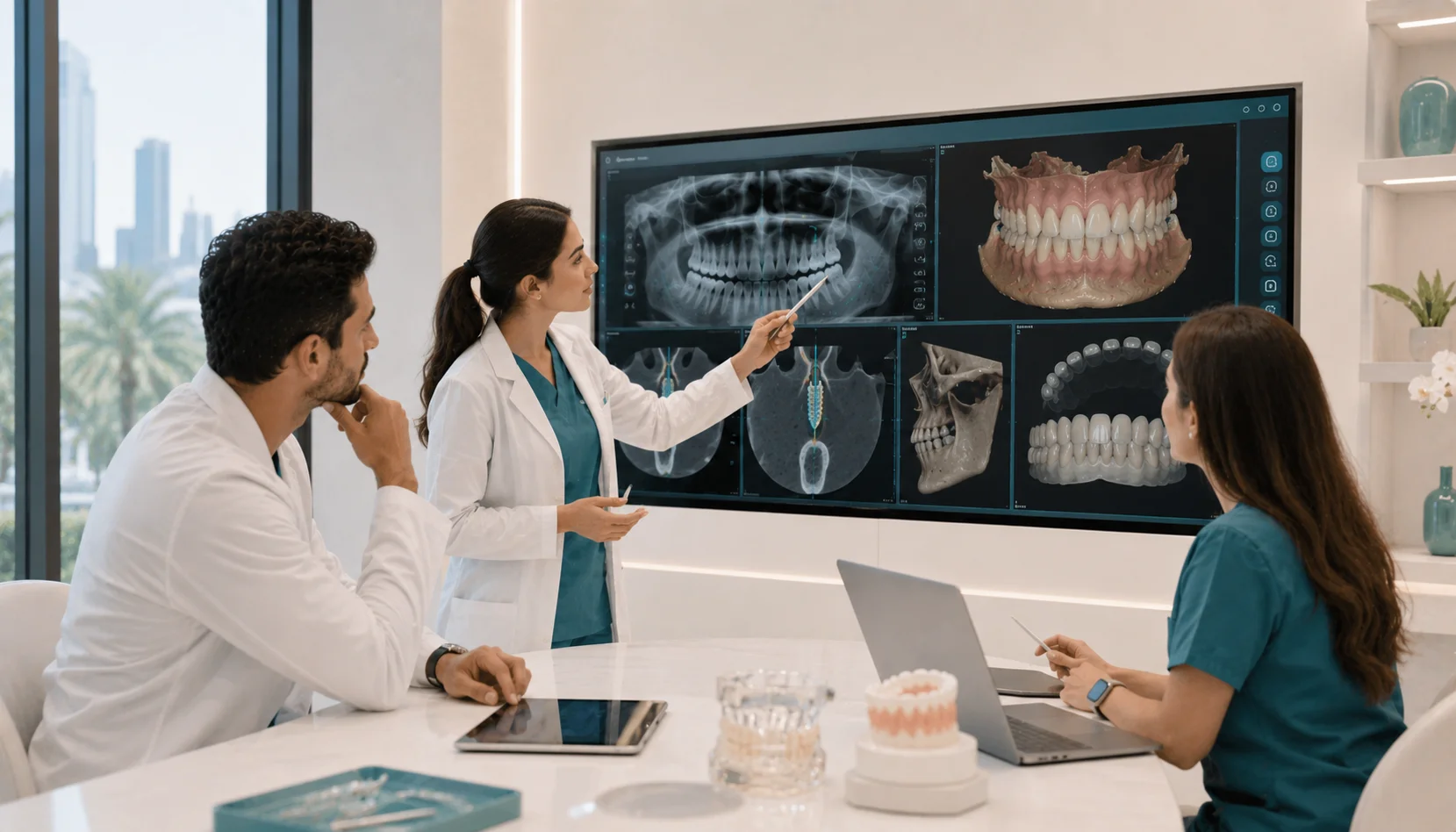
Comprehensive digital planning offers numerous clinical advantages.
These include:
- more accurate diagnosis;
- individualized treatment planning;
- visualization of expected results before treatment begins;
- reduced risk of unexpected complications;
- improved precision during surgical procedures;
- more efficient collaboration between different dental specialists.
Digital technologies do not replace the dentist's clinical expertise—they enhance it by providing more precise information for decision-making.
Traditional vs. Digital Treatment Planning
Traditional Planning |
Digital Planning |
| Limited diagnostic information | Comprehensive 3D diagnostic data |
| Two-dimensional imaging | Three-dimensional visualization |
| Limited treatment simulation | Virtual treatment planning |
| Manual measurements | Highly accurate digital calculations |
| Less predictable outcomes | Greater treatment predictability |
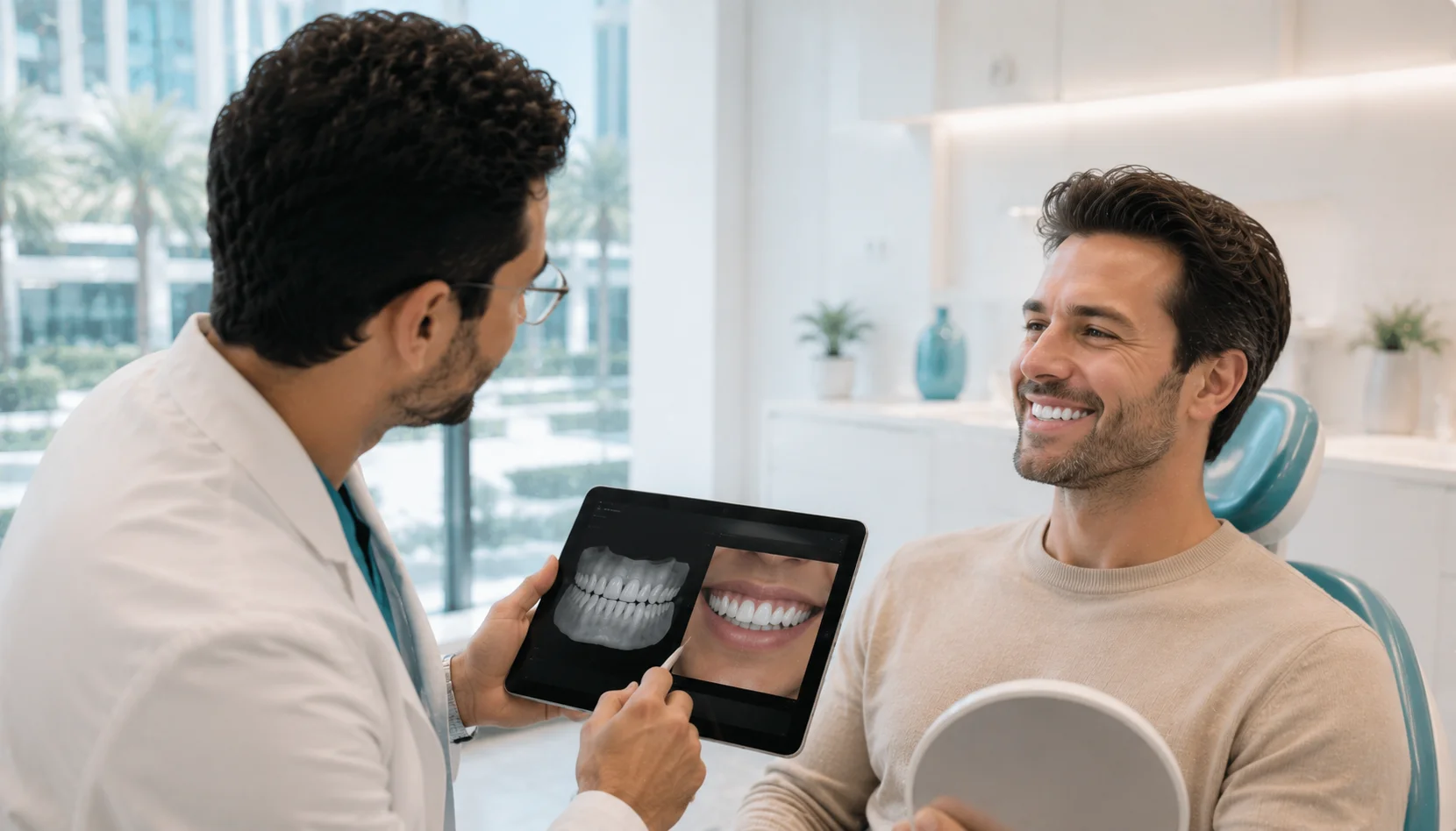
Modern dentistry increasingly relies on digital technologies that help dentists make informed clinical decisions before treatment even begins. Three-dimensional imaging, virtual simulation, and digital treatment planning make it possible to evaluate complex clinical situations in advance, reduce uncertainty, and provide patients with more predictable outcomes.
If you are considering dental implants, orthodontic treatment, veneers, or full-mouth rehabilitation, contact Factor Smile in Dubai. Our specialists use advanced digital diagnostics, virtual treatment planning, and the latest technologies to deliver highly precise, safe, and predictable dental care tailored to your individual needs.
Frequently Asked Questions