Dental Sealants for Children: Protecting Teeth from Cavities
Dental sealants for children are a preventive dental treatment in which the deep grooves and pits on the chewing surfaces of teeth are covered with a special protective material. The sealant closes hard-to-clean areas of the enamel, prevents food particles and dental plaque from accumulating, and reduces the risk of tooth decay.
The procedure is particularly beneficial for newly erupted permanent molars, as their chewing surfaces often have deep, narrow grooves known as fissures. Dental sealants are usually applied without drilling or anaesthesia, provided the tooth is healthy and does not require additional treatment.
However, the protection is not absolute. Its effectiveness depends on proper application, the integrity of the sealant, and good daily oral hygiene.

What Are Dental Fissures and Why Do Cavities Develop in Them?
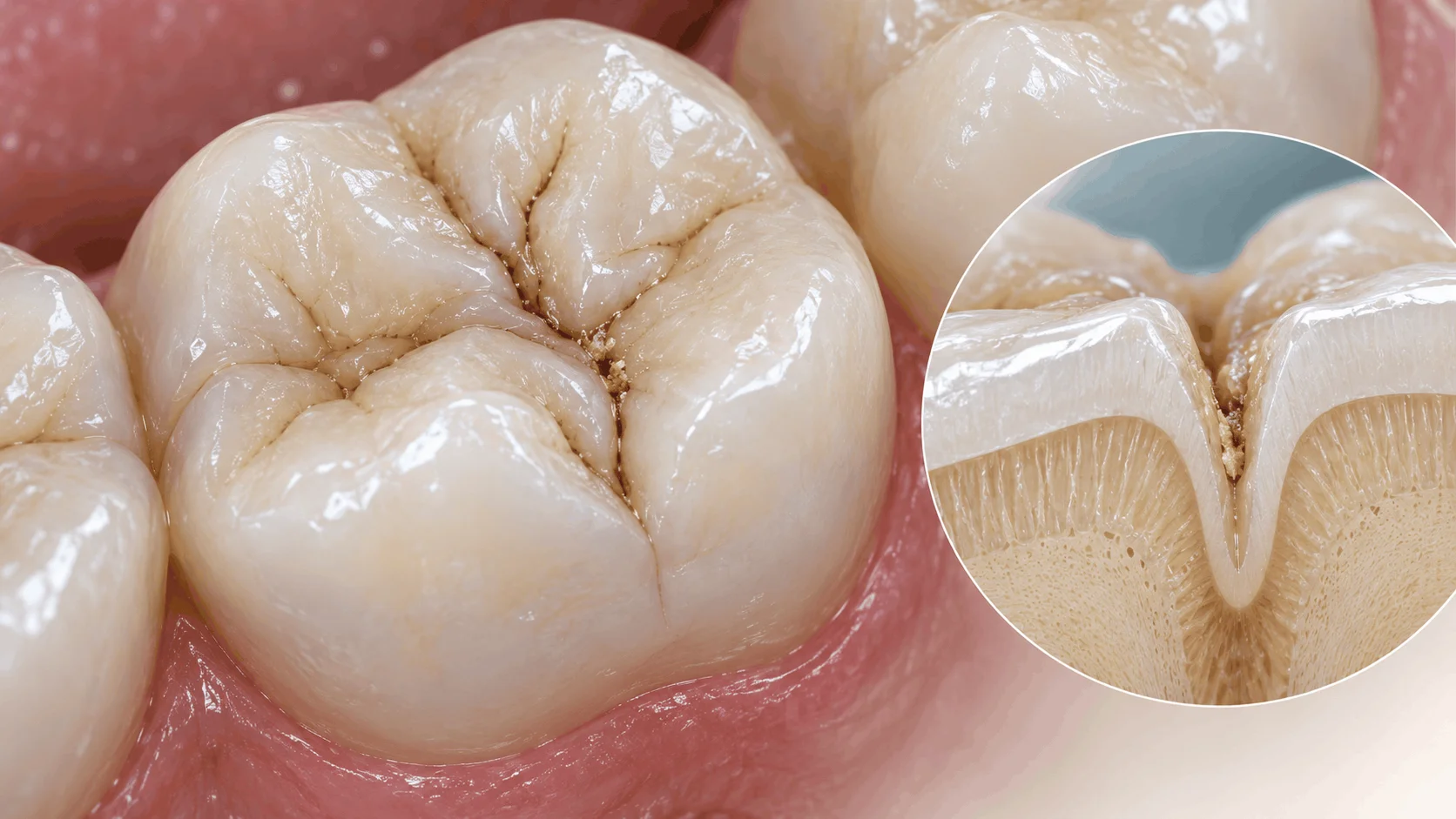
Dental fissures are natural grooves and depressions on the chewing surfaces of molars and premolars. They help break down food during chewing, but their complex shape can make them difficult to clean with a regular toothbrush.
In some children, fissures are so narrow and deep that toothbrush bristles cannot effectively reach their base. Dental plaque accumulates in these areas, and bacteria convert sugars from food into acids that gradually damage tooth enamel.
The main risk factors for fissure cavities include:
- Deep and narrow grooves on the chewing surfaces of teeth.
- Inadequate cleaning of hard-to-reach areas.
- Frequent consumption of sweets and sugary drinks.
- Newly erupted permanent teeth with enamel that is still undergoing post-eruptive maturation.
- High cavity risk and a history of tooth decay.
First permanent molars, which usually erupt at approximately 6–7 years of age, are particularly vulnerable. Parents sometimes mistake them for baby teeth because they emerge behind the existing dental arch rather than replacing primary teeth.
How Do Dental Sealants Protect Children's Teeth from Cavities?
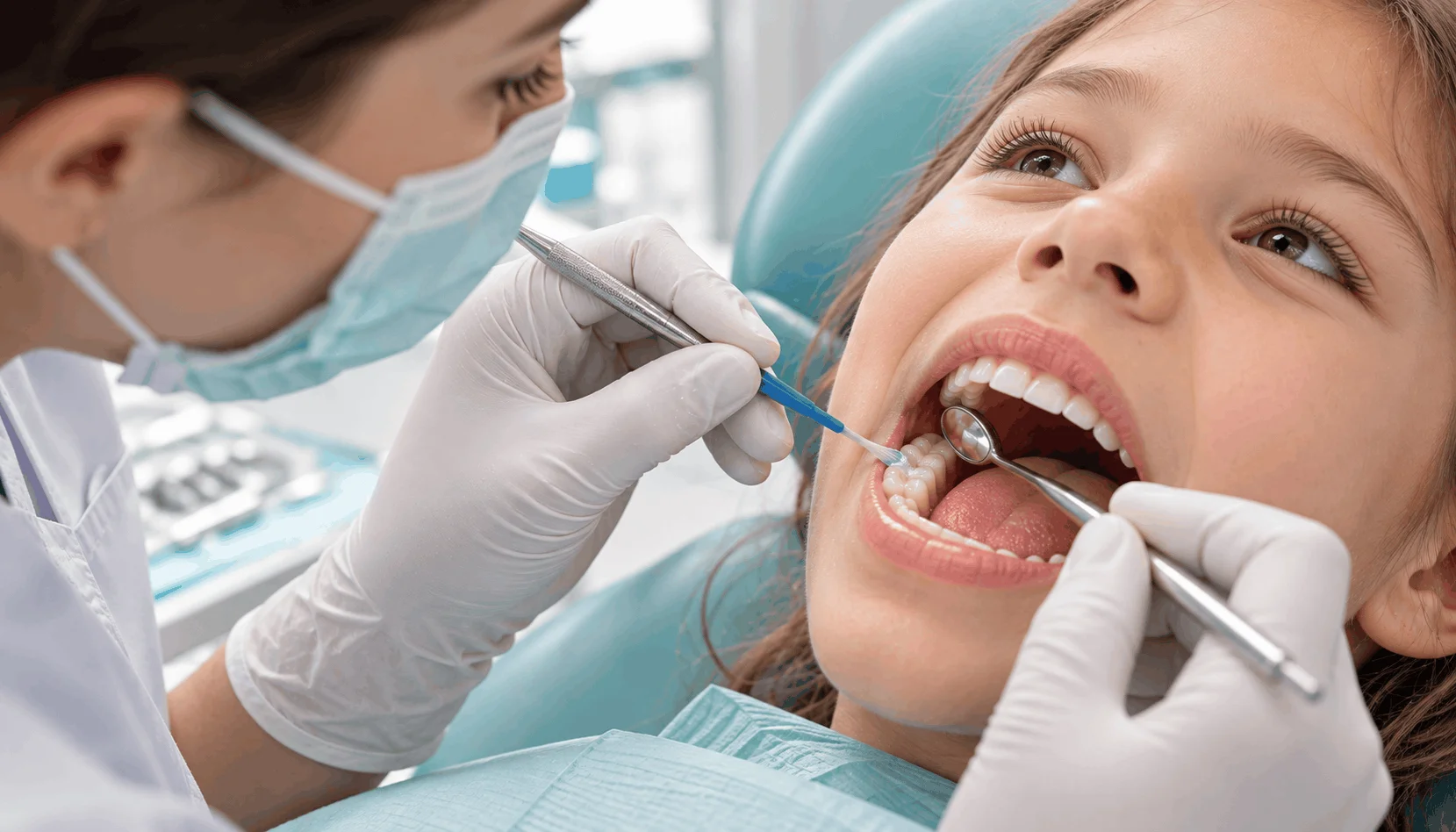
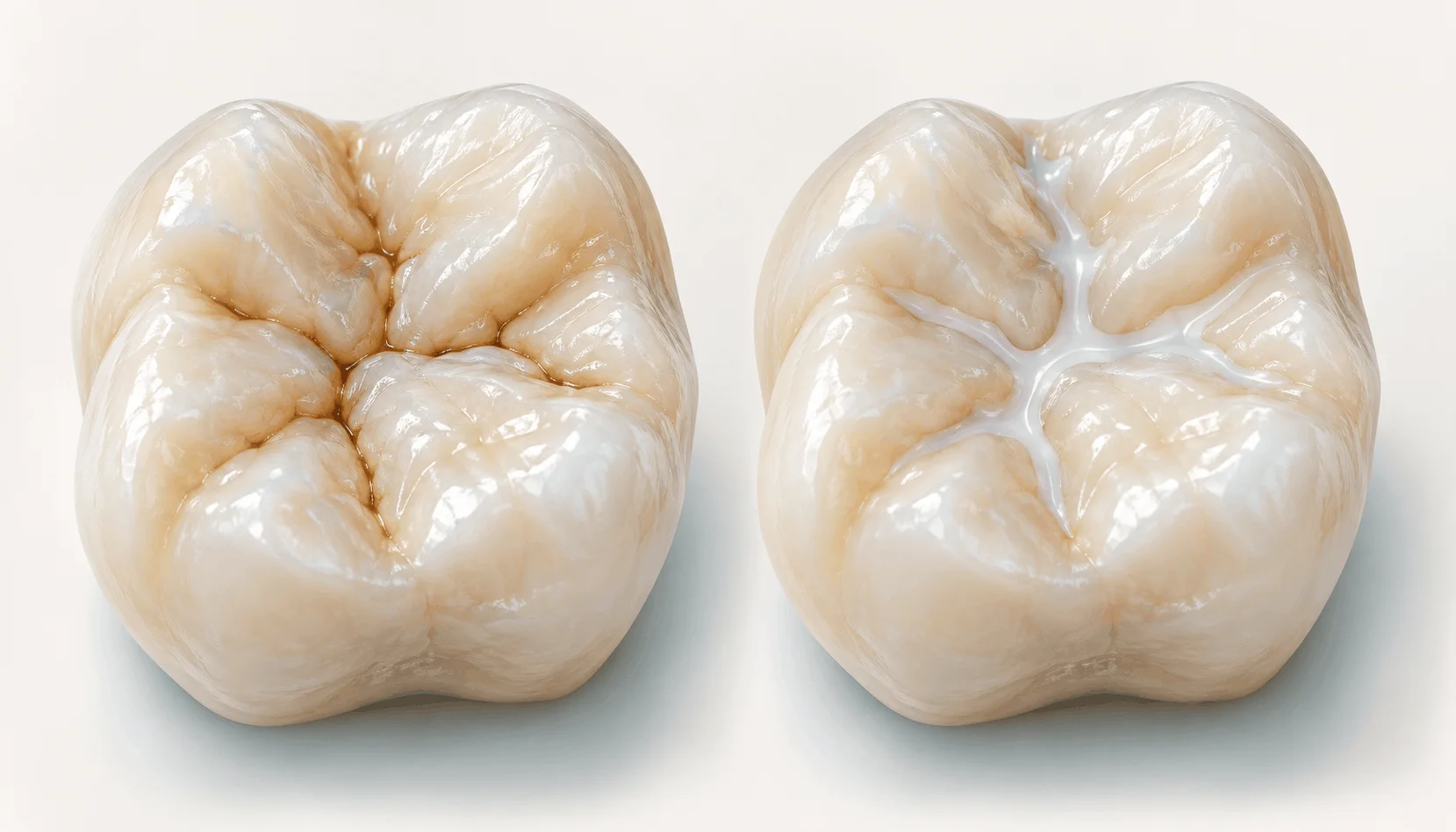
During the procedure, the dentist applies a liquid protective material called a dental sealant to the chewing surface of the tooth. The material flows into the grooves and, once hardened, forms a thin protective layer.
Dental sealants provide several benefits:
- Seal deep grooves. The chewing surface becomes easier to clean.
- Reduce plaque accumulation. Bacteria have fewer opportunities to settle inside the fissures.
- Limit access to nutrients. When the seal is intact, sugars have less access to bacteria trapped beneath the sealed areas.
- Reduce cavity risk. The protective barrier helps prevent decay on the chewing surfaces.
When properly applied, dental sealants can significantly reduce the likelihood of fissure cavities. However, sealants do not protect every tooth surface and cannot replace brushing with fluoride toothpaste.
At What Age Should Children Get Dental Sealants?
The ideal timing depends not only on the child's age but also on tooth eruption, fissure anatomy, and individual cavity risk.
| Age | Teeth to Assess | Key Considerations |
|---|---|---|
| 3–5 years | Primary molars | Sealants may be recommended for deep fissures when indicated |
| 6–8 years | First permanent molars | One of the main periods for preventive sealant application |
| 9–11 years | Permanent premolars | Sealants may be appropriate for pronounced fissures and increased cavity risk |
| 11–14 years | Second permanent molars | Protection of newly erupted permanent chewing teeth |
These age ranges are approximate, as the timing of tooth eruption varies between children.
Important: Parents should not wait for a specific birthday if a permanent molar has already erupted. A dentist may recommend sealing the tooth soon after eruption, once the surface can be adequately isolated from saliva.
Can Dental Sealants Be Applied to Baby Teeth?
Yes. Dental sealants can be used on primary teeth, particularly in children with a high risk of cavities and deep grooves on their chewing surfaces.
The procedure may be beneficial when:
- The child has already experienced tooth decay.
- Primary molars have deep, pronounced fissures.
- Independent oral hygiene is not yet sufficiently effective.
- The teeth are expected to remain in the mouth for several more years.
However, not every baby tooth automatically requires a sealant. The decision is made after examining the enamel and assessing the child's overall risk of developing cavities.
How Are Dental Sealants Applied to Children in Dubai?
At Factor Smile Dental Clinic in Dubai, preventive dental procedures are planned according to the child's age, enamel condition, and stage of tooth eruption.
The standard dental sealant procedure includes several stages:
- Examination and assessment. The pediatric dentist evaluates the fissures and checks for decay that may require a different treatment.
- Cleaning the tooth surface. Dental plaque and debris are removed.
- Isolation from saliva. The dentist creates suitable conditions for the sealant to bond securely to the enamel.
- Enamel preparation. When a resin-based sealant is used, the tooth surface is treated with a special conditioning agent.
- Sealant application. The material is carefully distributed across the fissures, filling the grooves.
- Curing and final inspection. Light-cured sealants are hardened using a dental curing light, after which the dentist checks the coating and bite.
The procedure usually takes only a few minutes per tooth. Local anaesthesia is generally unnecessary when sealing healthy enamel.
What Materials Are Used for Dental Sealants?
Several types of dental sealant materials are used in pediatric dentistry.
| Material | Characteristics | Typical Use |
|---|---|---|
| Resin-based sealant | Good retention when proper isolation is achieved | Fully erupted teeth that can be kept dry |
| Glass ionomer sealant | Releases fluoride and is less sensitive to moisture | Situations where ideal moisture control is difficult |
| Modified sealant materials | Combine selected properties of different material systems | Used according to clinical indications |
The choice of material depends on the stage of tooth eruption, the ability to isolate the tooth, and the child's individual cavity risk.
Dental Sealants vs. Fluoride Treatment: Which Is Better?
These preventive methods do not replace one another because they work differently.
Dental sealants create a physical barrier over the chewing surface of the tooth.
Fluoride treatment helps strengthen enamel and can slow down or arrest early tooth decay.
| Criteria | Dental Sealants | Fluoride Prevention |
|---|---|---|
| Main purpose | Protecting grooves from plaque accumulation | Increasing enamel resistance to decay |
| Area of protection | Mainly chewing surfaces | Different tooth surfaces |
| Protective coating | Yes | Does not create an equivalent physical barrier |
| Use in children | When indicated after tooth eruption | From an early age, using age-appropriate methods and amounts |
| Combined use | Possible | Possible |
For children with an increased risk of cavities, combining dental sealants, fluoride prevention, and proper oral hygiene can provide more comprehensive protection.
How Long Do Dental Sealants Last?
The lifespan of a dental sealant depends on the material, application quality, chewing forces, and individual bite characteristics.
Resin-based sealants may remain effective for several years. However, they can sometimes wear down or partially detach earlier.
For this reason, the condition of the sealant should be checked regularly during preventive dental appointments.
If part of the sealant is lost, the dentist assesses the fissure and restores the protective coating when necessary.
When Are Dental Sealants Not Suitable?
Dental sealants should not be used as a substitute for restorative treatment when a tooth already has a deep cavity.
Possible limitations include:
- Significant destruction of tooth structure.
- The need for comprehensive restorative treatment.
- Inability to achieve adequate isolation for the selected material.
- Tooth eruption conditions requiring a different preventive approach.
However, some early non-cavitated carious lesions may be suitable for sealing. The decision depends on the activity and depth of the lesion.
Where Can Children Get Dental Sealants in Dubai?
Dental sealants are an effective method of cavity prevention for children, particularly during the eruption of permanent molars. Protecting deep grooves at the appropriate time helps reduce the likelihood of tooth decay and preserve healthy tooth structure.
At Factor Smile Dental Clinic in Dubai, parents can arrange a pediatric dental consultation, have their child's primary and permanent teeth assessed, and discuss an individual preventive dental care plan.
Book a consultation at Factor Smile to find out whether your child would benefit from dental sealants and receive personalised recommendations for protecting their teeth against cavities.
Frequently Asked Questions