Can Clear Aligners Improve Not Only Your Smile but Also Your Quality of Life?
Yes, orthodontic treatment with clear aligners can affect more than just the appearance of your smile. Correcting tooth position and certain bite problems may make oral hygiene easier, reduce the risk of uneven tooth wear, improve conditions for chewing, and create a better foundation for future dental treatment. Because aligners are removable, they also tend to place fewer restrictions on diet and everyday activities compared with fixed orthodontic appliances. However, clear aligners are not a universal solution for every bite problem: the outcome depends on accurate diagnosis, proper treatment planning, and patient compliance with the recommended wear schedule.
Are Clear Aligners Only an Aesthetic Treatment?
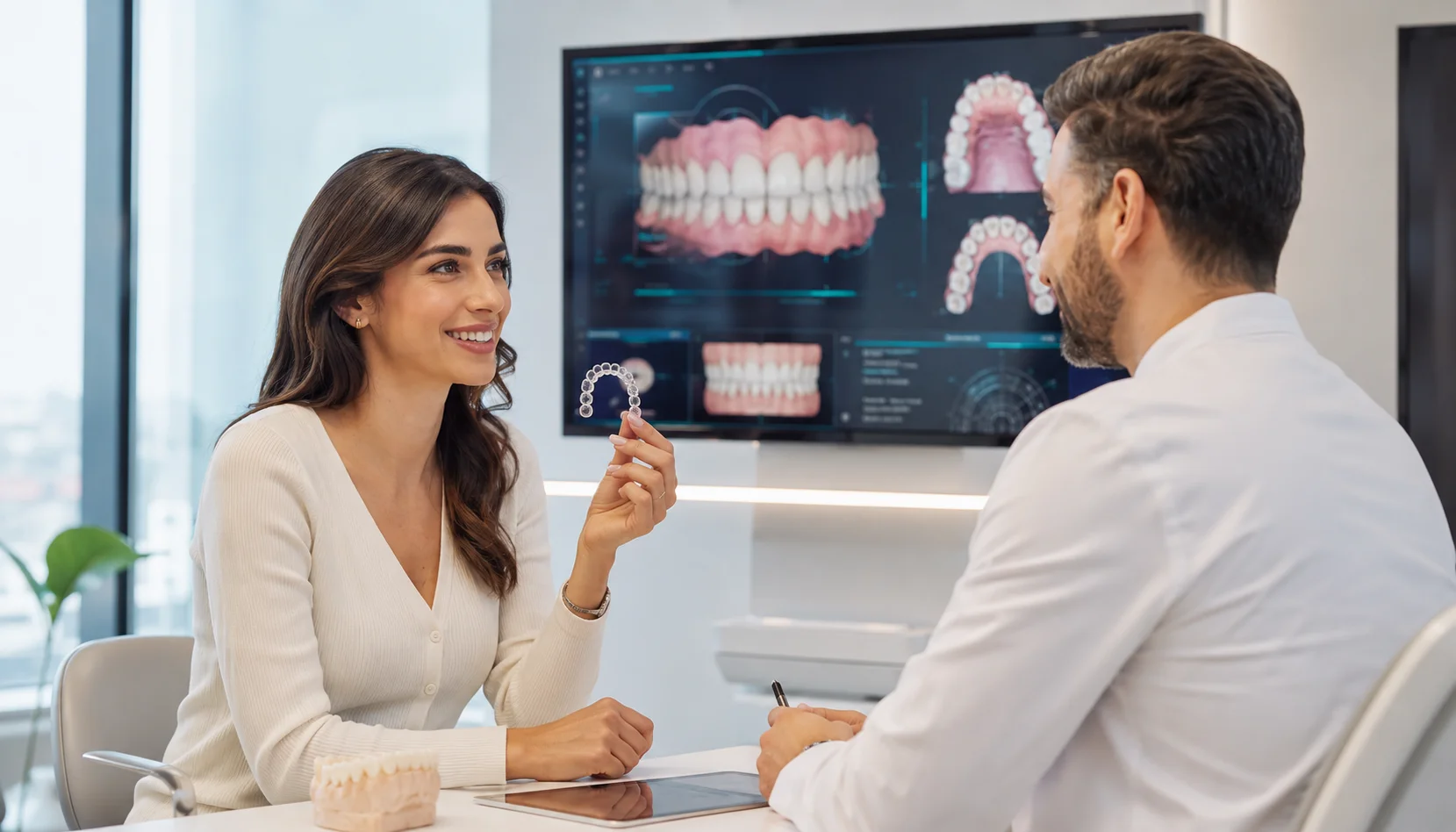
Clear aligners are transparent, removable orthodontic trays that gradually move teeth into carefully planned positions.
Patients often begin treatment because of crooked teeth or because they want a more harmonious smile. However, orthodontics involves more than aesthetics. Tooth position can influence how chewing forces are distributed, how easily interdental areas can be cleaned, and how stable future dental restorations may be.
For this reason, when clinically indicated, orthodontic treatment may provide both aesthetic and functional benefits.
Can Straighter Teeth Make Daily Oral Hygiene Easier?
Crowded or rotated teeth can create difficult-to-reach areas where dental plaque accumulates more easily.
After the dental arch has been aligned, patients may find it easier to:
- clean tooth surfaces effectively with a toothbrush;
- use dental floss or interdental brushes;
- control plaque between the teeth;
- maintain healthy gums.
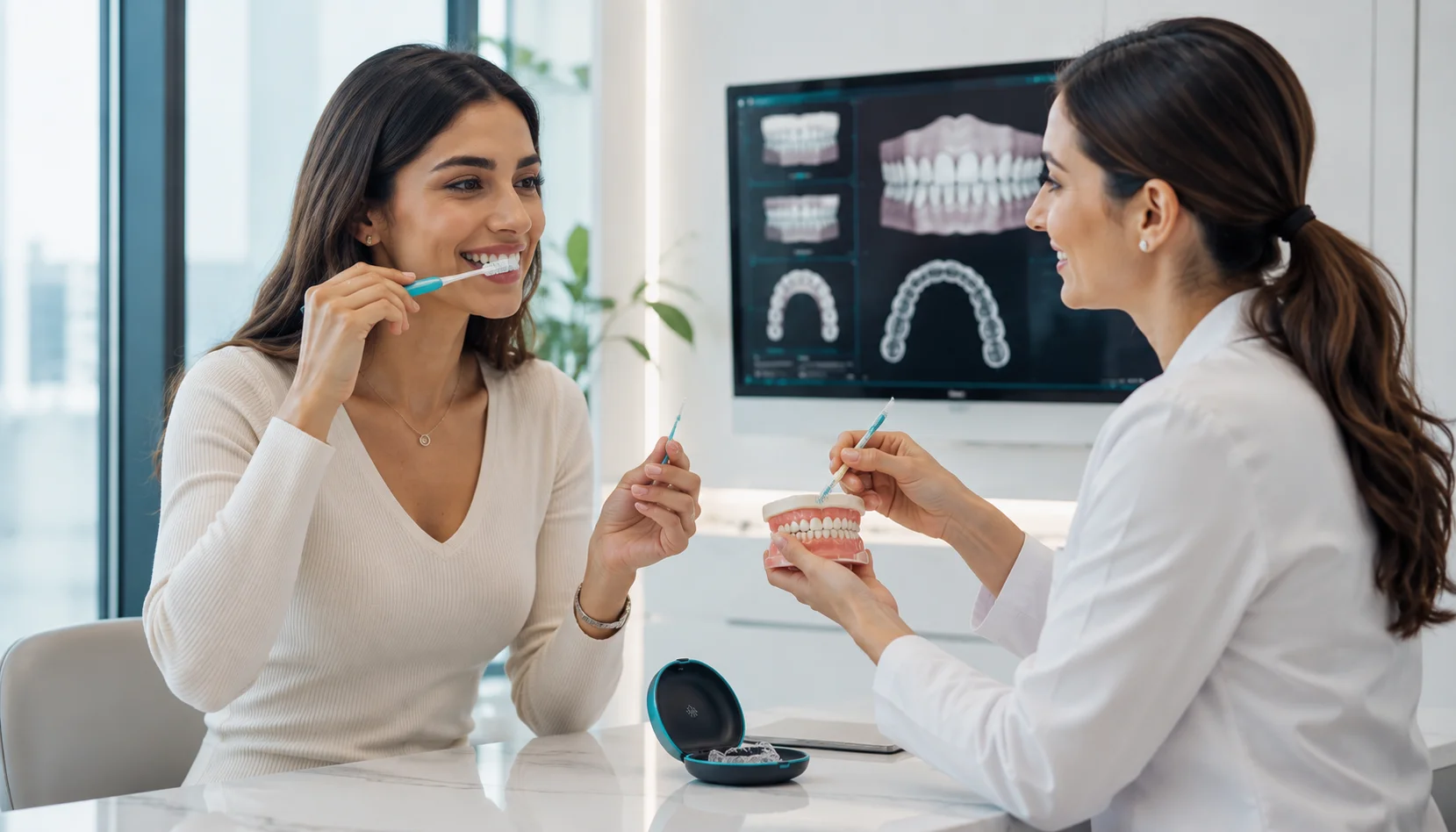
However, clear aligners themselves do not protect against tooth decay or gum disease. Good oral hygiene is particularly important during treatment because the trays are worn directly over the teeth and must also be kept clean.
How Can Clear Aligners Affect Chewing Function?
The bite determines how the upper and lower teeth contact each other. When these contacts are uneven, individual teeth may be exposed to excessive forces.
In appropriate cases, orthodontic treatment can change tooth position and improve the pattern of occlusal contacts.
This may help to:
- distribute chewing forces more evenly;
- reduce undesirable contacts between individual teeth;
- create more favorable conditions for chewing;
- prepare the dental arches for future prosthetic treatment or dental implants.
However, chewing comfort depends on many factors, so any functional improvement should be assessed individually.
Can Clear Aligners Reduce Tooth Wear?
Improper contacts between teeth can be one of the factors contributing to excessive enamel wear, tooth chipping, and overloading of individual restorations.
If tooth position is contributing to the problem, orthodontic correction may help improve the distribution of forces.
However, tooth wear may also be associated with other factors, including:
- bruxism or teeth grinding;
- acid erosion;
- individual enamel characteristics;
- missing teeth;
- the condition of existing dental restorations.
For this reason, an orthodontist evaluates not only tooth alignment but the entire dentofacial system before treatment.
How Comfortable Is Everyday Life With Clear Aligners?
One of the main differences between clear aligners and braces is that the trays can be removed for short periods.
This can make everyday routines easier: patients can remove the aligners before eating, clean their teeth normally, and then put the trays back in.
| Everyday Situation | Clear Aligners |
|---|---|
| Eating | Trays are removed |
| Brushing teeth | Teeth can be cleaned without an appliance attached |
| Appearance | Transparent trays are relatively discreet |
| Sports | Usually cause few significant restrictions |
| Speaking | Speech usually normalizes after an adaptation period |
| Business meetings | Aligners remain relatively discreet |
Comfort also depends directly on patient compliance. To achieve predictable tooth movement, aligners must be worn for the number of hours per day recommended by the orthodontist.
Do Clear Aligners Affect Speech?
During the first few days after starting a new aligner, some patients may notice slight changes in the pronunciation of certain sounds. This happens because the tongue needs time to adapt to the new surface around the teeth.
For most patients, speech gradually returns to normal as they adapt.
If speech changes persist or the aligner causes significant discomfort, the orthodontist should check that the tray fits correctly.
Can Clear Aligners Help With TMJ Problems?
It is particularly important to avoid universal promises in this area.
Pain, clicking, or restricted movement of the temporomandibular joint (TMJ) can have many different causes. Orthodontic treatment alone is not a guaranteed treatment for temporomandibular disorders.
If a patient has these symptoms, additional assessment may be required before orthodontic treatment begins. The orthodontist should consider the condition of the joints and chewing muscles when planning tooth movement.
Clear aligners may therefore be part of a comprehensive treatment plan for selected patients, but they should not be considered a standalone solution for TMJ pain or clicking.
How Does Digital Planning Affect the Result?
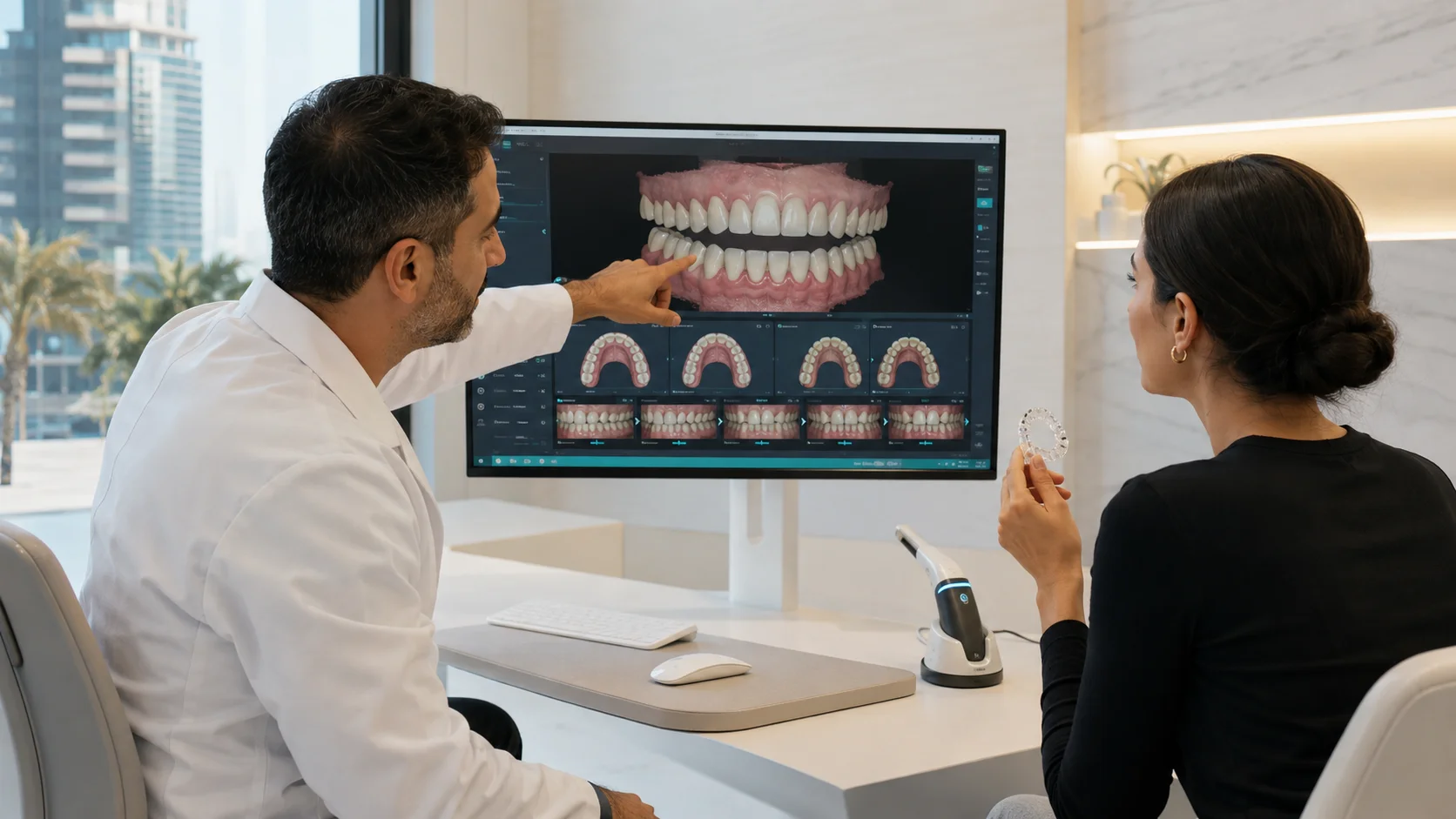
Modern clear aligner treatment begins with comprehensive diagnostics.
Dental clinics in Dubai may use:
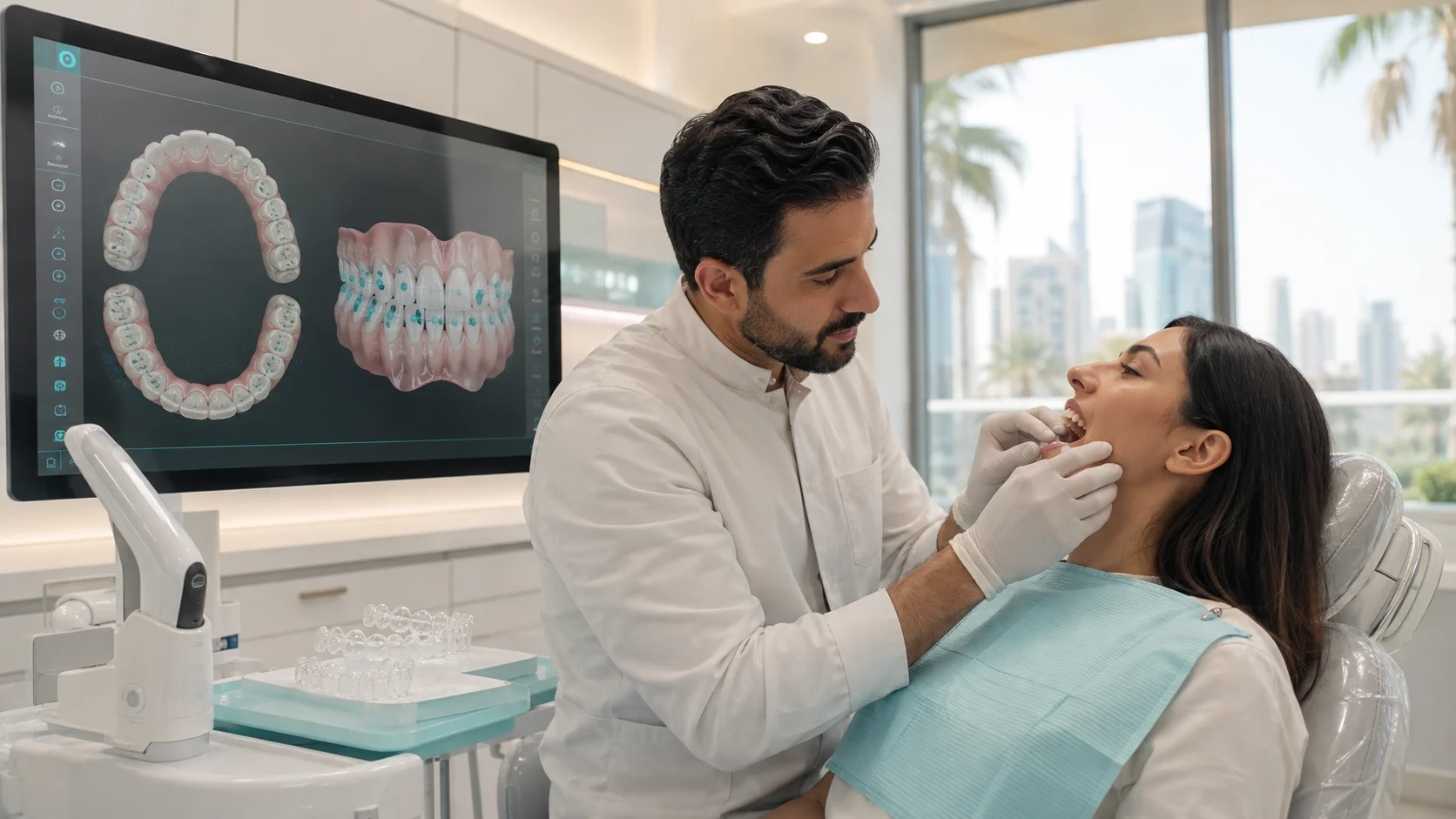
- intraoral 3D scanning;
- digital dental photography;
- radiographic diagnostics;
- CBCT when clinically indicated;
- digital simulation of tooth movement;
- analysis of the bite and contacts between teeth.
Using this information, the orthodontist plans the sequence of tooth movements and evaluates which changes can realistically be achieved with clear aligners.
Digital visualization is valuable for treatment planning, but it does not replace clinical diagnosis and should not be considered a guarantee of the final result.
When Are Clear Aligners Particularly Convenient for Adults?
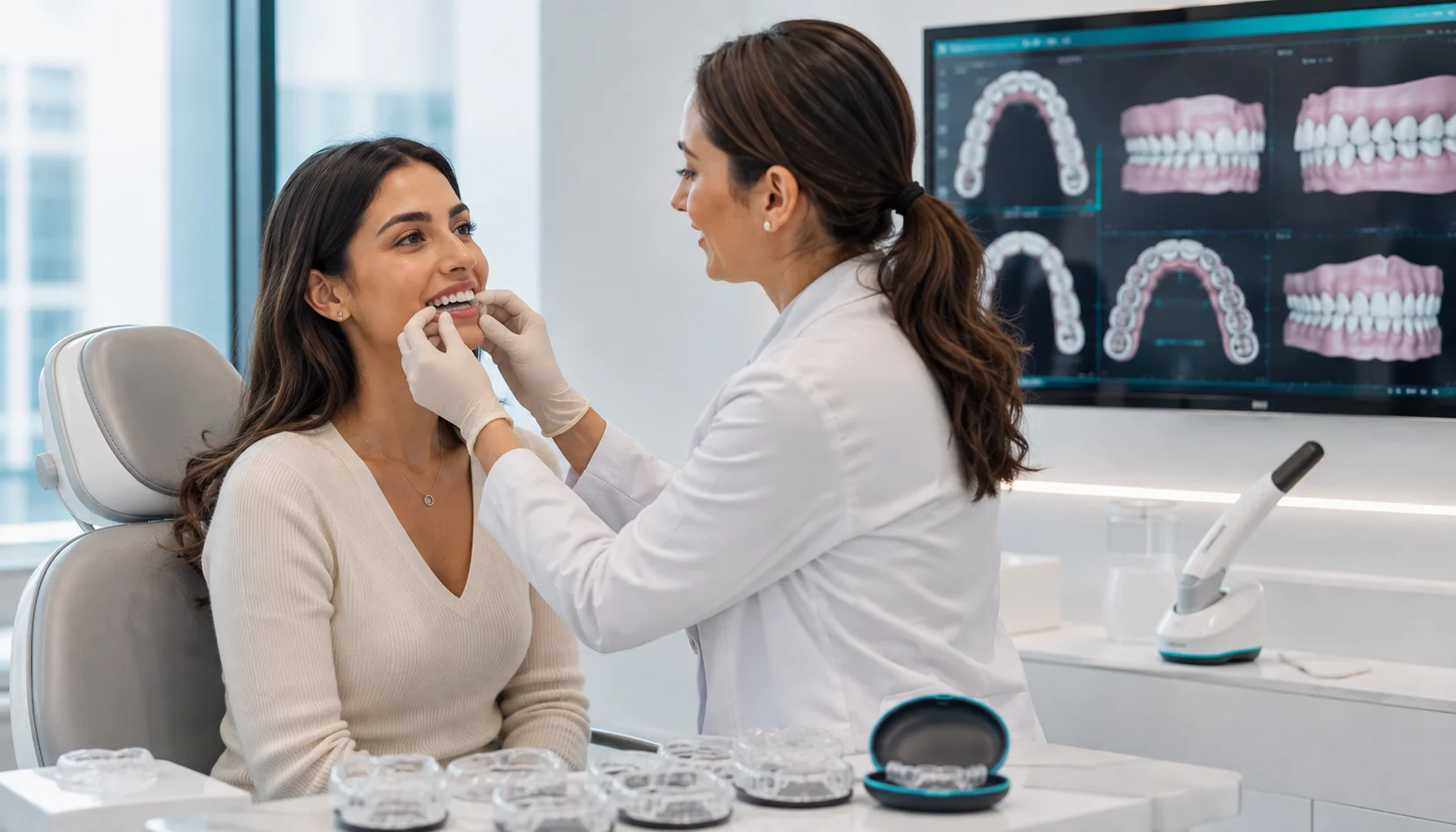
For adult patients, the ability to combine orthodontic treatment with work, travel, and social activities can be an important consideration.
Clear aligners may be a convenient option because of:
- their discreet appearance;
- the ability to remove the trays while eating;
- the absence of metal wires;
- easier access for routine oral hygiene;
- the ability to plan follow-up appointments in advance;
- digital monitoring of treatment stages.
For active residents of Dubai who frequently combine work, business meetings, travel, and social commitments, these features may have practical value.
When Are Clear Aligners Not Suitable for Everyone?
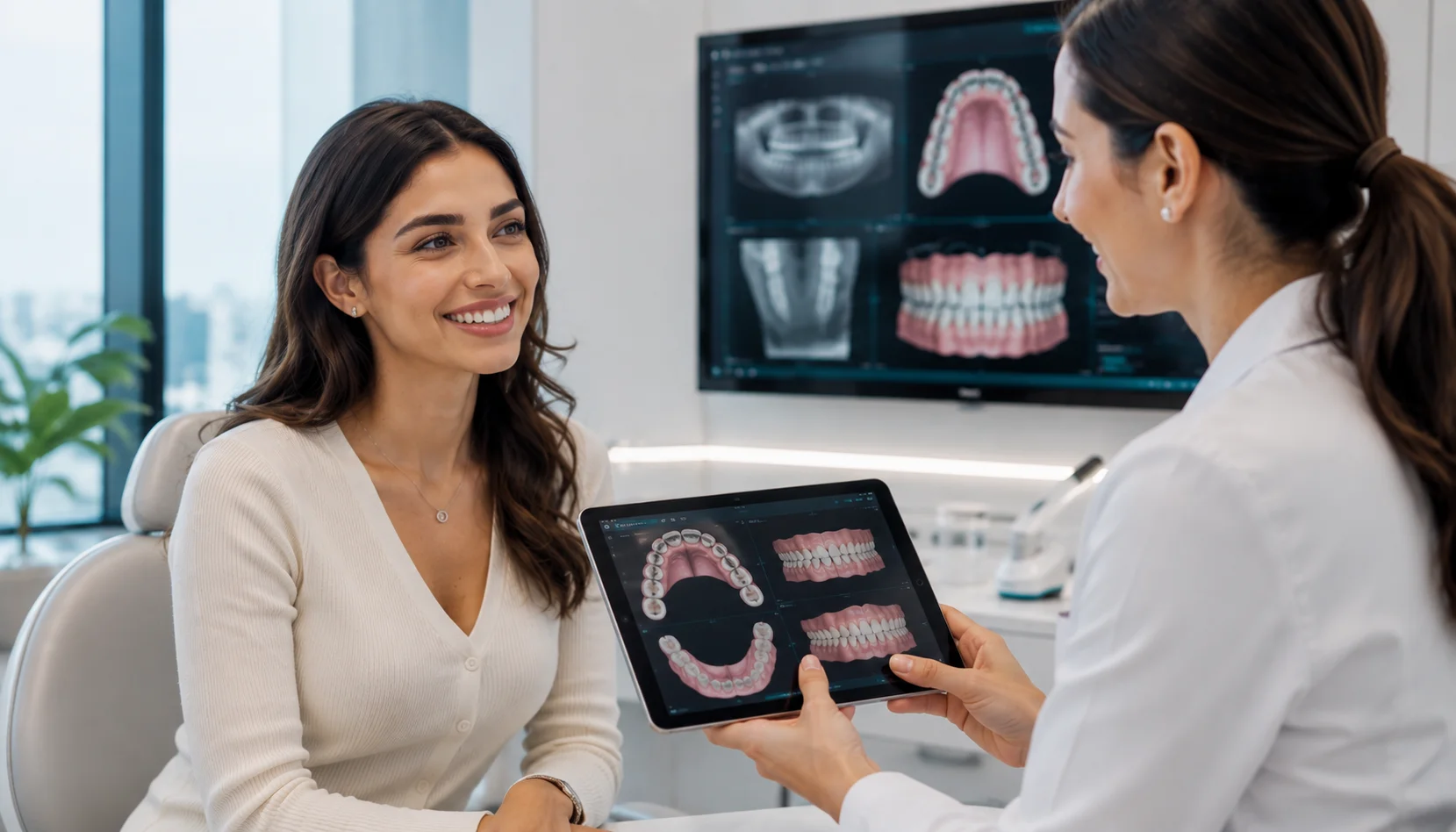
Despite the broad possibilities of modern orthodontics, transparent aligners are not the optimal treatment method for every patient.
The choice of treatment may depend on:
- the complexity of the bite problem;
- the type of tooth movement required;
- the condition of the bone and gums;
- the presence of crowns, implants, or other dental restorations;
- the need for additional orthodontic components;
- the patient's ability to follow the recommended wear schedule.
In complex cases, the orthodontist may recommend braces, combined treatment, or another orthodontic approach.
Clear aligners can do more than change the appearance of your smile; they can also make orthodontic treatment easier to integrate into everyday life. With an accurate diagnosis and appropriate treatment plan, aligning the teeth may improve conditions for oral hygiene, correct undesirable tooth contacts, and create a more stable foundation for future dental care. However, the actual functional benefits always depend on the patient's individual dental and bite conditions.
If you are considering clear aligner treatment and would like to understand what changes it may provide in your particular case, contact Factor Smile in Dubai. Our orthodontist will assess your teeth and bite, perform the necessary diagnostics, and develop an individualized digital treatment plan that takes aesthetics, function, and your lifestyle into account.
Frequently Asked Questions