
Tooth sensitivity: causes, symptoms, and treatment options

Do you feel a sharp discomfort from cold water, sweets, or even a light brush touch? You may have hypersensitivity of your teeth, a problem that millions of people around the world face. At the Factor Smile Clinic (Dubai) We know how to properly diagnose, treat, and— most importantly, prevent enamel hypersensitivity. We tell you why this happens and how to return comfort without pain.
What is tooth sensitivity?
Hypersensitivity of the teeth (hyperesthesia) is a painful reaction of the tooth to external stimuli: cold, hot, sour, sweet, and sometimes even to the touch of air or a toothbrush. Normally, dentin (the main tooth tissue) is protected by enamel, and the roots are protected by gum. If this protection is disrupted, external stimuli directly affect the nerve endings, causing a painful response.
Key symptoms:
- Acute, short-term pain when eating and drinking;
- Discomfort when inhaling cold air through the mouth;
- Pain during brushing your teeth;
- Reaction to sour or sweet food.
Sensitivity can affect one tooth or several at once, be temporary or permanent. It is important to distinguish it from the symptoms of caries, pulpitis or cracks, which is why a dentist's consultation is needed.
Causes of tooth sensitivity
The causes of hypersensitivity can be both external and internal. At Factor Smile, we always start with a diagnosis — only if we know the exact cause can we choose an effective treatment.
The most common causes are:
- Enamel abrasion — due to aggressive brushing, improper paste, overbite, or bruxism (gnashing of teeth);
- Root baring — due to gum drooping, periodontal disease, or individual anatomical features;
- Microcracks in enamel — occur after bleaching, injury, or temperature changes;
- Frequent use of acidic foods — lemons, soda, vinegar, berries destroy the protective layer of enamel;
- Teeth whitening without prior preparation;
- Caries, fillings, cracks — hidden foci of enamel and dentine destruction often manifest as local sensitivity.
Sensitivity after braces and aligners
Orthodontic treatment is an important step towards a smooth and healthy smile. However, many patients, especially adolescents and adults with an already formed bite, experience increased sensitivity of the teeth during correction. This is due to the physiological process of moving teeth and changing the load on periodontal ligaments and enamel.
When using Damon braces or transparent aligners (for example, Invisalign, FlexiLigner), there is a gentle but constant pressure on the teeth. This pressure is necessary to equalize them, but may be accompanied by:
- increased reaction to cold and hot food;
- pain when biting in certain areas;
- exposure of the cervical region of the teeth (including due to gum recession);
- sensitivity when brushing teeth or using an irrigator.
Such sensations are usually temporary and controlled. They occur more often in the first weeks after the start of treatment or when the arch / aligner changes and disappear as the body adapts to the new position of the teeth.
How do we diagnose sensitivity in Factor Smile
Proper and timely diagnosis is the key to effective and safe treatment. Hypersensitivity of teeth can be a symptom of a variety of conditions: from superficial thinning of the enamel to deep latent carious lesions or malocclusion. At the Factor Smile clinic, we approach diagnosis comprehensively and technologically in order to accurately identify the source of pain and find the optimal solution.
Dental sensitivity diagnosis include:
Magnification inspection (magnifying glass, microscope)
It allows you to identify microcracks, erosions, demineralization zones, and untreated plaque in the neck area. We do not rely solely on visual inspection — magnifying technology helps to see the problem at the earliest stages.
Tactile, temperature and air tests
Classic diagnostic tests to determine the dentin response and assess the depth of irritation. With their help, the doctor can understand whether the sensation is associated with hyperesthesia, inflammation of the pulp or exposure of the neck of the tooth.
3D scanning and cone beam computed tomography (CBCT)
If latent caries, gum recession, periapical changes are suspected, or if orthopedic/orthodontic evaluation is required, we perform CT and dental scans. This allows you to see the structure of the tooth and surrounding tissues in volume and detect pathologies that are inaccessible during a routine examination.
Assessment of bite and distribution of chewing load
Malocclusion, increased pressure on individual teeth, and bruxism are common causes of sensitivity, especially in the lateral areas. We use articulation papers, digital sensors, and jaw position photofixing to analyze the contacts.
Checking previously installed restorations
Sensitivity may occur due to a leaky seal, unsuitable material, or crown fitting defects. The doctor carefully evaluates each restoration in terms of its edge fit and correct shape.
The diagnostic procedure at Factor Smile is not just a "quick checkup." This is a careful study of the entire clinical picture, with a discussion of lifestyle, habits, hygiene and nutrition levels. We are working ahead of the curve — not just to remove the symptom, but to eliminate the root cause and protect your smile for many years to come.
Ways to treat tooth sensitivity
Effective treatment of hypersensitivity begins with an accurate diagnosis. At the Factor Smile Clinic, we identify the root cause — whether it's tooth decay, gum recession, microcracks, or aggressive brushing — and create a personalized treatment plan. The approach can be complex, especially if several factors are involved at once.
1. Professional enamel remineralization
The most sought-after method for sensitivity after bleaching, orthodontic treatment, and in the initial stages of erosion. We use gels and varnishes based on fluorine, calcium, hydroxyapatite and nanoparticles that seal the dentine channels and strengthen the enamel structure. It is carried out by courses in the clinic and can be supplemented with home use of mouthguards with remineralizing compounds.
2. Laser sensitivity treatment
Laser therapy is an innovative way to eliminate hyperesthesia painlessly. The laser acts on exposed areas of dentin, coagulates and "seals" sensitive tubules. Suitable for adults and children, especially for sensitivity after removal of braces, enamel injuries or wedge-shaped defects. The effect occurs after the first session and lasts for several months.
3. Tissue repair with filling materials or veneers
If the sensitivity is caused by caries, cracks, or erosion of the enamel, we repair the damaged area with a composite seal or aesthetic veneer. Modern materials completely mimic the tooth structure, protect the dentine and improve the appearance. This approach is also applicable for sensitivity in the neck area.
4. Orthopedic treatment
If there is severe tooth wear, multiple chipping, or generalized erosion, it may be necessary to install ceramic crowns, inlays, or veneers. This completely covers sensitive areas, restores chewing function and aesthetics. In Factor Smile, such designs are digitally imprinted, which ensures an accurate fit and durability.
5. Mouthguards for bruxism and bite correction
If the reason for sensitivity is bruxism (nocturnal clenching or gnashing of teeth), we manufacture individual protective mouthguards. They take the load off the teeth and prevent the enamel from being erased. Bite analysis is also performed to determine and correct improper load distribution, which often provokes neck baring and gum recession.
Each of these areas can be part of a complex therapy. We do not just eliminate the symptoms, but solve the problem in the long term, relying on diagnostic data and modern scientific protocols.
What can I do at home?
If you notice the first signs of sensitivity, try:
- use a paste for sensitive teeth (for example, with potassium nitrate or arginine);
- avoid acidic drinks and thermal fluctuations;
- do not brush your teeth with too hard a brush;
- do not whiten your teeth without a doctor's approval;
- visit a dentist — self-medication can lead to complications.
How we work with patients at Factor Smile
Tooth sensitivity is not a verdict. At Factor Smile, we don't just treat the symptoms, but eliminate the cause, improving the quality of life of our patients. Comfort is at the heart of our philosophy.
What will you get:
- A cozy atmosphere and attention from the first visit;
- Modern equipment — from a microscope to a laser;
- Personalized approach — we take into account the patient's medical history, lifestyle and goals;
- An international team of doctors with experience in Europe, the UAE and Russia;
- Flexible schedule, convenient location in Dubai and affordable diagnostics;
- Recommendations for home care — so that the result is preserved for a long time.
Make an appointment — we'll help you forget about the pain.
If you are familiar with hypersensitivity of the teeth, do not wait until it develops into a serious problem. At Factor Smile, we know how to restore your comfort, health, and confidence in your smile.
Make an appointment for a consultation online or by phone — we are always happy to help you maintain dental health for many years to come.

Book a consultation.
Don't put off taking care of your smile.
Contact us by phone
+971 58 524 4003
WhatsApp
Online booking
Special offer!
Free dental consultation!
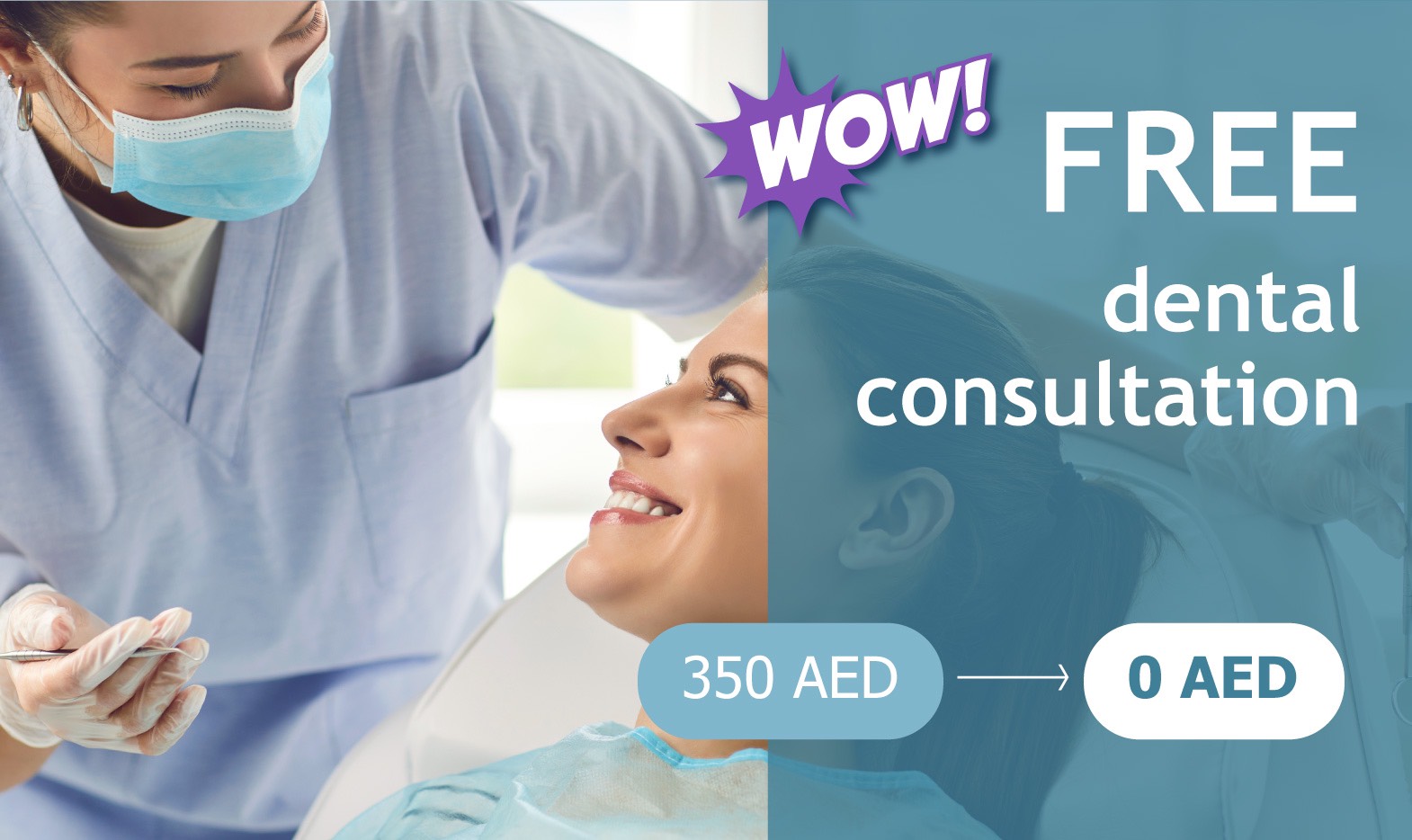
The Factor Smile clinic has a special offer for new patients - a free consultation with a dentist. Depending on the problem you are contacting us with, you can get a consultation from the following specialists: therapist, surgeon, orthopedist, orthodontist.
CONSULTATION INCLUDES:
-

Professional examination by a highly qualified doctor.
-

Treatment plan
Based on the results of the examination, an individual plan will be created for you with detailed information on the stages of treatment and an indication of the current cost.
Book a consultation.
Don't put off taking care of your smile.
Contact us by phone
+971 58 524 4003
WhatsApp
We use cookies!
We use cookies to make the site convenient to use. More detailed information can be found in privacy policy.Accept