
Can Artificial Intelligence Detect Dental Disease Before Symptoms Appear?
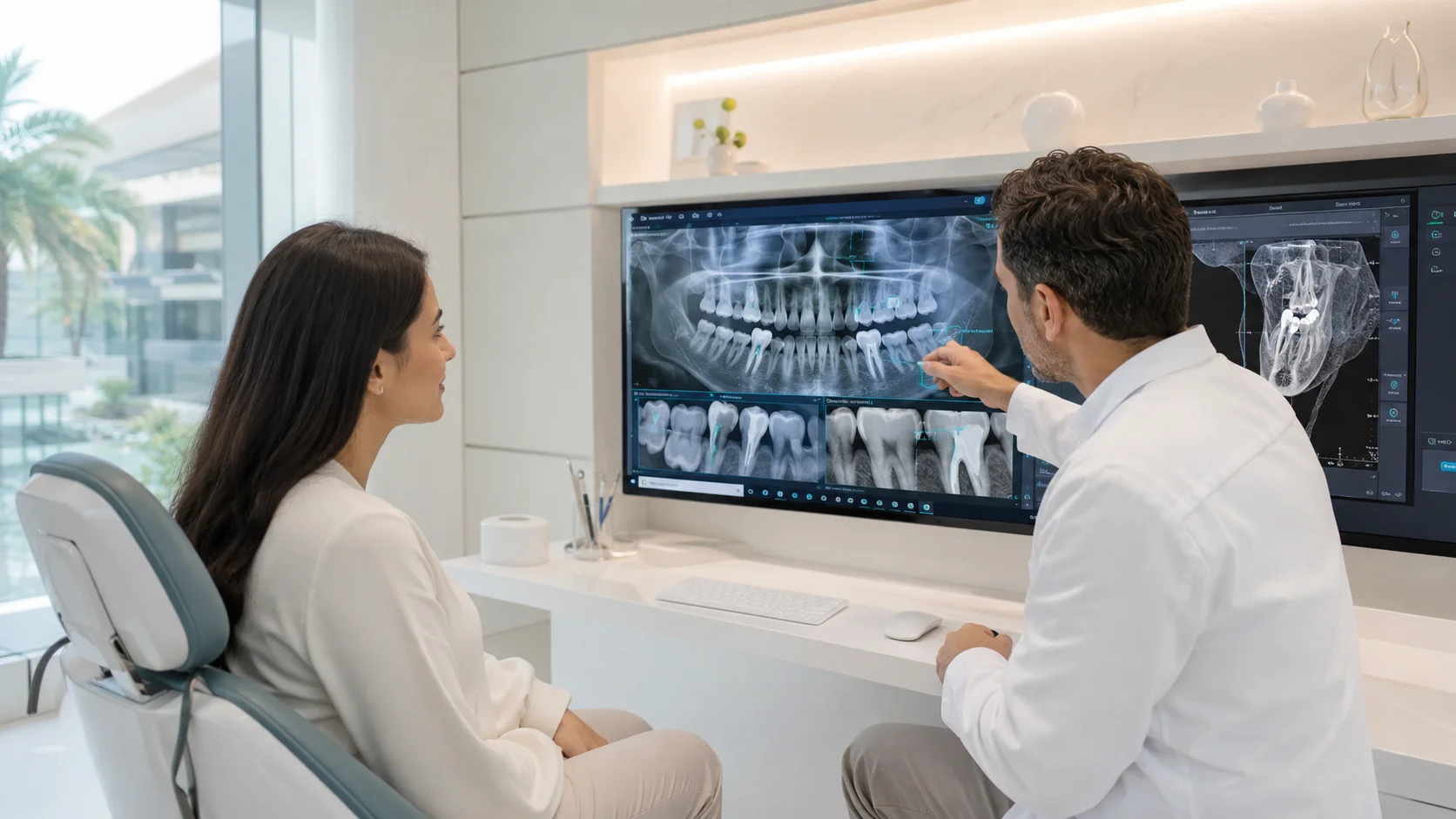
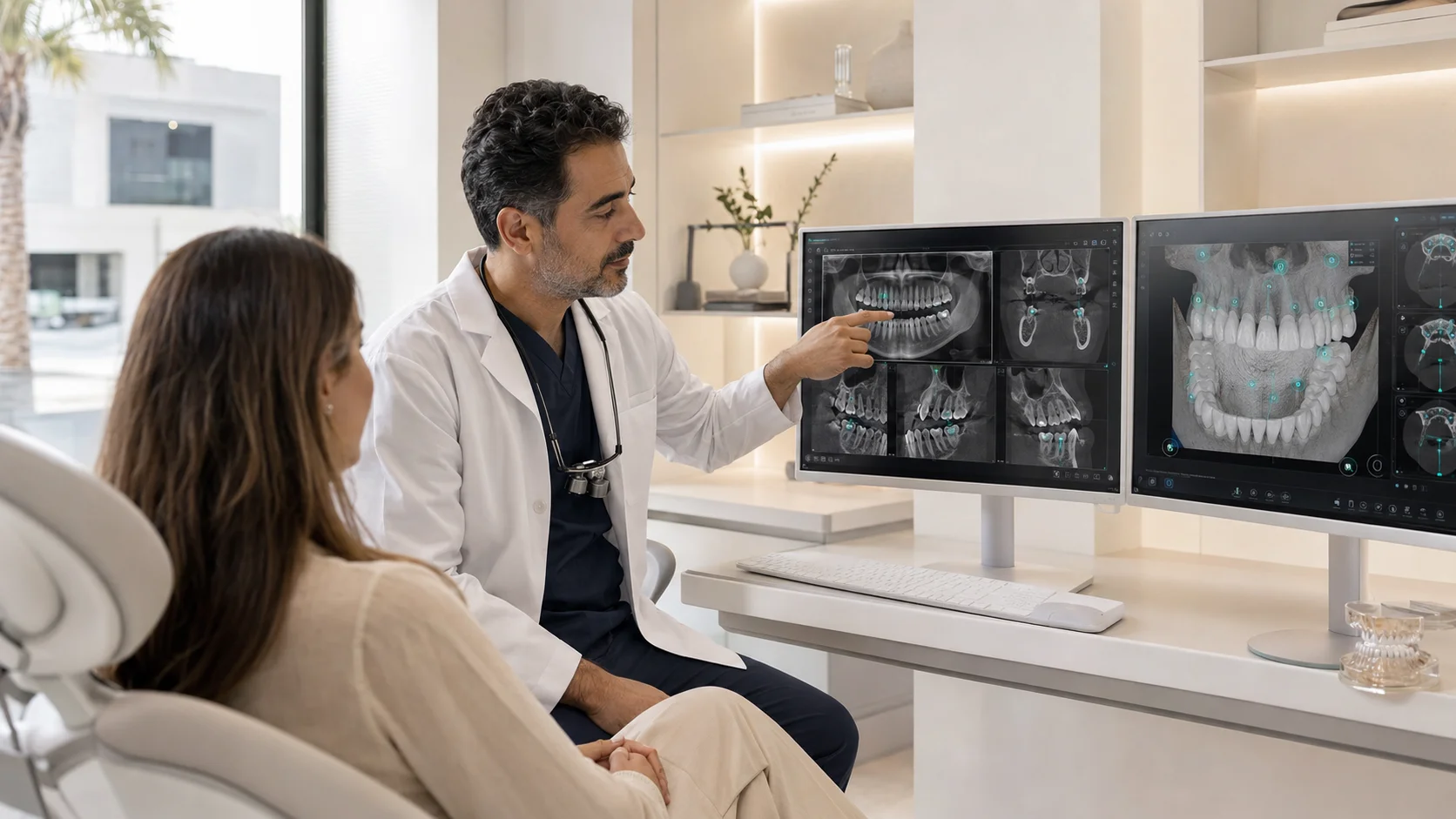
Yes, artificial intelligence systems can help dentists detect certain changes on dental X-rays before pain or other noticeable symptoms appear. AI algorithms can analyze digital images and highlight areas that may correspond to early tooth decay, inflammation around a tooth root, changes in bone tissue, or other dental problems. However, AI does not make a final diagnosis on its own: the results must be evaluated by a dentist together with the clinical examination, the patient's symptoms, and additional diagnostic findings. In modern dental clinics in Dubai, these technologies may be used as an additional tool for digital dental diagnostics.
How Is Artificial Intelligence Used in Dentistry?
Artificial intelligence in dentistry refers to software algorithms trained to analyze medical images and recognize specific patterns.
Depending on the technology being used, an AI system may analyze:
- intraoral dental X-rays;
- panoramic dental X-rays;
- certain CBCT data;
- digital dental photographs;
- other diagnostic images.
After analyzing an image, the software may highlight a suspicious area and bring it to the dentist's attention.
The main advantage of this approach is not replacing the dentist, but providing an additional layer of diagnostic review.
Can Dental Disease Develop Without Pain?
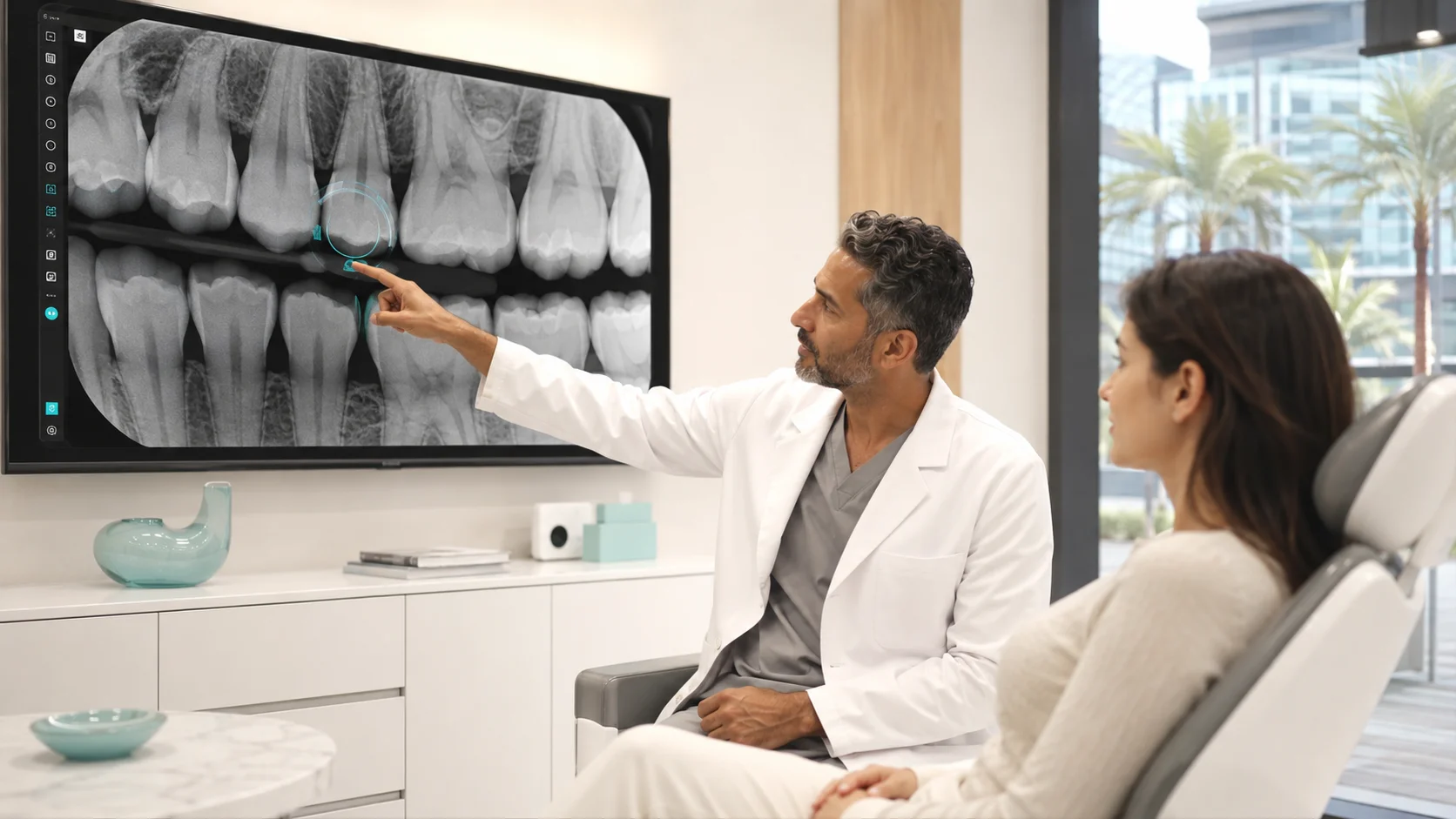
Yes. Many dental conditions can develop with few or no noticeable symptoms during their early stages.
The absence of pain does not necessarily mean that the teeth and surrounding tissues are completely healthy.
Conditions that may initially develop without obvious symptoms include:
- early tooth decay;
- cavities between adjacent teeth;
- recurrent decay around an existing restoration;
- inflammatory changes around a tooth root;
- periodontal disease;
- gradual loss of supporting bone.
This is why preventive dental examinations remain important even when a patient has no complaints.
Can AI Detect Early Tooth Decay?
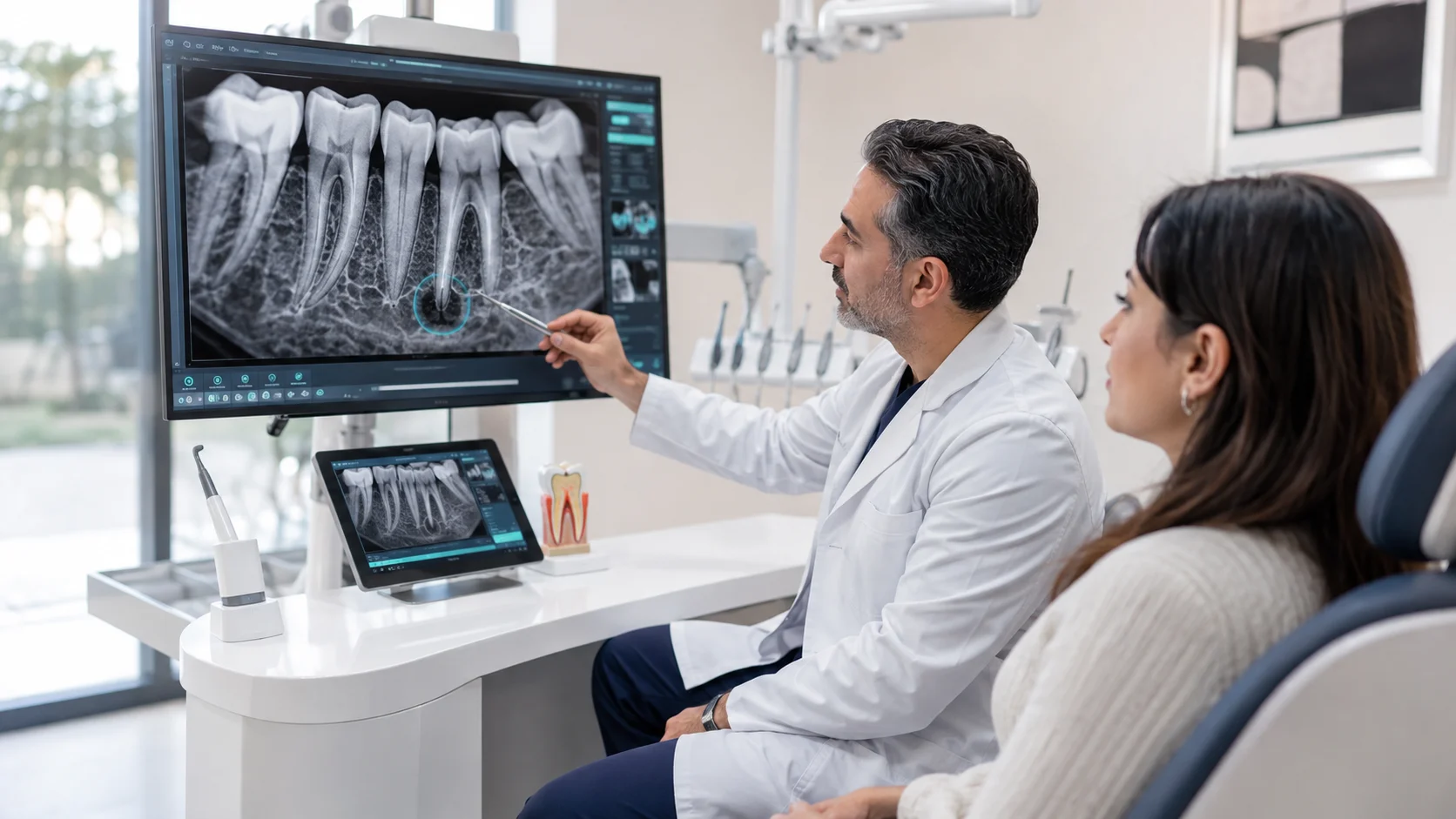
One of the most promising applications of artificial intelligence in dentistry is the analysis of dental X-rays for signs of caries.
Decay developing between adjacent teeth can be particularly difficult for a patient to notice. During the early stages, there may be no pain or sensitivity.
An image-analysis algorithm may draw the dentist's attention to changes in tissue density within a suspicious area.
The dentist then evaluates the area independently and determines:
- whether tooth decay is actually present;
- how deep the lesion appears to be;
- whether treatment is necessary;
- whether monitoring and preventive measures may be sufficient.
AI can therefore assist with image analysis, but the clinical decision remains the responsibility of the dentist.
Can Artificial Intelligence Detect Inflammation Around a Tooth Root?
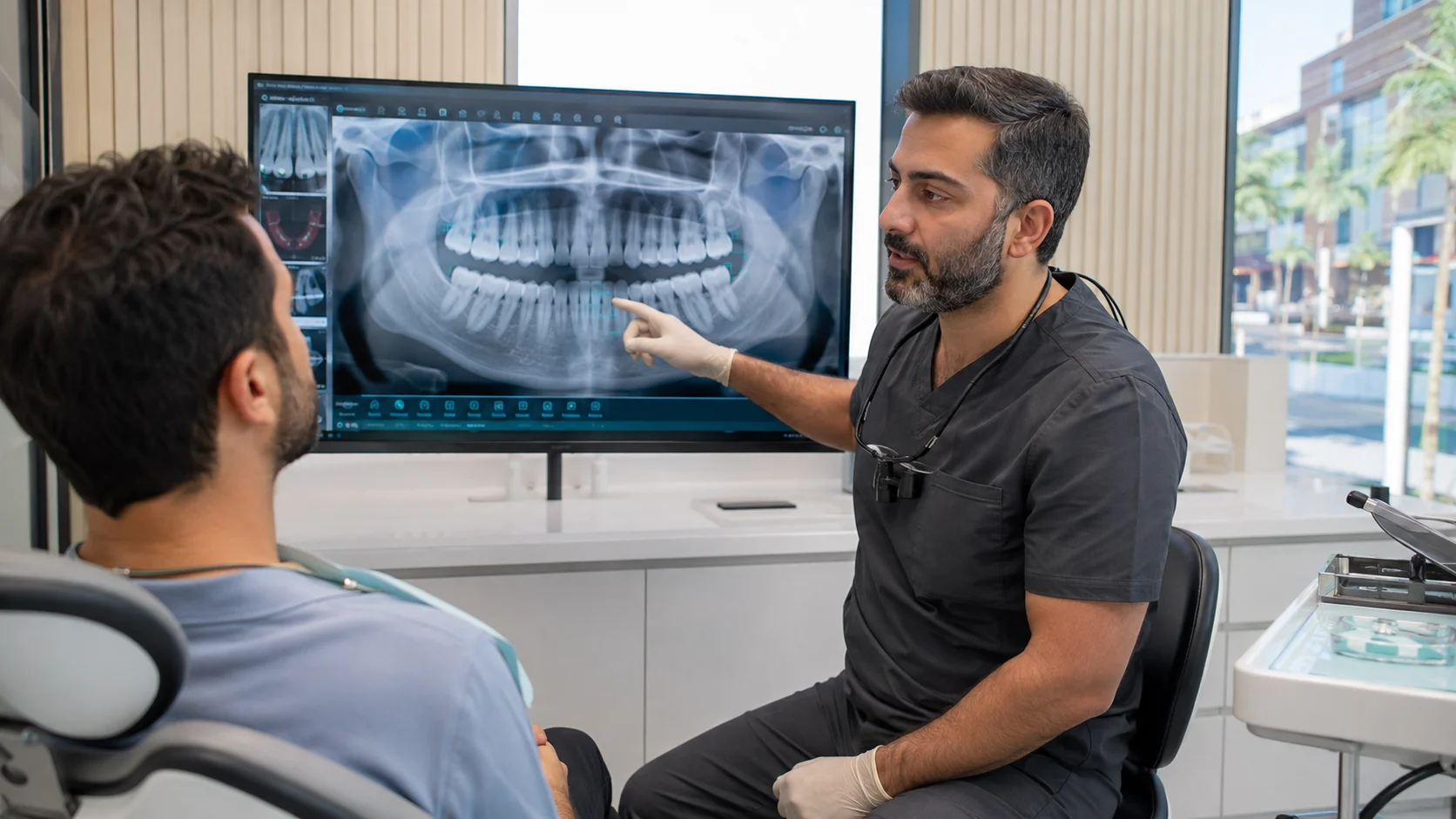
Inflammatory changes around the tip of a tooth root are sometimes discovered incidentally during a radiographic examination.
The patient may have little or no significant pain.
An AI system may highlight areas of altered bone around the roots and help the dentist identify regions that require closer examination.
However, similar radiographic appearances can occur in different conditions. Establishing the diagnosis may therefore require:
- a clinical examination;
- pulp vitality or sensibility testing;
- targeted dental X-rays;
- comparison with previous images;
- CBCT when clinically indicated.
The final interpretation should always be performed by a qualified dental professional.
How Can AI Help Assess Bone and Gum Health?
Periodontal disease can gradually affect the level of bone supporting the teeth.
Digital algorithms may assist in analyzing dental X-rays and identifying areas where bone levels differ from what would normally be expected.
This may be useful for:
- identifying signs associated with periodontitis;
- assessing the distribution of supporting bone;
- comparing examinations taken at different times;
- planning further diagnostic evaluation.
However, radiographic analysis is only one part of periodontal diagnosis. The dentist or periodontist also evaluates periodontal pocket depth, bleeding, gum condition, tooth mobility, and the quality of daily oral hygiene.
Which Dental Problems Can AI Help Identify?
The capabilities depend on the specific AI system, the type of image, and the quality of the diagnostic data.
| Potential Dental Problem | How AI May Help |
|---|---|
| Interproximal tooth decay | Highlight a suspicious area on an X-ray |
| Decay around a restoration | Draw attention to changes in dental tissues |
| Inflammation around a tooth root | Identify a potential area of bone change |
| Bone loss | Assist with assessing bone levels |
| Hidden dental changes | Provide an additional algorithmic review |
| Changes over time | Assist with comparison of digital examinations |
It is important to understand that an AI-generated finding indicates an area requiring professional assessment rather than a confirmed diagnosis.
Why Can AI Be Useful Even for an Experienced Dentist?
Dental diagnosis often requires the interpretation of a large amount of information. A single X-ray may show teeth, roots, restorations, bone, and surrounding anatomical structures at the same time.
AI can function as an additional diagnostic assistant by drawing attention to areas that may require closer examination.
A particularly useful approach is “dentist + digital analysis,” where the clinician compares the algorithm's findings with their own clinical assessment.
This allows technology to serve as an additional diagnostic support tool rather than a replacement for professional experience.
Can AI Replace a Dental Examination?
No.
Artificial intelligence can analyze only the information provided to it. An X-ray does not show the entire clinical picture.
For example, an algorithm cannot independently and comprehensively assess:
- the nature of pain or sensitivity;
- the condition of soft tissues during a clinical examination;
- the tooth's response to diagnostic tests;
- individual bite characteristics;
- the patient's medical history;
- the underlying cause of a particular change visible on an image.
A diagnosis must therefore be based on the complete set of available clinical information.
What Does Modern Digital Dental Diagnosis Involve?
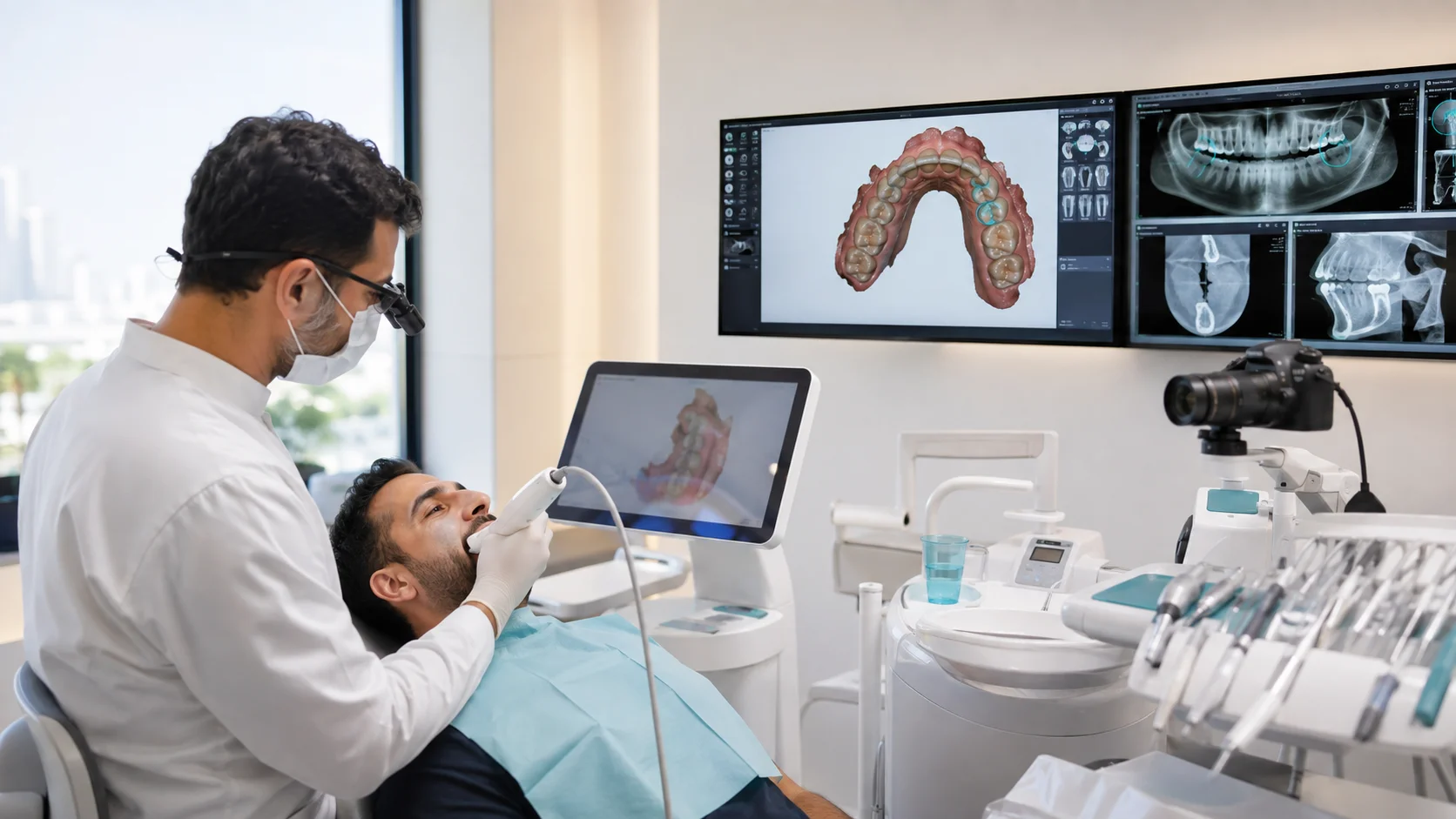
In modern dental clinics in Dubai, an examination may combine several complementary diagnostic methods.
Depending on the clinical situation, these may include:
- clinical dental examination;
- digital dental photography;
- intraoral dental X-rays;
- panoramic radiography;
- CBCT when clinically indicated;
- intraoral 3D scanning;
- software-assisted analysis of diagnostic images.
Not every patient requires all of these examinations. The appropriate diagnostic approach is selected individually according to the patient's symptoms and the clinical question being investigated.
Why Is Early Detection Important?
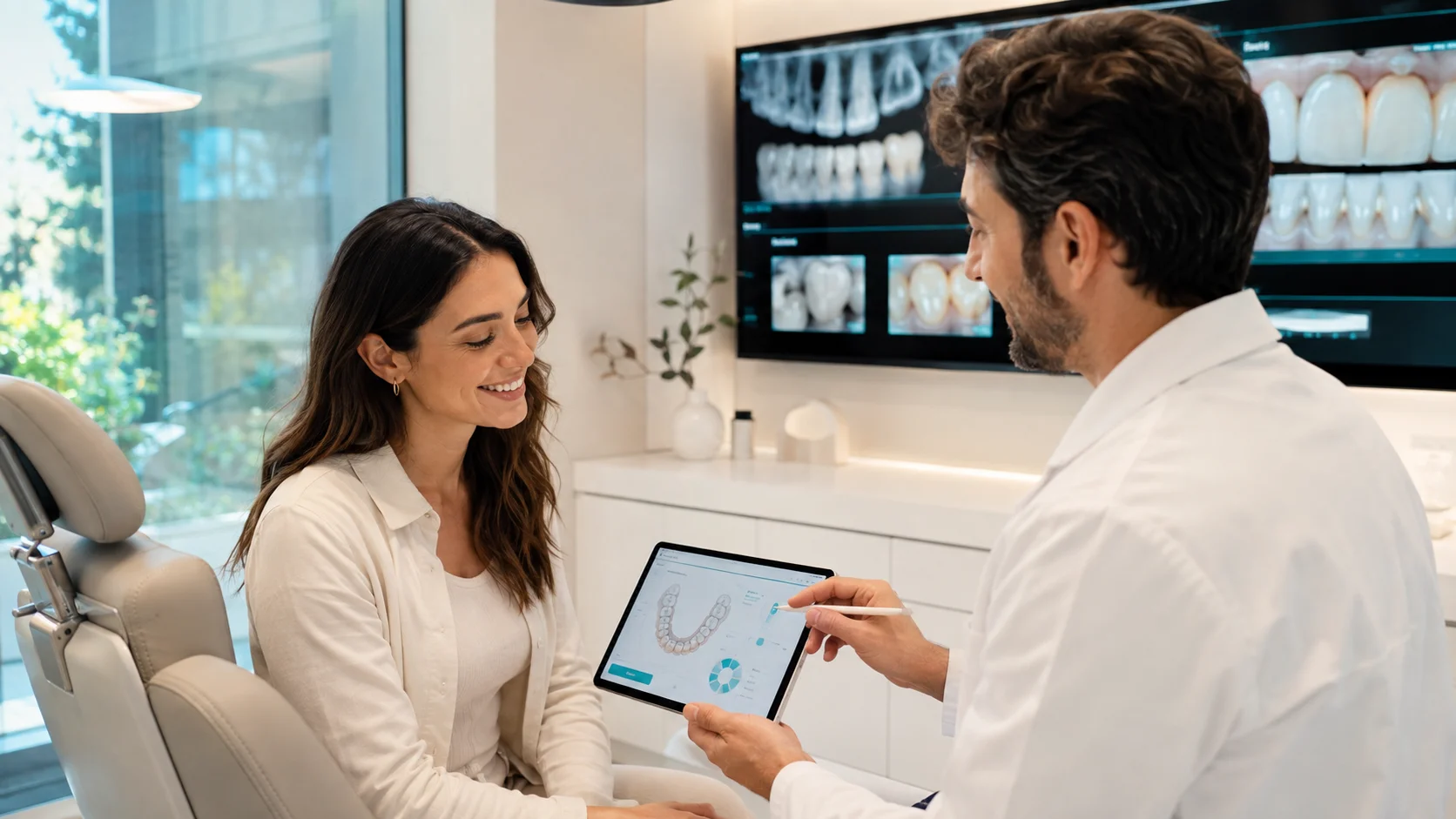
The earlier a dental problem is identified, the more opportunities there may be to choose a conservative treatment strategy.
For example, certain early enamel changes may be managed with preventive measures and monitoring, while a deeper carious lesion may already require restorative treatment.
With periodontal disease, timely identification of inflammation can allow treatment to begin before significant loss of supporting tissues develops.
The goal of modern diagnostics is therefore not to detect disease “as early as possible at any cost,” but to identify clinically significant changes at a stage when they can be managed in the most appropriate way.
Artificial intelligence is expanding the possibilities of digital dental diagnostics and may help identify certain changes before noticeable symptoms develop. The technology provides the greatest value when combined with a clinical examination, appropriate radiographic diagnostics, and professional interpretation by a dentist.
If you would like to assess the health of your teeth even when you have no pain or other symptoms, contact Factor Smile in Dubai. Our specialists will perform the necessary diagnostic examinations, evaluate the condition of your teeth, roots, gums, and supporting bone, and develop an individualized prevention or treatment plan if clinically significant changes are detected.
Frequently Asked Questions