
Root-End Resection (Apicoectomy): Preserving Teeth with Surgery
Root-end resection, also known as apicoectomy, is a surgical procedure that can help preserve a natural tooth when inflammation persists around the root and conventional root canal treatment has been unsuccessful or retreatment is difficult. During the procedure, the dental surgeon removes a small portion of the root tip along with the affected surrounding tissues, treats the root canal from the root end, and seals it when necessary.
Apicoectomy may be recommended for persistent periapical infections, chronic inflammation, and certain complications following previous root canal treatment.
However, root-end surgery is not suitable for every patient. The possibility of saving a tooth depends on the condition of its roots, the quality of previous endodontic treatment, the surrounding bone, and the presence of cracks or fractures. The decision is made following a clinical examination and dental imaging, including cone beam computed tomography (CBCT) when indicated.

What Is Root-End Resection in Dentistry?
Root-end resection is a tooth-preserving surgical procedure in which infected or inflamed tissue surrounding the root is removed together with its apical portion, typically approximately 3 mm.
In modern endodontic microsurgery, the surgeon also examines the resected root surface and seals the end of the root canal using a specialised biocompatible material.
The main purpose of apicoectomy is to eliminate persistent inflammation and create conditions for bone healing around the root without extracting the tooth.
Unlike tooth extraction, root-end resection preserves the crown and most of the root structure. After successful healing, the tooth can continue to perform its normal chewing function.
When Is Root-End Resection Necessary?
Apicoectomy is primarily considered when inflammation persists after root canal treatment and conventional endodontic retreatment is impossible, carries significant risks, or has an unfavourable prognosis.
The main indications include:
- Chronic apical periodontitis. Persistent inflammation of the tissues surrounding the root tip that does not resolve after adequate endodontic treatment.
- Periapical granuloma or cyst. An inflammatory lesion that may require surgical intervention after evaluating nonsurgical treatment options.
- Blocked root canals. Severe canal curvature, calcification, or an obstruction that prevents effective retreatment.
- A broken instrument inside the root canal. When the instrument cannot be safely removed or bypassed and infection persists.
- An existing post or complex dental restoration. When removing the restoration could significantly damage the tooth.
- Persistent periapical infection. When inflammation remains despite previous root canal treatment.
The presence of a dental cyst or granuloma does not automatically mean that apicoectomy is necessary. In many cases, primary root canal treatment or nonsurgical endodontic retreatment is considered first.
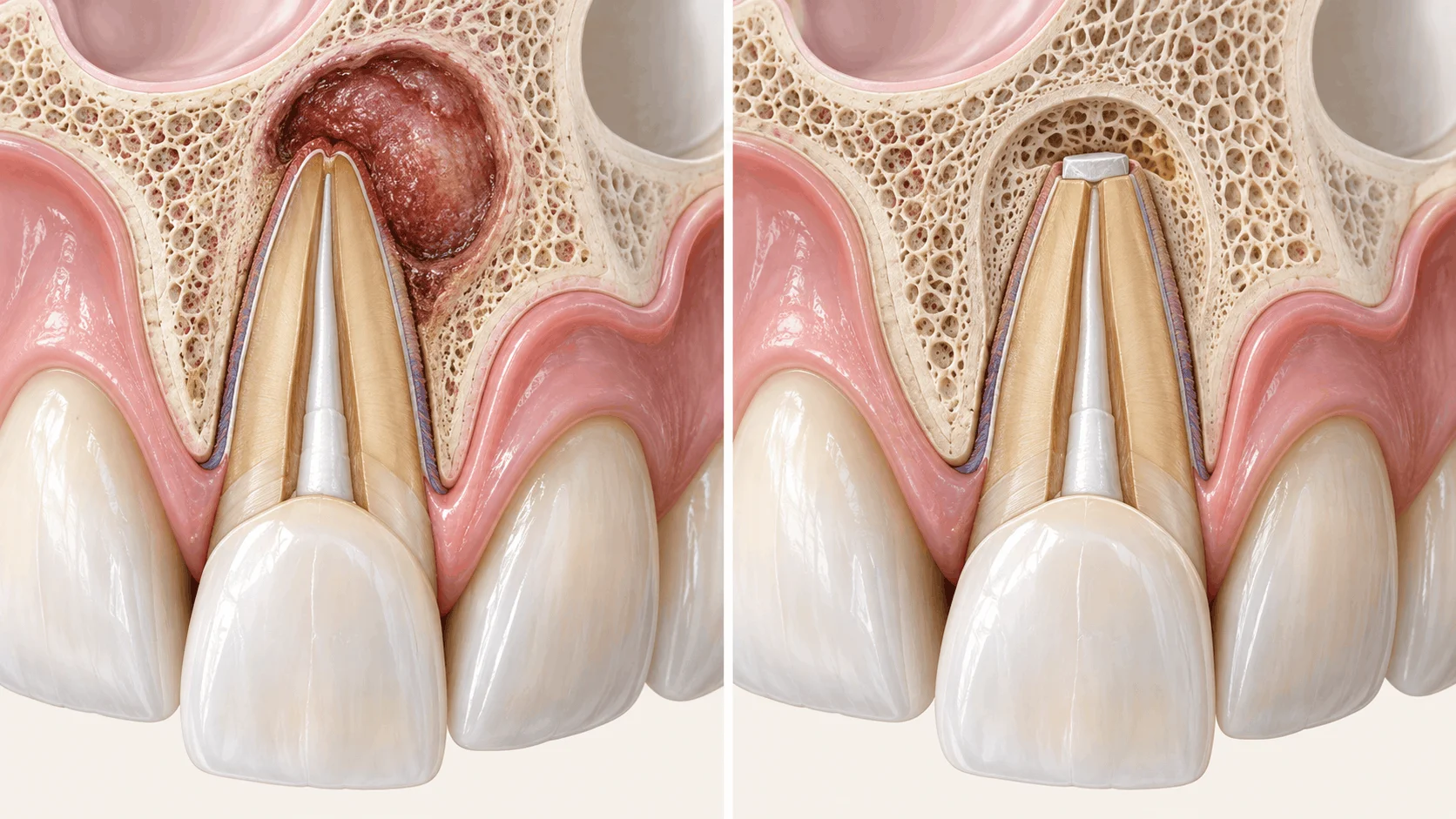
Apicoectomy vs. Root Canal Retreatment: Which Is Better?
Both procedures aim to eliminate infection and preserve the natural tooth, but they approach the problem differently.
| Criteria | Root Canal Retreatment | Root-End Resection (Apicoectomy) |
|---|---|---|
| Access | Through the crown of the tooth | Through the gum and surrounding bone |
| Main purpose | Recleaning and resealing the root canals | Eliminating inflammation around the root tip |
| Surgical intervention | Usually not required | Required |
| When preferred | When root canals can be accessed and retreated | When retreatment is difficult or ineffective |
| Tooth preservation | Yes, if treatment is successful | Yes, if surgery is successful |
| Follow-up assessment | Clinical examination and dental X-rays | Clinical examination and dental X-rays |
When Is Root Canal Retreatment the Better Option?
If inflammation results from incomplete root canal cleaning, inadequate sealing, or a previously missed canal, nonsurgical endodontic retreatment is often considered the first option.
When Is Apicoectomy Preferable?
Surgical treatment may be appropriate when the root canals have already been adequately treated but inflammation persists, or when reopening the canals would create a significant risk of damaging the tooth.
How Is Root-End Resection Performed in Dubai?
At Factor Smile Dental Clinic in Dubai, planning tooth-preserving surgical treatment begins with a diagnostic assessment. The dentist evaluates the condition of the root, surrounding bone, existing fillings, and dental restorations.
The main stages of apicoectomy include:
- Clinical examination and diagnostics. The dentist performs an oral examination, takes periapical X-rays, and may recommend CBCT imaging when necessary.
- Local anaesthesia. The surgical area is numbed using a local anaesthetic.
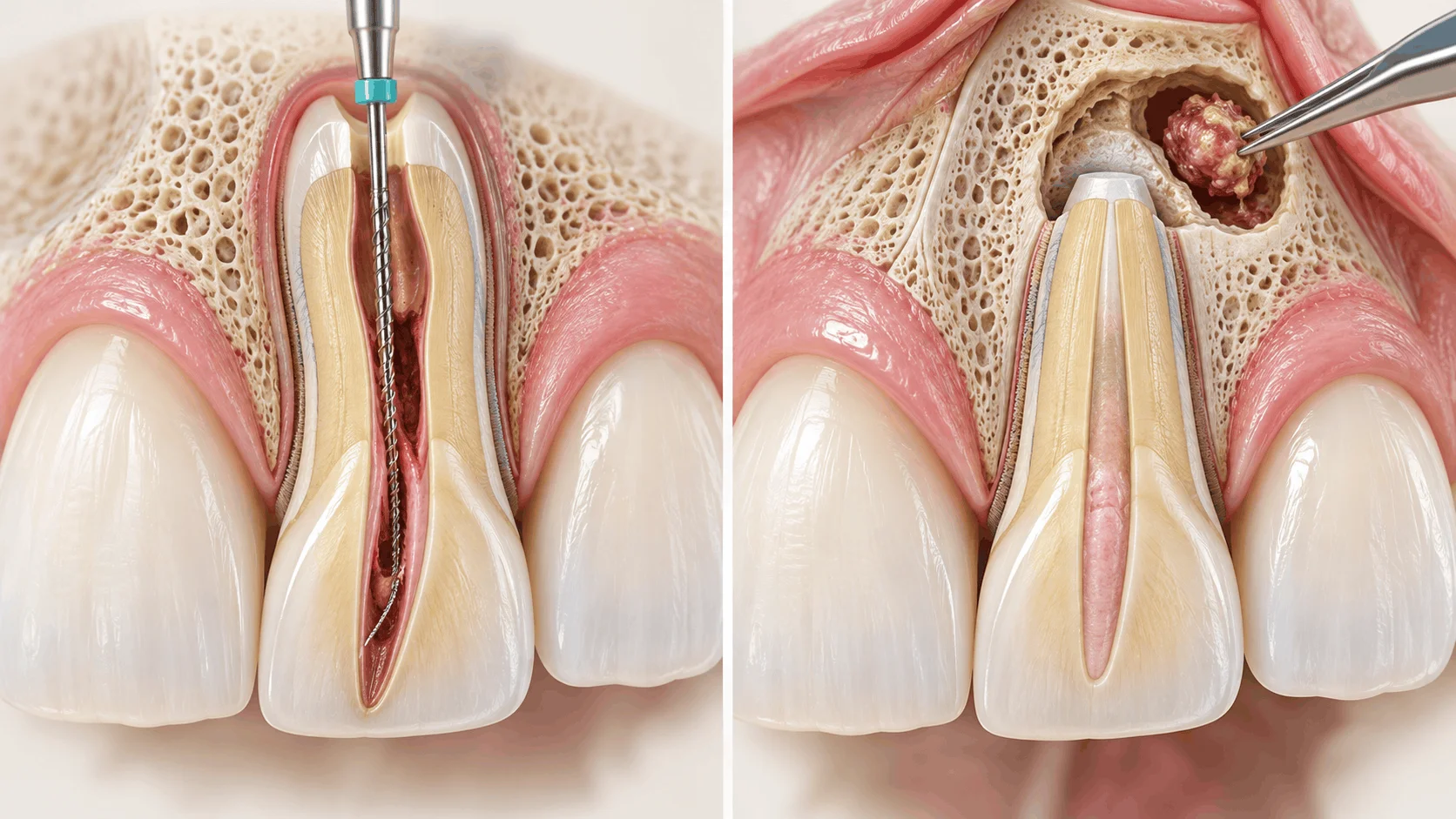
- Surgical access. The surgeon makes a small incision in the gum and creates access to the root tip.
- Removal of inflamed tissues. The affected tissues are removed, followed by resection of the apical portion of the root.
- Root canal treatment. In modern microsurgical procedures, a small cavity is prepared at the root end and sealed using a biocompatible root-end filling material.
- Completion of surgery. The surgical area is cleaned, the gum tissue is repositioned, and sutures are placed.
The duration of the procedure depends on the location of the tooth, root anatomy, and the complexity of the clinical situation.
Which Teeth Can Be Saved with Apicoectomy?
Root-end surgery can be performed on both anterior and posterior teeth. However, surgical accessibility and treatment prognosis vary depending on tooth anatomy.
| Tooth Type | Surgical Considerations |
|---|---|
| Front teeth | Root tips are generally more accessible |
| Canines | Root length and shape require careful evaluation |
| Premolars | The number of roots and nearby anatomical structures must be considered |
| Molars | Surgical access is often more complex, particularly in multi-rooted teeth |
In the upper jaw, the surgeon must consider the proximity of the maxillary sinus. In the lower jaw, special attention is given to the mandibular canal and nearby nerve structures.
When Can Apicoectomy Not Save a Tooth?
Despite advances in modern endodontic surgery, root-end resection cannot guarantee a favourable outcome in every case.
The main limitations include:
- Vertical root cracks or fractures.
- Extensive tooth destruction that prevents reliable restoration.
- Significant periodontal tissue loss and tooth mobility.
- An unfavourable root length relative to expected chewing forces.
- Inability to establish safe surgical access.
- Certain medical conditions that increase surgical risks.
In cases of vertical root fracture, apicoectomy generally cannot resolve the underlying problem. Tooth extraction followed by prosthetic restoration or dental implant treatment may then be considered.
Recovery After Root-End Resection
Mild discomfort, swelling, and minor bleeding may occur during the first few days after surgery. The severity of these symptoms depends on the extent of the procedure and individual healing characteristics.
To support proper recovery, patients are advised to:
- Follow the dental surgeon's postoperative instructions.
- Avoid strenuous physical activity during the first few days.
- Avoid hard foods that could irritate the surgical area.
- Maintain oral hygiene according to the dentist's recommendations.
- Refrain from smoking during the healing period.
- Attend scheduled follow-up appointments.
Soft tissues generally heal within one to two weeks. Bone regeneration takes considerably longer and may continue for several months.
Increasing pain, significant swelling, fever, or persistent bleeding should be reported to the treating dentist promptly.

How Successful Is Root-End Resection?
Modern endodontic microsurgery can achieve favourable outcomes in a substantial proportion of appropriately selected patients.
Clinical studies of contemporary microsurgical techniques frequently report success rates exceeding 85–90% during medium-term follow-up. However, reported outcomes vary depending on the criteria used to define success, the length of follow-up, tooth condition, and surgical technique.
Factors affecting the prognosis include:
- Quality of the original root canal treatment.
- Absence of vertical root fractures.
- Condition of the surrounding periodontal tissues.
- Ability to achieve an effective root-end seal.
- Quality of the final dental restoration.
- Compliance with postoperative recommendations.
Reduction of the inflammatory lesion and regeneration of surrounding bone are assessed through follow-up dental imaging.
The absence of pain immediately after surgery does not necessarily indicate complete healing.
Where Can I Get Root-End Surgery and Dental Diagnostics in Dubai?
When inflammation develops around a tooth root, it is important to identify the underlying cause and determine whether the natural tooth can be preserved.
A comprehensive assessment may require collaboration between an endodontist and an oral surgeon.
At Factor Smile Dental Clinic in Dubai, patients can receive a dental consultation, undergo diagnostic assessment of root canals and surrounding bone, and discuss nonsurgical endodontic retreatment or surgical treatment options.
Book a consultation at Factor Smile to find out whether your tooth can be saved through apicoectomy or another tooth-preserving treatment and receive a personalised dental care plan.
Medically reviewed by Dr. Maria Gerasimova, DHA-licensed dentist at Factor Smile