
Can an implant be placed if there is insufficient bone tissue? Modern treatment options.
In many cases, dental implants can be placed even when there is insufficient jawbone. Modern implant dentistry offers several solutions, including bone grafting, sinus lift procedures, and alternative implant placement techniques. In certain situations, shorter or narrower implants may be used if the available bone provides adequate support and stability.
However, insufficient bone does not always mean that bone augmentation is necessary. The decision depends on bone height, width, and quality, the location of important anatomical structures, and the planned dental restoration. Accurate diagnosis, usually including cone-beam computed tomography (CBCT), is essential for selecting a safe and appropriate treatment approach.

Why Does Jawbone Loss Occur Before Dental Implant Placement?
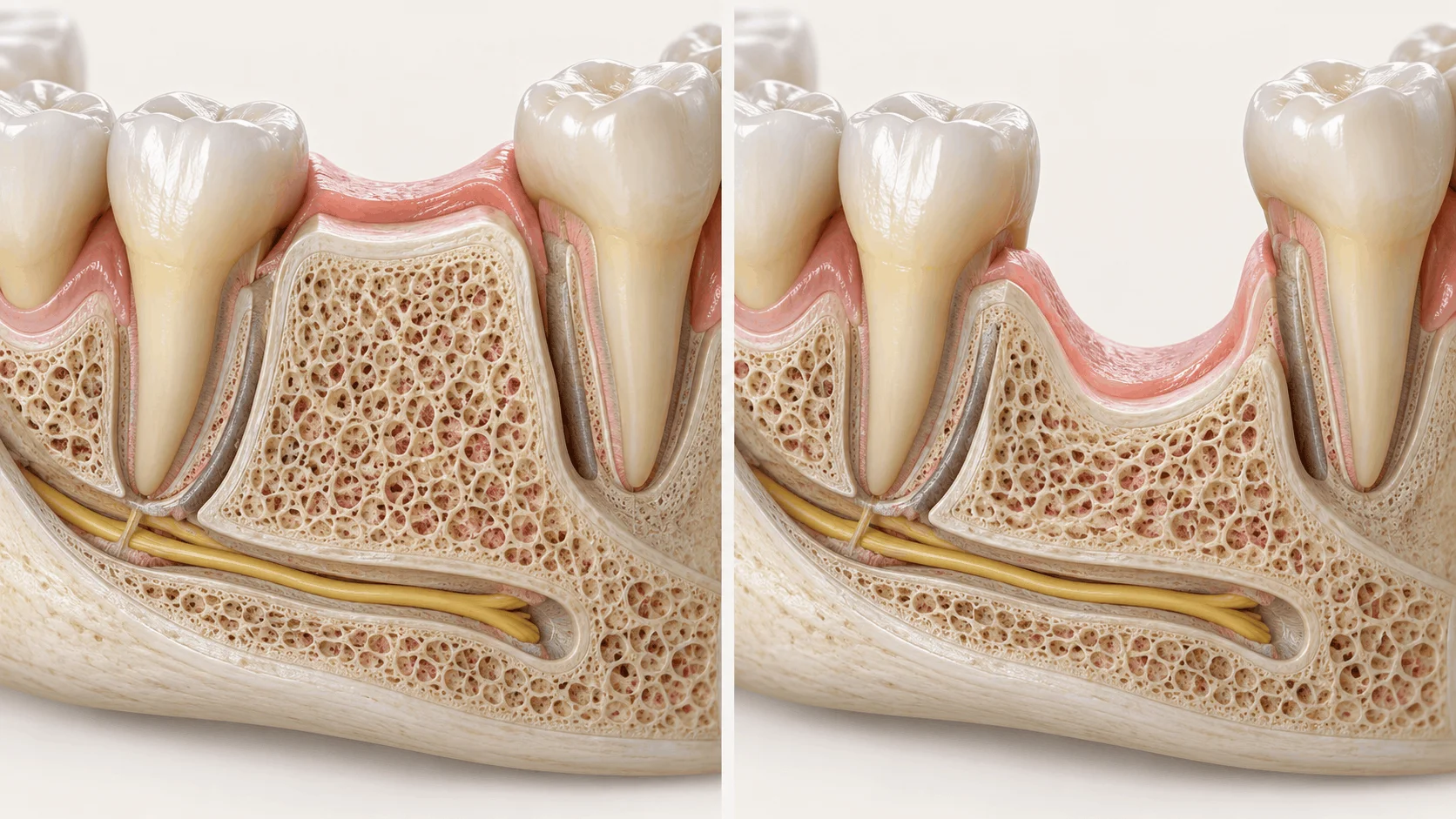
Jawbone atrophy is the gradual reduction in the volume of alveolar bone that previously supported natural teeth. After a tooth is extracted or lost, the distribution of functional forces changes, and the surrounding bone ridge may gradually decrease in height and width.
The main causes of insufficient jawbone include:
- Long-term absence of one or more teeth.
- Tooth extraction following infection or trauma.
- Periodontitis resulting in the destruction of tooth-supporting tissues.
- Individual anatomical characteristics of the jaws.
- Previous injuries and surgical procedures.
- Age-related changes combined with other risk factors.
Bone limitations are particularly common in the posterior upper jaw, where tooth roots are located close to the maxillary sinuses.
In the lower jaw, an important anatomical limitation is the position of the mandibular canal, which contains nerves and blood vessels.
Can Dental Implants Be Placed Without Bone Grafting?
Yes. In certain clinical situations, dental implant placement without bone grafting is possible.
If the remaining bone provides sufficient primary implant stability and allows forces to be distributed appropriately, the oral surgeon may consider:
- Short dental implants.
- Narrow-diameter implants when clinically appropriate.
- Adjusting implant positioning within safe anatomical boundaries.
- Specialised treatment protocols for replacing multiple or all missing teeth.
Short dental implants may be used when bone height is limited, particularly in selected posterior areas of the jaws. However, they are not suitable for every patient. Bone ridge width, bite forces, the planned prosthetic restoration, and other clinical factors must be considered.
Narrow-diameter implants are also not a universal alternative to bone grafting. Their use depends on anatomical conditions and prosthetic requirements.
What Treatments Are Available for Insufficient Jawbone?
Modern dentistry offers several approaches to preparing the jaw for dental implant placement.
| Treatment Method | When It Is Used | Main Purpose |
|---|---|---|
| Guided bone regeneration (GBR) | Insufficient ridge width or a localised bone defect | Increasing available bone volume |
| Block bone grafting | Significant localised bone deficiency | Restoring the shape and volume of the alveolar ridge |
| Sinus lift | Insufficient bone height in the posterior upper jaw | Creating space for bone formation beneath the sinus floor |
| Short dental implants | Limited bone height with suitable anatomy | Placing an implant without vertical bone augmentation |
| Alternative implant placement protocols | Multiple missing teeth or complete tooth loss | Using available bone to support a dental prosthesis |
These methods are not interchangeable. The appropriate treatment depends on the specific bone defect, the condition of surrounding tissues, and the goals of the planned restoration.
What Is Bone Grafting Before Dental Implant Placement?
Dental bone grafting is a surgical procedure designed to restore insufficient bone volume in the jaw.
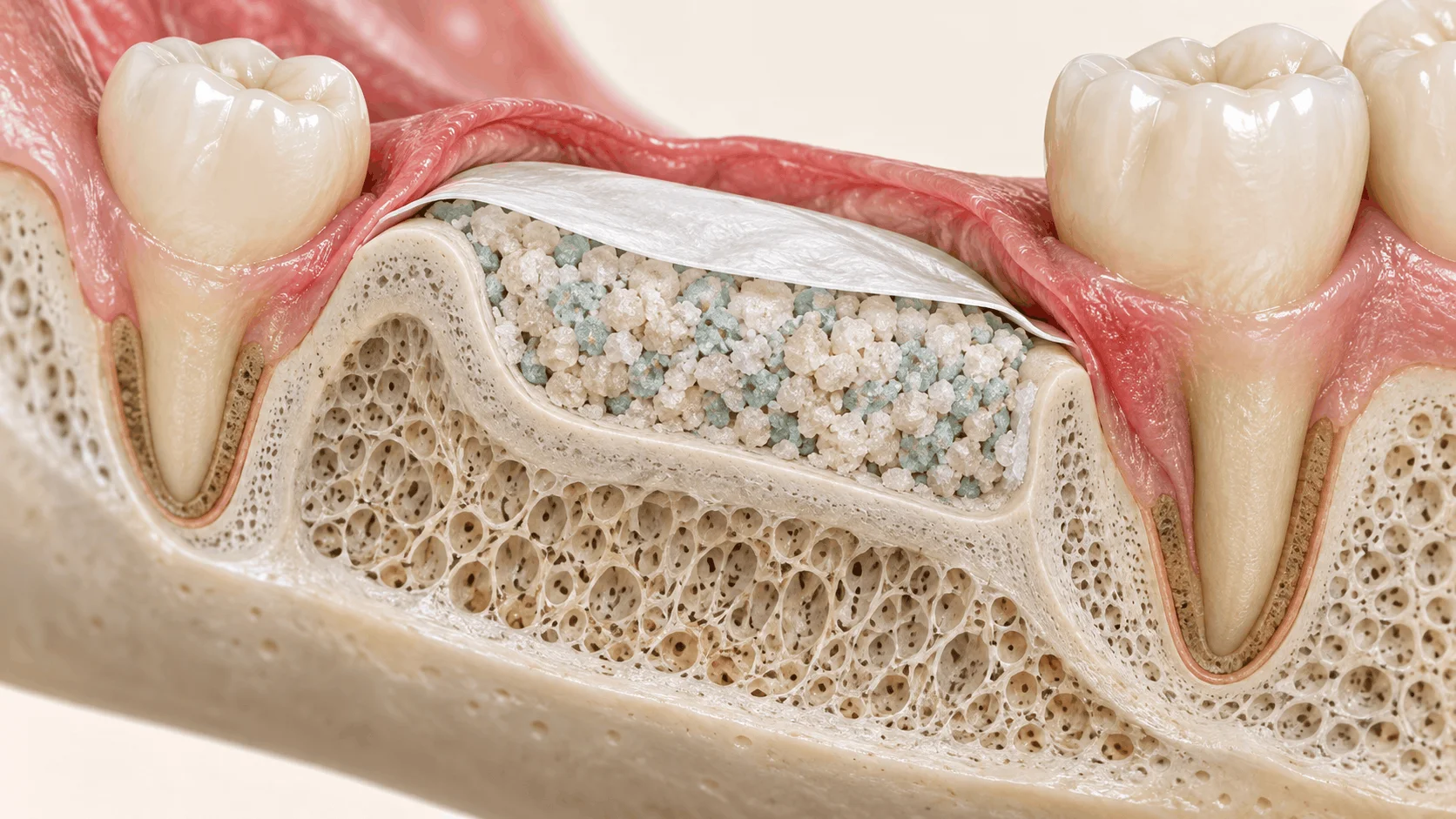
One commonly used technique is guided bone regeneration (GBR). A bone grafting material is placed in the area of the defect and, when necessary, covered with a specialised membrane.
Materials used for bone augmentation may include:
- The patient's own bone tissue.
- Specially processed bone-derived materials of animal origin.
- Synthetic bone substitute materials.
- Combinations of different grafting materials.
The membrane helps create favourable conditions for bone formation while limiting the growth of soft tissue into the grafted area.
Depending on the clinical situation, bone grafting may be performed at the same time as implant placement or as a separate surgical stage.
When Is a Sinus Lift Necessary?
A sinus lift is primarily used when there is insufficient bone height in the area of the upper back teeth.
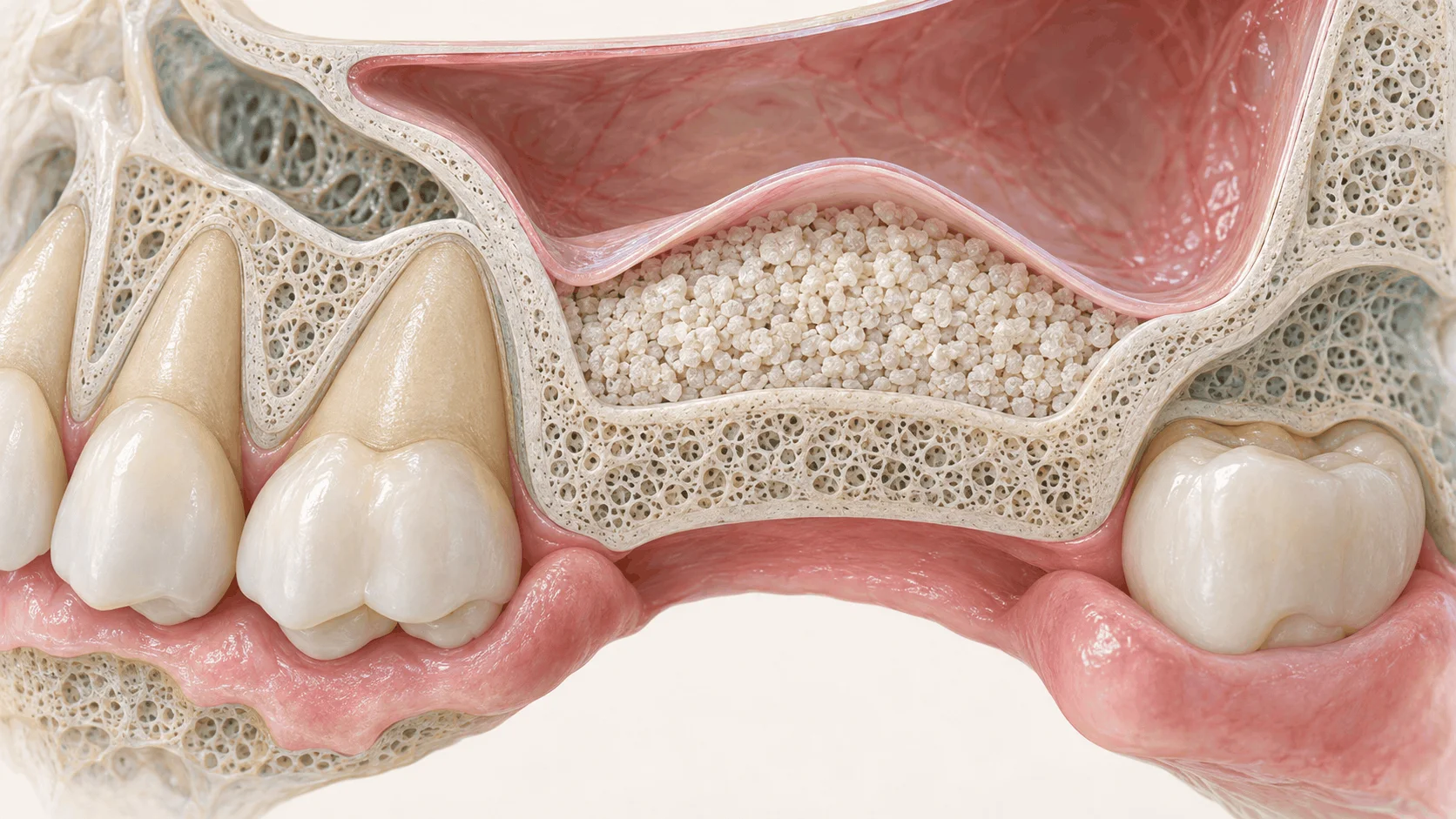
After tooth loss, the alveolar ridge may shrink while the maxillary sinus may expand into the surrounding space. As a result, there may not be enough bone to accommodate a dental implant of conventional length.
During a sinus lift, the surgeon carefully elevates the membrane lining the floor of the maxillary sinus and creates space for bone grafting material.
There are two main approaches:
- Closed sinus lift (transcrestal approach). Usually considered when a relatively small increase in bone height is required and anatomical conditions are suitable.
- Open sinus lift (lateral window approach). Used when more substantial bone augmentation is needed.
Whether an implant can be placed during the same procedure depends on the remaining bone height and the primary stability that can be achieved.

Can Dental Implants Be Placed Immediately After Bone Grafting?
In some cases, bone grafting and dental implant placement can be performed during the same surgical procedure. This is possible when the existing bone provides sufficient primary implant stability.
When bone deficiency is significant, treatment is more often divided into stages:
- Preparing the site and performing bone grafting.
- Allowing time for healing and new bone formation.
- Assessing the grafted area and placing the dental implant.
- Osseointegration — the process by which the implant surface establishes a stable connection with the surrounding bone.
- Placing the final prosthetic restoration.
Healing times vary between patients. Depending on the extent of surgery and the grafting material used, preparation for implant placement may take several months.
How Is Dental Implant Planning Performed in Dubai?
At Factor Smile Dental Clinic in Dubai, implant treatment planning begins with an assessment of the patient's oral health and the possibility of placing an implant in the correct prosthetic position.
The main diagnostic stages include:
- Consultation with a dental surgeon. Assessment of general health, gum condition, and relevant risk factors.
- Cone-beam computed tomography (CBCT). Measurement of bone height and width and identification of the maxillary sinuses and important nerve structures.
- Digital implant planning. Determining the optimal implant position based on the future crown or prosthesis.
- Treatment selection. Comparing implant options with and without bone grafting.
- Individual treatment plan. Discussing surgical stages, healing periods, and the subsequent prosthetic restoration.
It is important to consider not only the available bone volume but also whether the final restoration can provide comfortable chewing function and allow effective daily cleaning.
What Affects the Success of Dental Implants When Bone Is Limited?
The outcome of treatment depends on several factors:
- Accuracy of diagnosis and surgical planning.
- Adequate primary implant stability.
- Health of the gums and surrounding tissues.
- Effective management of periodontitis and other inflammatory conditions.
- Control of systemic medical conditions that may affect healing.
- Smoking and other factors that can impair recovery.
- Following postoperative care instructions.
In cases of significant bone loss, it is particularly important to assess not only whether an implant can be placed but also the long-term prognosis of the proposed treatment.
Where Can You Get Dental Implants with Insufficient Bone in Dubai?
Insufficient jawbone does not always mean that dental implants are impossible. Modern diagnostic methods, bone regeneration techniques, and surgical planning can provide options for replacing missing teeth, even in complex clinical situations.
At Factor Smile Dental Clinic in Dubai, patients can arrange a consultation to discuss dental implant treatment, assess their jawbone condition, and explore suitable treatment options.
Book a consultation at Factor Smile to find out whether dental implants can be placed without bone grafting, whether bone augmentation is necessary, and which tooth replacement approach is most appropriate for your individual situation.
Medically reviewed by Dr. Maria Gerasimova, DHA-licensed dentist at Factor Smile