
Can You Wear Clear Aligners If You Have Crowns, Veneers, or Dental Implants?
Yes. In many cases, orthodontic treatment with clear aligners is possible even if you already have dental crowns, veneers, or implants. However, these situations require especially careful diagnosis and individualized treatment planning because each type of restoration behaves differently during tooth movement. In advanced dental clinics throughout Dubai, comprehensive digital diagnostics are performed before treatment begins to evaluate your bite, existing restorations, and oral health, ensuring that aligner therapy is both safe and predictable.
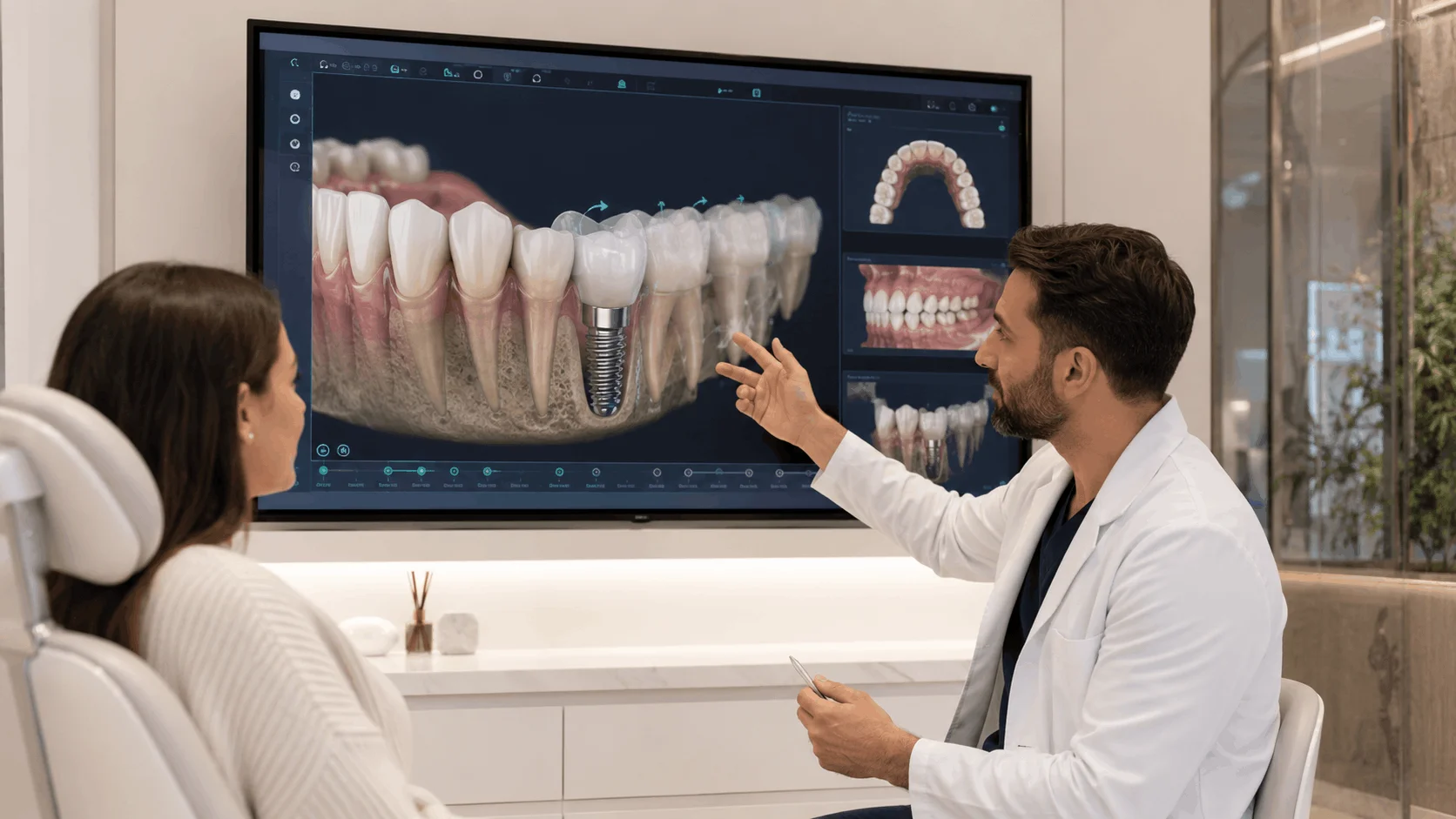
Can Teeth with Crowns Be Straightened?
Yes. In most cases, dental crowns are not a contraindication to clear aligner treatment.
Modern aligners can successfully move crowned teeth provided that:
- the crown is securely bonded;
- the tooth root is healthy;
- there is no active infection or inflammation;
- the tooth can safely tolerate orthodontic forces.
Before treatment, the orthodontist carefully evaluates both the crown itself and the surrounding supporting tissues.
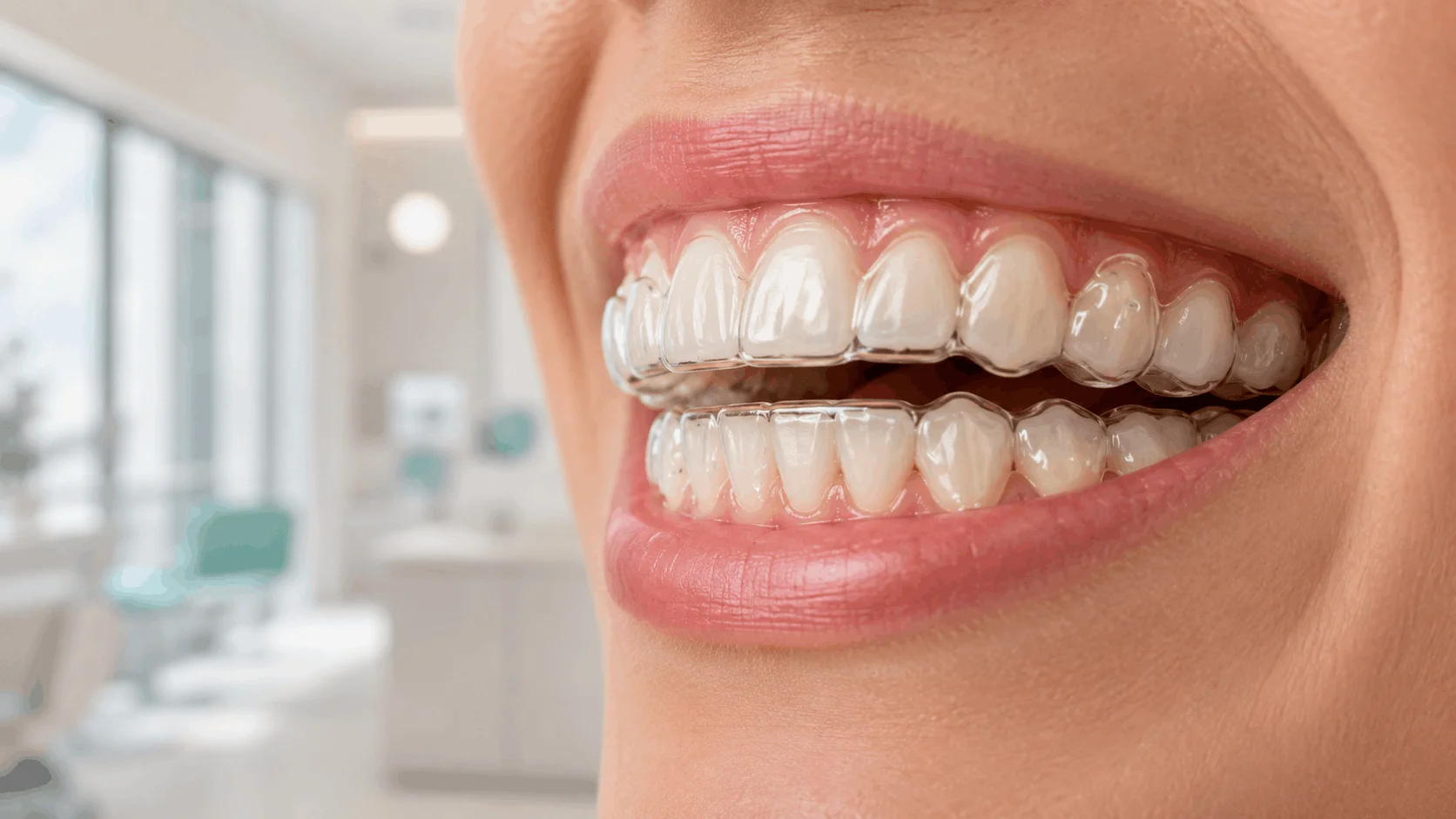
How Do Aligners Work with Veneers?
Having veneers does not automatically prevent orthodontic treatment.
However, the dentist considers several important factors, including:
- the veneer material;
- the quality of bonding;
- the amount of planned tooth movement;
- the location of the veneers;
- the possibility of damaging existing restorations.
In some situations, the best approach is to complete orthodontic treatment first and replace one or more veneers afterward to achieve the most natural aesthetic result.
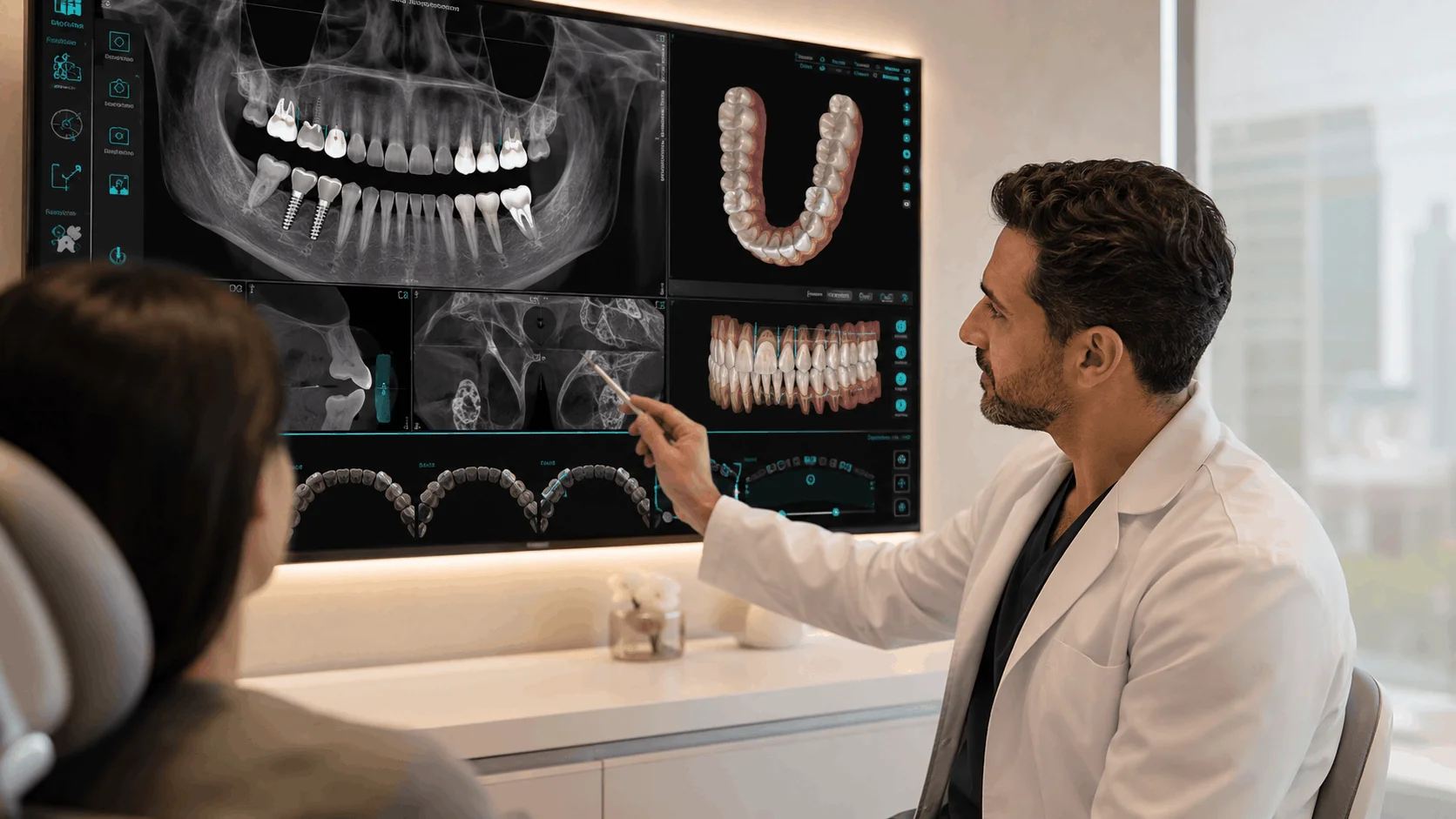
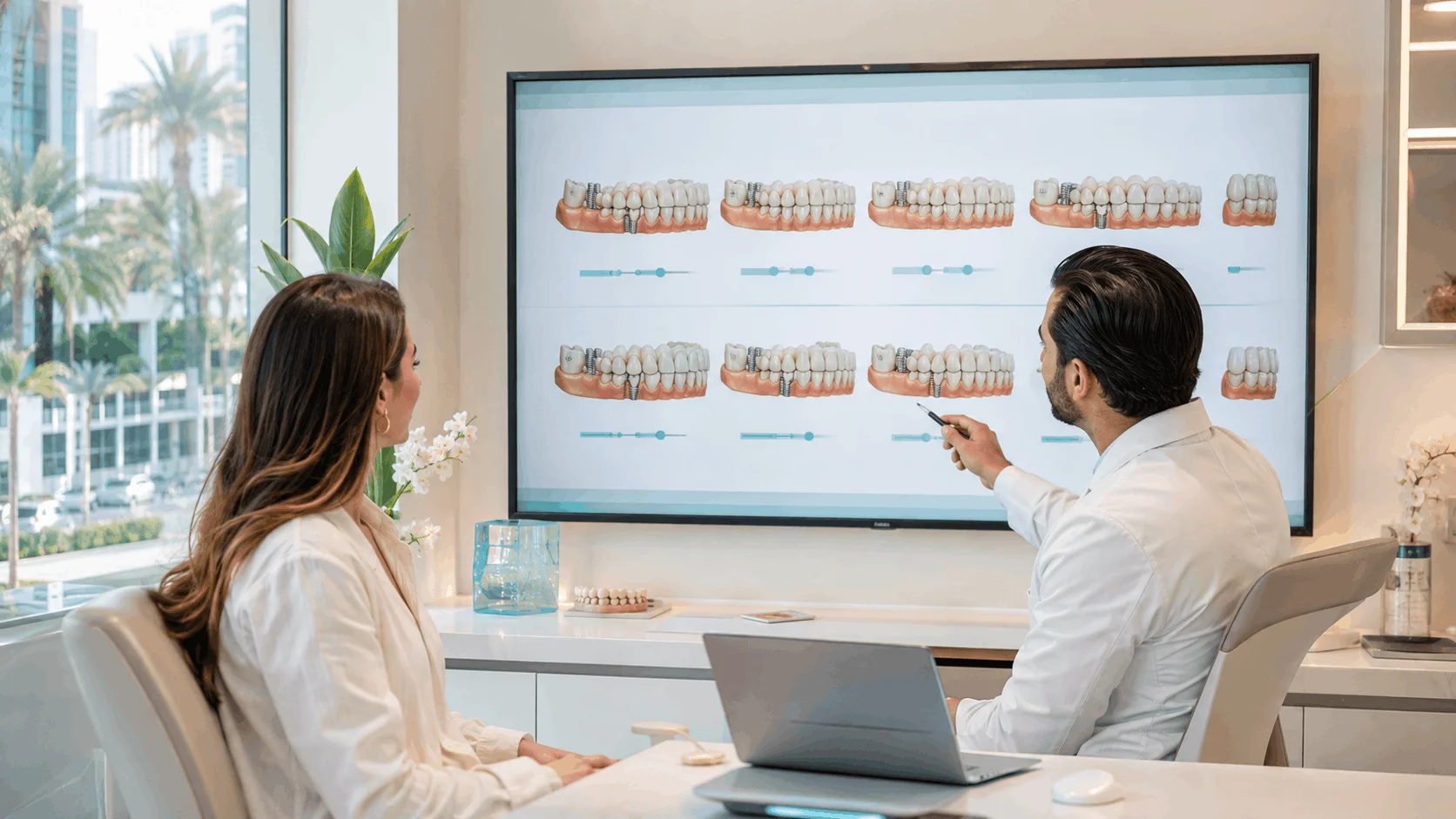
Can Teeth Be Moved Next to Dental Implants?
This is one of the most important considerations in treatment planning.
Unlike natural teeth, dental implants are permanently fused to the jawbone.
This means that:
- the implant itself cannot move;
- neighboring natural teeth can still be repositioned;
- the implant serves as a fixed reference point during treatment;
- tooth movement is carefully planned around the implant's permanent position.
For this reason, digital treatment planning becomes especially important whenever implants are present.
What Does the Orthodontist Evaluate?
Before treatment begins, a comprehensive examination is performed.
The orthodontist assesses:
- the number and position of dental implants;
- the location of crowns and veneers;
- gum health;
- bite alignment;
- tooth root position;
- jawbone condition;
- the amount of tooth movement required.
Every treatment plan is developed individually based on the patient's clinical situation.
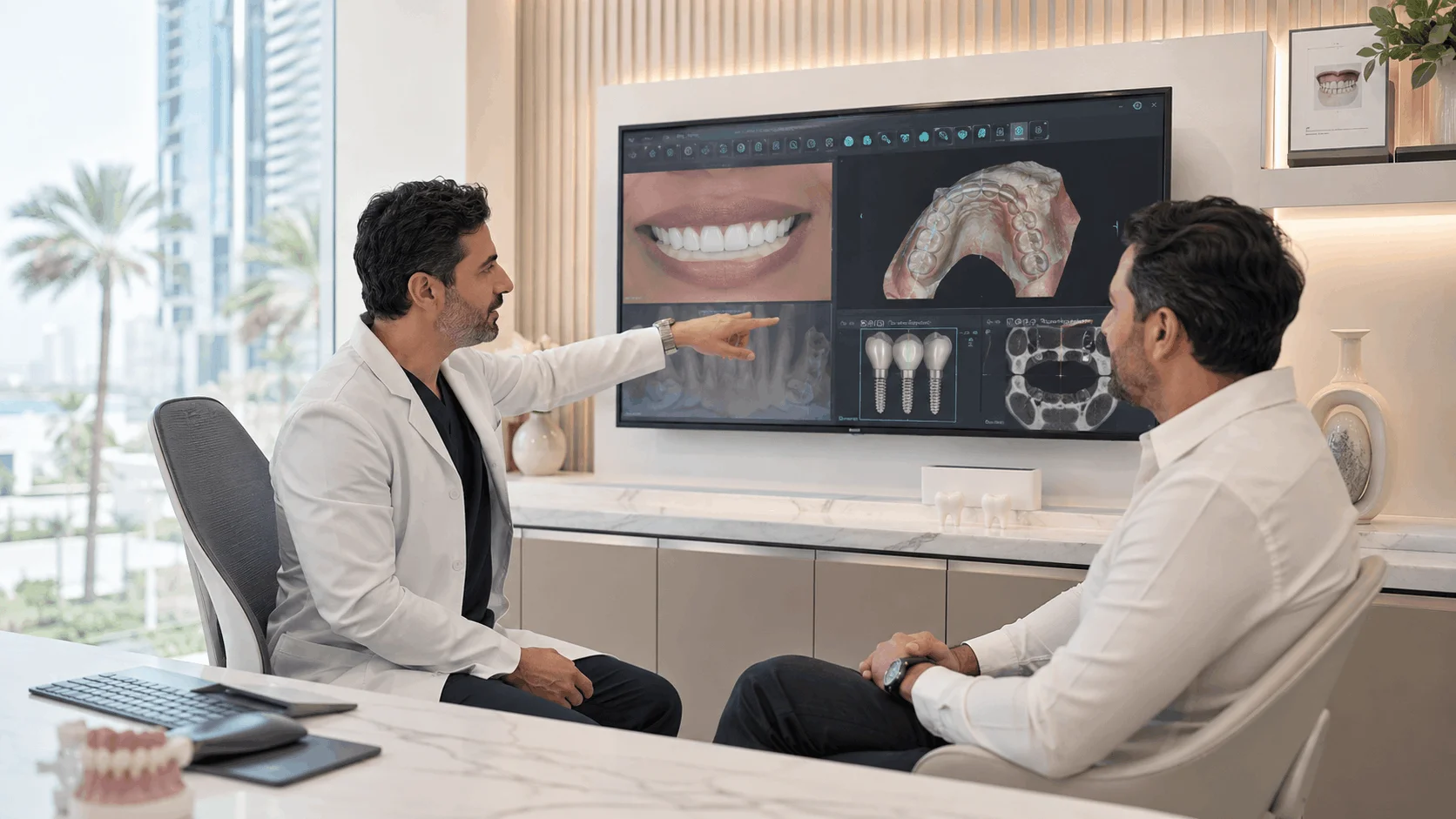
How Does Digital Treatment Planning Improve Safety?
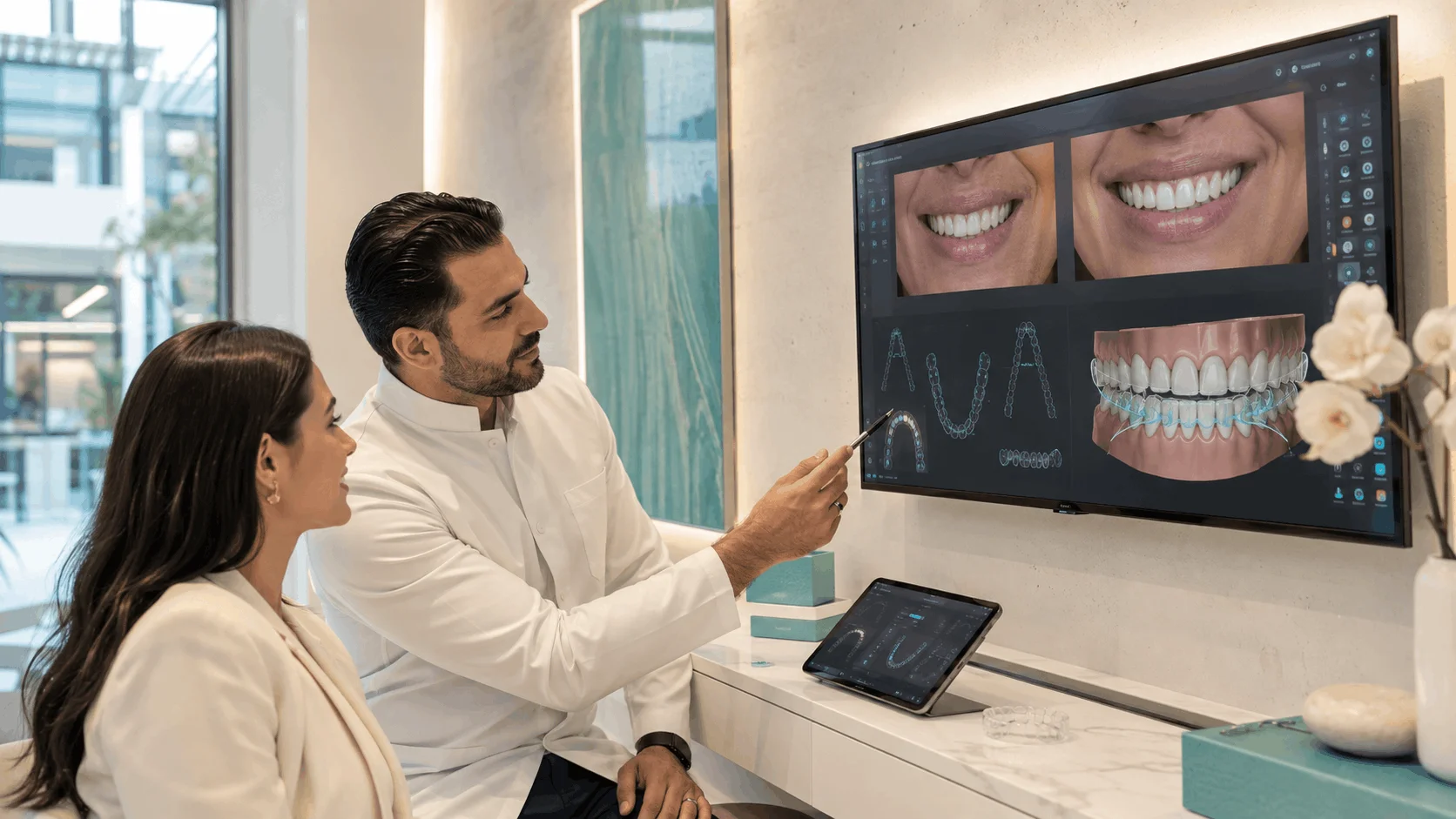
Modern orthodontics relies heavily on advanced digital technology.
Common diagnostic tools include:
- intraoral 3D scanning;
- Cone Beam Computed Tomography (CBCT);
- digital bite analysis;
- virtual tooth movement simulation;
- digital treatment outcome prediction.
In leading dental clinics across Dubai, virtual treatment planning allows orthodontists to identify which teeth can be moved safely while accounting for the fixed position of implants and existing restorations before treatment even begins.
Will Crowns or Veneers Need to Be Replaced After Treatment?
Not necessarily.
The answer depends on several factors, including:
- the amount of tooth movement;
- the location of existing restorations;
- bite changes during treatment;
- the patient's aesthetic expectations.
In many cases, existing crowns and veneers remain unchanged.
However, when tooth alignment changes significantly, replacing one or more restorations after orthodontic treatment may provide the most harmonious final appearance.
What Are the Advantages of Aligners in These Cases?
Clear aligners offer excellent control throughout treatment.
Their main advantages include:
- highly precise tooth movement;
- digitally planned treatment stages;
- the ability to remove aligners while eating and brushing;
- comfortable use alongside existing restorations;
- minimal disruption to daily life.
With proper planning, aligner treatment remains predictable even in patients with crowns, veneers, or implants.
Comparison of Different Clinical Situations
Clinical Situation |
Are Clear Aligners Possible? |
|---|---|
| Dental crowns | Yes, in most cases |
| Veneers | Yes, after evaluating the restorations |
| One or more dental implants | Yes, while considering that implants cannot move |
| Combination of implants and crowns | Yes, following comprehensive digital treatment planning |
| Full-mouth prosthetic rehabilitation | Depends on the individual clinical situation and diagnostic findings |

Having crowns, veneers, or dental implants does not necessarily prevent treatment with clear aligners. Modern digital orthodontics makes it possible to carefully plan tooth movement while preserving existing restorations and achieving both functional and aesthetic improvements. A personalized approach and comprehensive digital diagnostics help ensure safe, predictable treatment even in complex clinical situations.
If you already have crowns, veneers, or dental implants and are considering straightening your teeth with clear aligners, contact Factor Smile in Dubai. Our specialists will perform a comprehensive digital evaluation, assess your existing restorations, and develop a personalized treatment plan designed to deliver safe, predictable, and aesthetically pleasing results.
Frequently Asked Questions